Lesser Devil Ray

Lesser Devil Ray

Mobula thurstoni

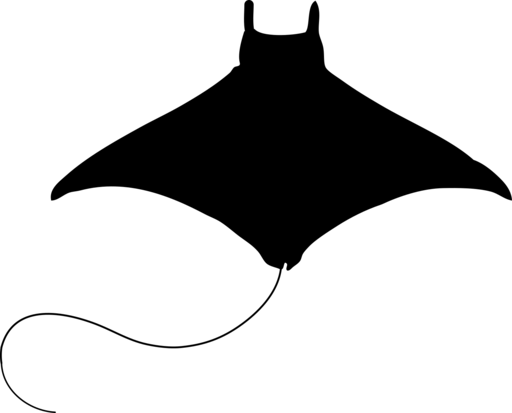
Silhouette: Steven Traver · PhyloPic

Daily sighting probability ~20% · Possible
at Galápagos Islands

In 3 days ~40% in a week ~70%

24 Verified sightings at Galápagos Islands From 2019 to 2026
24 In 1 park
March Best month
☀️ Diurnal When it's spotted

About the Lesser Devil Ray

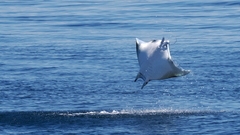
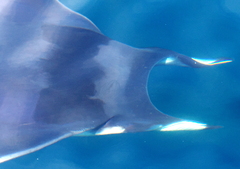
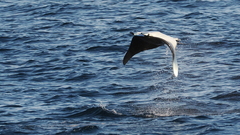
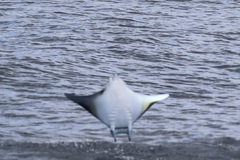
The bentfin devil ray (Mobula thurstoni), also known as the lesser devil ray, smoothtail devil ray, smoothtail mobula or Thurston's devil ray, is a species of ray in the family Mobulidae. It is found worldwide in tropical, subtropical and warm temperate oceans, with records from Australia, Brazil, Chile, Costa Rica, Ecuador, Egypt, El Salvador, Eritrea, Guatemala, Honduras, India, Indonesia, Ivory Coast, Japan, Malaysia, Maldives, Mexico, Myanmar, Nicaragua, Oman, Pakistan, Peru, the Philippines, Saudi Arabia, Senegal, South Africa, Sri Lanka, Thailand, United Arab Emirates, United States (California), Uruguay, Vanuatu and throughout the central and western Pacific. It likely occurs in many other locations in tropical, subtropical and warm temperate oceans. It is found both offshore and near the coast.

The bentfin devil ray can reach a disc width of 189 cm (6.2 ft) and weigh about 54 kg (120 lb). The length of the disc is about 1.95 times its width. The front edge of the disc is nearly straight near the snout, but curves sinuously as it approaches the broad, triangular pectoral fins. The back edge is concave, becoming straight as it approaches the tail. On either side... Wikipedia →

Global Distribution

Parks Where Found

# Park Country Daily sighting probability
1 Galápagos Islands 🇪🇨 Ecuador
~20%

More parks will be added in future updates.

Before you go

What are the chances of seeing a Lesser Devil Ray in Galápagos Islands?

Possible

About 20% of wildlife watchers report a Lesser Devil Ray sighting in Galápagos Islands on a given day, based on 24 verified sightings from GBIF citizen-science data from 2019 to 2026. It is the 11th most-seen of the 16 sharks and rays we can rate there. Over three days the chance rises to about 40%, and over a week to about 70%, if each day is a fresh chance.

When is the best time to see a Lesser Devil Ray in Galápagos Islands?

March

In that month about 40% of wildlife watchers report a Lesser Devil Ray in Galápagos Islands on a given day, against under 5% in July, September and December, the lowest months. That is one of Galápagos Islands's wettest months, with about 50 mm of rain against almost none in August.

What time of day is best to see a Lesser Devil Ray?

Between 9 am and noon

Across all the parks we cover, that three-hour window holds the most Lesser Devil Ray sightings with a recorded time, and about 8 in 10 of them come between 6 am and 6 pm: it is a daytime animal.

Where else can you see a Lesser Devil Ray?

Only Galápagos Islands, in our data

Galápagos Islands is the only park on Wallace's Line with enough records to rate Lesser Devil Ray sightings: about 20% of wildlife watchers there report one on a given day.

Which relatives of the Lesser Devil Ray live in Galápagos Islands?

Same genus: Mobula

The closest relatives of the Lesser Devil Ray that you can see in Galápagos Islands (genus Mobula, Devil Rays) are Oceanic Manta Ray (about 30%) and Munk's Pygmy Devil Ray (about 10%), with each one's daily chance of a sighting.

Where does the Lesser Devil Ray sighting chance come from?

GBIF citizen-science records

It is estimated from how often the Lesser Devil Ray is recorded against all the sharks and rays logged in Galápagos Islands (24 verified sightings from 2019 to 2026), calibrated against known sighting rates. Figures are rounded to the nearest 10% because citizen-science data supports honest approximations, not decimals, and months with records from fewer than five people show "—". How it works.

← Back to Galápagos Islands