Australian Swamp Rat

Australian Swamp Rat

Rattus lutreolus

Silhouette: Kawinwit Kittipalawattanapol · PhyloPic

LCLeast ConcernNTVUENCR Endemic
Daily sighting probability ~10% · With luck
at Grampians National Park

In 3 days ~30% in a week ~50%

6 Verified sightings at Grampians National Park From 2019 to 2026
79 In all 5 parks
July Best month
☀️ Diurnal When it's spotted

About the Australian Swamp Rat

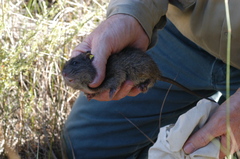
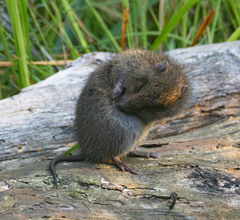
The Australian swamp rat (Rattus lutreolus), also known as the eastern swamp rat, is a species of rat native to the coasts of southern and eastern Australia. The Australian swamp rat grows to have a body length of approximately 160 millimetres (6 in) with a tail length of approximately 110 mm (4.3 in) and a mass of about 120 grams (4 oz). It has a stocky build with black-brown fur and black feet. Its ventral surface is cream to brown color and it has small ears nearly concealed by hair. The tail is dark grey, scaly and sparsely haired.

The swamp rat is found near the coast of south and eastern Australia. It occurs in lowland country from Fraser Island down the coast of New South Wales and Victoria to the Mount Lofty Ranges in South Australia. A subspecies velutinus can be found in Tasmania, and another subspecies lacus lives in isolated patches of high altitude rainforest near Atherton, Queensland.

The preferred habitat of the swamp rat is thick vegetation along watercourses and in swamps. The dense vegetation of islands above the high water mark is also suitable. They can also live in areas of coastal heath, dune scrub, grasslands... Wikipedia →

Global Distribution

Parks Where Found

# Park Country Daily sighting probability
1 Great Otway National Park 🇦🇺 Australia
~20%
2 Booderee National Park 🇦🇺 Australia
~10%
3 Lamington National Park 🇦🇺 Australia
~10%
4 Royal National Park 🇦🇺 Australia
~10%
5 Grampians National Park 🇦🇺 Australia
~10%

Cities Where Found

# City Country Daily sighting probability
1 Melbourne 🇦🇺 Australia
<5%

Closest Relatives at Grampians National Park

No species of the same family or order lives in Grampians National Park, so these are its closest relatives here: other mammals.

Before you go

What are the chances of seeing an Australian Swamp Rat in Grampians National Park?

With luck

About 10% of wildlife watchers report an Australian Swamp Rat sighting in Grampians National Park on a given day, based on 6 verified sightings from GBIF citizen-science data from 2019 to 2026. It is the 13th most-seen of the 13 mammals we can rate there. Over three days the chance rises to about 30%, and over a week to about 50%, if each day is a fresh chance.

When is the best time to see an Australian Swamp Rat in Grampians National Park?

July

In that month about 30% of wildlife watchers report an Australian Swamp Rat in Grampians National Park on a given day, against under 5% in February–June and August–October, the lowest months.

What time of day is best to see an Australian Swamp Rat?

Between 2 and 5 pm

Across all the parks we cover, that three-hour window holds the most Australian Swamp Rat sightings with a recorded time, and about 9 in 10 of them come between 6 am and 6 pm: it is a daytime animal.

Is Grampians National Park the best place to see an Australian Swamp Rat?

5th of 5

Of the 5 parks where we can rate Australian Swamp Rat sightings, Grampians National Park ranks 5th at about 10%. The best odds are in Great Otway National Park (Australia, about 20%), Booderee National Park (Australia, about 10%) and Lamington National Park (Australia, about 10%).

Where does the Australian Swamp Rat sighting chance come from?

GBIF citizen-science records

It is estimated from how often the Australian Swamp Rat is recorded against all the mammals logged in Grampians National Park (6 verified sightings from 2019 to 2026), calibrated against known sighting rates. Figures are rounded to the nearest 10% because citizen-science data supports honest approximations, not decimals, and months with records from fewer than five people show "—". How it works.

← Back to Grampians National Park