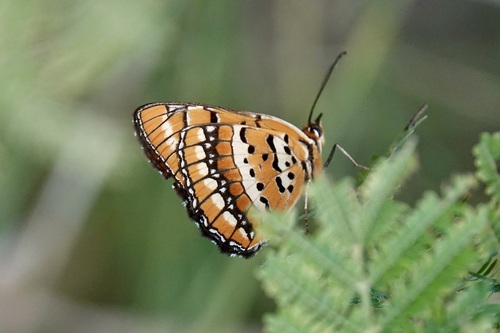
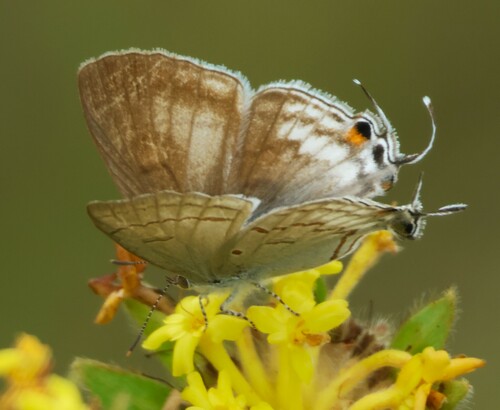
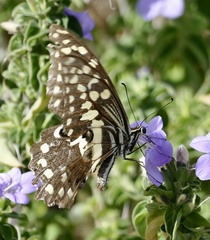
Citrus Swallowtail

Citrus Swallowtail

Papilio demodocus

Daily sighting probability ~10% · With luck
at Hluhluwe-Imfolozi Park

In 3 days ~30% in a week ~60%

15 Verified sightings at Hluhluwe-Imfolozi Park From 2019 to 2026
765 In all 19 parks
March Best month
☀️ Diurnal When it's spotted

About the Citrus Swallowtail

Papilio demodocus, the citrus swallowtail or Christmas butterfly, is a swallowtail butterfly which commonly occurs over the entirety of sub-Saharan Africa, including Madagascar, besides the southern Arabian Peninsula. The caterpillars feed on various native plants of especially the family Rutaceae, but have also taken to the leaves of cultivated citrus trees.

Citrus swallowtails pass through approximately three generations per year. Female butterflies lay their eggs singly on citrus leaves. After about six days, the egg hatches into an immature larva. The immature larvae are black, yellow, and white with spikes. Their coloration provides effective camouflage, as they resemble bird droppings. They grow to a length of 10 or 15 mm before changing into mature larvae.

Mature larvae are green with white or pink markings and eyespots. They grow to a maximum length of about 45 mm. Mature caterpillars lack the camouflage of their immature state. Instead, when threatened by a bird or other predator, they produce a forked, orange-coloured organ known as an osmeterium. The organ emits a strong smell which acts as a discouragement... Wikipedia →

Global Distribution

Parks Where Found

# Park Country Daily sighting probability
1 Ankarafantsika National Park 🇲🇬 Madagascar
~40%
2 Akagera National Park 🇷🇼 Rwanda
~40%
3 Lake Mburo National Park 🇺🇬 Uganda
~40%
4 uMkhuze Game Reserve 🇿🇦 South Africa
~30%
5 iSimangaliso Wetland Park 🇿🇦 South Africa
~20%
6 Nairobi National Park 🇰🇪 Kenya
~20%
7 Arusha National Park 🇹🇿 Tanzania
~20%
8 Addo Elephant National Park 🇿🇦 South Africa
~20%
9 Table Mountain National Park 🇿🇦 South Africa
~20%
10 Tarangire National Park 🇹🇿 Tanzania
~20%
11 Pilanesberg National Park 🇿🇦 South Africa
~20%
12 Odzala-Kokoua National Park 🇨🇬 Republic of the Congo
~20%
13 Murchison Falls National Park 🇺🇬 Uganda
~10%
14 Hluhluwe-Imfolozi Park 🇿🇦 South Africa
~10%
15 Kruger National Park 🇿🇦 South Africa
~10%
16 West Coast National Park 🇿🇦 South Africa
~10%
17 Garden Route National Park 🇿🇦 South Africa
~10%
18 Masai Mara National Reserve 🇰🇪 Kenya
~10%
19 Chobe National Park 🇧🇼 Botswana
~10%

Cities Where Found

# City Country Daily sighting probability
1 Accra 🇬🇭 Ghana
~50%
2 Dar es-Salaam 🇹🇿 Tanzania
~40%
3 Cotonou 🇧🇯 Benin
~40%
4 Abidjan 🇨🇮 Côte d'Ivoire
~40%
5 Luanda 🇦🇴 Angola
~40%
6 Lusaka 🇿🇲 Zambia
~30%
7 Kigali 🇷🇼 Rwanda
~30%
8 Monrovia 🇱🇷 Liberia
~30%
9 Kampala 🇺🇬 Uganda
~30%
10 Maputo 🇲🇿 Mozambique
~30%

Before you go

What are the chances of seeing a Citrus Swallowtail in Hluhluwe-Imfolozi Park?

With luck

About 10% of wildlife watchers report a Citrus Swallowtail sighting in Hluhluwe-Imfolozi Park on a given day, based on 15 verified sightings from GBIF citizen-science data from 2019 to 2026. It is the 13th most-seen of the 44 insects we can rate there. Over three days the chance rises to about 30%, and over a week to about 60%, if each day is a fresh chance.

When is the best time to see a Citrus Swallowtail in Hluhluwe-Imfolozi Park?

February–April and September–October

In those months about 20% of wildlife watchers report a Citrus Swallowtail in Hluhluwe-Imfolozi Park on a given day, against under 5% in June–August and November–January, the lowest months.

What time of day is best to see a Citrus Swallowtail?

Between 9 am and noon

Across all the parks we cover, that three-hour window holds the most Citrus Swallowtail sightings with a recorded time, and about 9 in 10 of them come between 6 am and 6 pm: it is a daytime animal.

Which relatives of the Citrus Swallowtail live in Hluhluwe-Imfolozi Park?

Same order: Lepidoptera

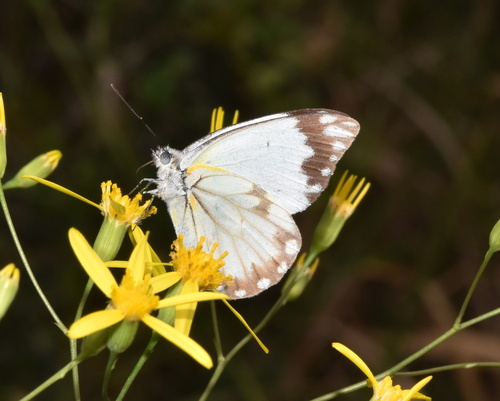
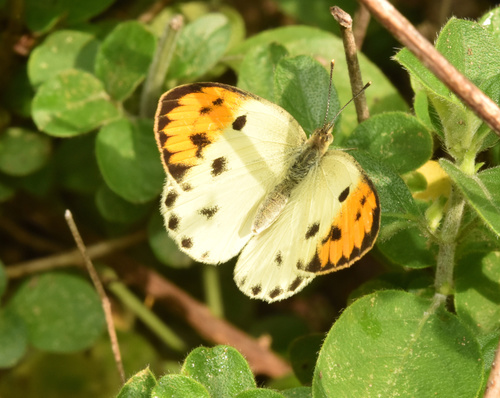
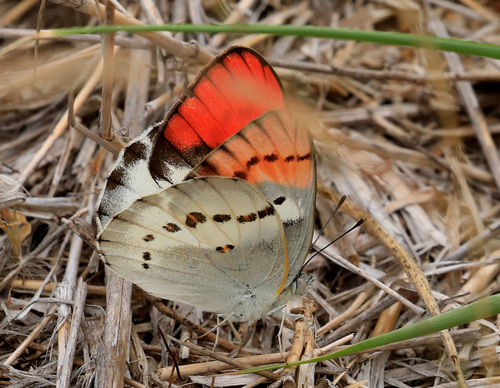
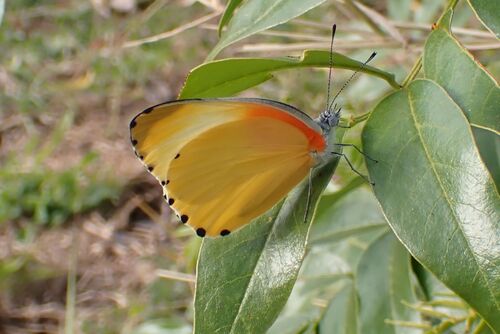
The closest relatives of the Citrus Swallowtail that you can see in Hluhluwe-Imfolozi Park (order Lepidoptera, Butterflies and Moths) are African Caper (about 30%), Sulphur Orange Tip (about 20%) and Scarlet Tip (about 20%), with each one's daily chance of a sighting.

Where does the Citrus Swallowtail sighting chance come from?

GBIF citizen-science records

It is estimated from how often the Citrus Swallowtail is recorded against all the insects logged in Hluhluwe-Imfolozi Park (15 verified sightings from 2019 to 2026), calibrated against known sighting rates. Figures are rounded to the nearest 10% because citizen-science data supports honest approximations, not decimals, and months with records from fewer than five people show "—". How it works.

← Back to Hluhluwe-Imfolozi Park