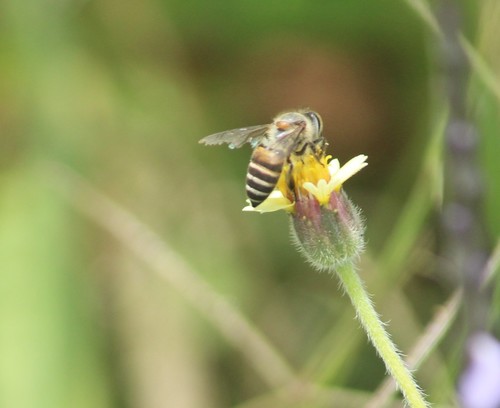
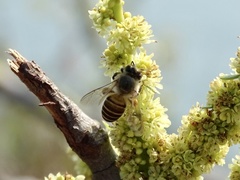
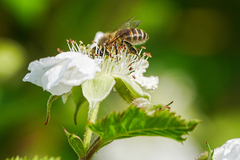
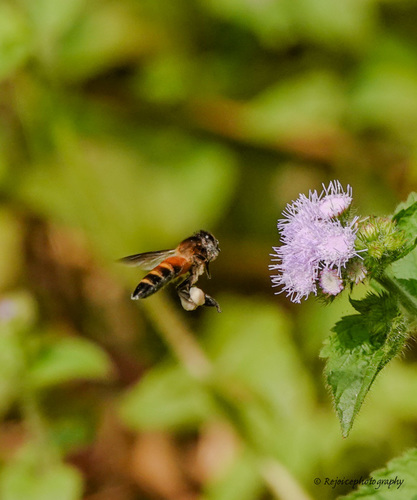
About the Asian Honey Bee
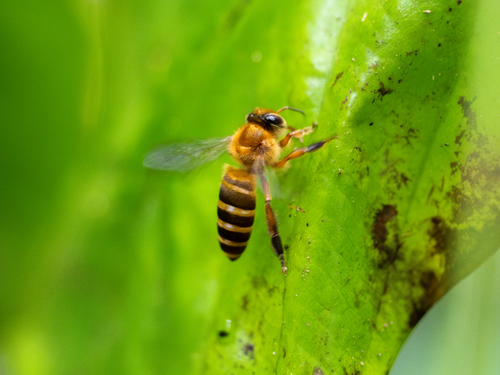
Apis cerana, the eastern honey bee, Asiatic honey bee or Asian honey bee, is a species of honey bee native to South, Southeast and East Asia. This species is the sister species of Apis koschevnikovi and both are in the same subgenus as the western (European) honey bee, Apis mellifera. A. cerana is known to live sympatrically along with Apis koschevnikovi within the same geographic location. Apis cerana colonies are known for building nests consisting of multiple combs in cavities containing a small entrance, presumably for defense against invasion by individuals of another nest. The diet of this honey bee species consists mostly of pollen and nectar, or honey. Moreover, Apis cerana is known for its highly social behavior, reflective of its classification as a type of honey bee.
The terms Apis cerana indica and Apis Indica or Indian honey bee, is a historic term, with all Asian hive bees now referred to as Apis cerana. Danish zoologist Johan Christian Fabricius described Apis cerana, also known as the eastern or Asian honey bee, in 1793. The genus name Apis is Latin for "bee". The eastern honey bee is of the Apidae family, one of the most diverse families... Wikipedia →