About the Southern Tamandua
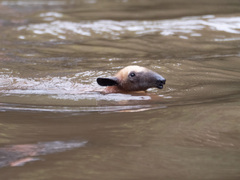
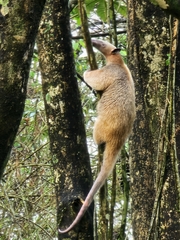
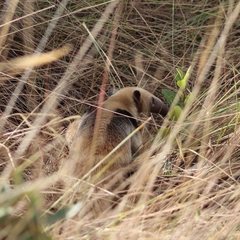
The southern tamandua (Tamandua tetradactyla), also called the collared anteater or lesser anteater, is a species of anteater from South America and the island of Trinidad in the Caribbean. It is a solitary animal found in many habitats, from mature to highly disturbed secondary forests and arid savannas. It feeds on ants, termites, and bees. Its very strong foreclaws can be used to break insect nests and to defend itself.
The southern tamandua is found in Trinidad and throughout South America from Venezuela to northern Argentina, southern Brazil, and Uruguay at elevations up to 1,600 m (5,200 ft). It inhabits both wet and dry forests, including tropical rainforest, savanna, and thorn scrub. It seems to be most common in habitats near streams and rivers, especially those thick with vines and epiphytes (presumably because its prey is common in these areas).
The oldest fossil tamanduas date from the Pleistocene of South America, although genetic evidence suggests they may have diverged from their closest relative, the giant anteater, in the late Miocene, 12.9 million years ago.
The four recognised subspecies of Tamandua tetradactyla are... Wikipedia →