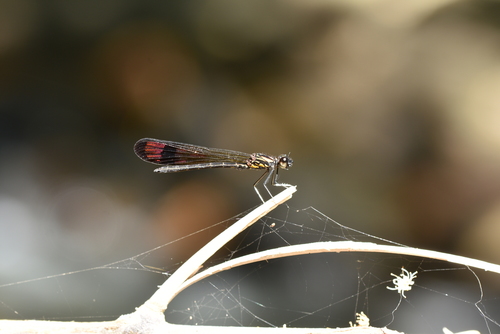
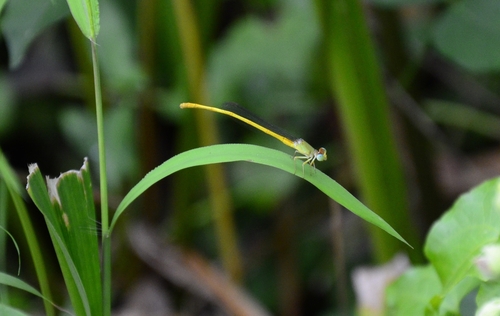
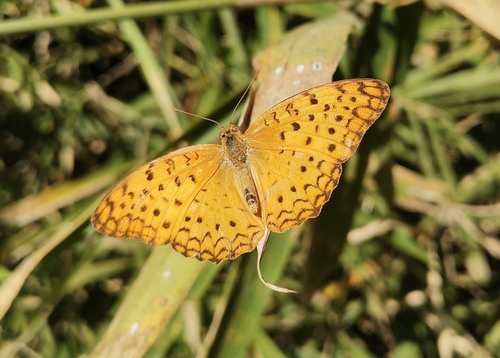
Crimson-Tailed Marsh Hawk

Crimson-Tailed Marsh Hawk

Orthetrum pruinosum

Daily sighting probability ~30% · Possible
at Mudumalai National Park

In 3 days ~70% in a week ~90%

10 Verified sightings at Mudumalai National Park From 2019 to 2026
158 In all 12 parks
September Best month
☀️ Diurnal When it's spotted

About the Crimson-Tailed Marsh Hawk

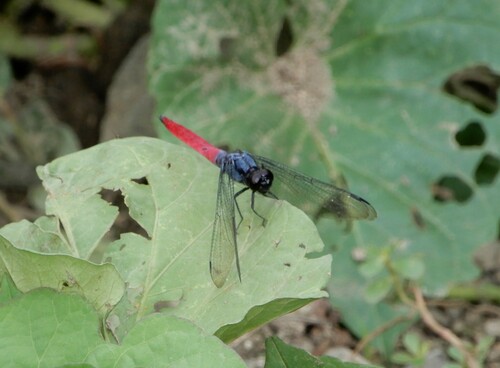
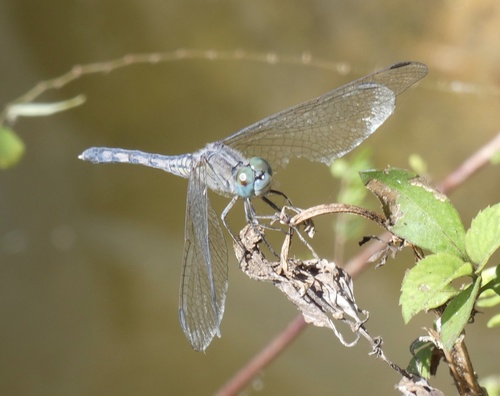
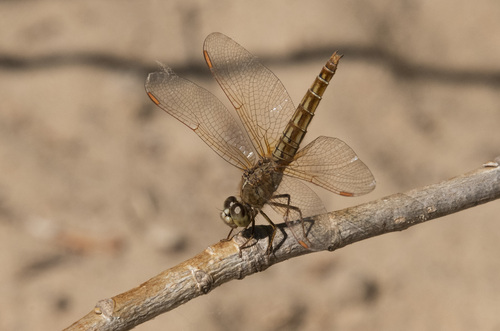
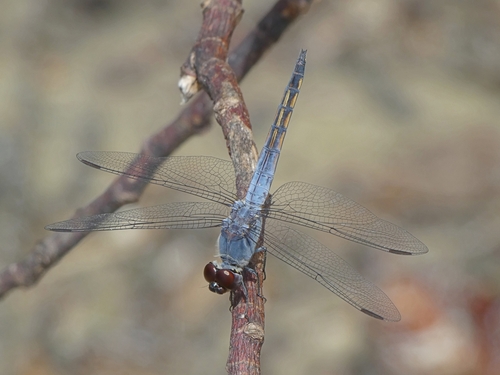
Orthetrum pruinosum, the crimson-tailed marsh hawk, is a species of dragonfly in the family Libellulidae. It is a widespread species occurring from west India to Japan and south to Java and the Sunda Islands. A molecular phylogenetics study of Orthetrum dragonflies revealed that Orthetrum pruinosum is a cryptic species.

Young males have red abdomen as in Orthetrum chrysis. Females of both species look similar. It breeds in ponds, lakes and sluggish streams. List of odonates of Sri Lanka List of odonates of India List of odonata of Kerala Wikipedia →

Global Distribution

Parks Where Found

# Park Country Daily sighting probability
1 Mudumalai National Park 🇮🇳 India
~30%
2 Periyar National Park 🇮🇳 India
~30%
3 Cuc Phuong National Park 🇻🇳 Vietnam
~30%
4 Namdapha National Park 🇮🇳 India
~30%
5 Tangkoko Nature Reserve 🇮🇩 Indonesia
~20%
6 Doi Inthanon National Park 🇹🇭 Thailand
~20%
7 Khao Yai National Park 🇹🇭 Thailand
~20%
8 Kanha National Park 🇮🇳 India
~20%
9 Chitwan National Park 🇳🇵 Nepal
~10%
10 Sinharaja Forest Reserve 🇱🇰 Sri Lanka
~10%
11 Kaeng Krachan National Park 🇹🇭 Thailand
~10%
12 Taroko National Park 🇹🇼 Taiwan
~10%

Cities Where Found

# City Country Daily sighting probability
1 Taichung 🇹🇼 Taiwan
~30%
2 Jabalpur 🇮🇳 India
~20%
3 Taipei 🇹🇼 Taiwan
~20%
4 Colombo [Sri Jayawardenepura Kotte] 🇱🇰 Sri Lanka
~20%
5 Thiruvananthapuram 🇮🇳 India
~20%
6 New Delhi 🇮🇳 India
~20%
7 Dehradun 🇮🇳 India
~20%
8 Hong Kong 🇨🇳 China
~20%
9 Tuen Mun 🇨🇳 China
~10%
10 Kathmandu 🇳🇵 Nepal
~10%

Before you go

What are the chances of seeing a Crimson-Tailed Marsh Hawk in Mudumalai National Park?

Possible

About 30% of wildlife watchers report a Crimson-Tailed Marsh Hawk sighting in Mudumalai National Park on a given day, based on 10 verified sightings from GBIF citizen-science data from 2019 to 2026. It is the 2nd most-seen of the 13 insects we can rate there. Over three days the chance rises to about 70%, and over a week to about 90%, if each day is a fresh chance.

When is the best time to see a Crimson-Tailed Marsh Hawk in Mudumalai National Park?

September

In that month about 60% of wildlife watchers report a Crimson-Tailed Marsh Hawk in Mudumalai National Park on a given day, against under 5% in April–May and October, the lowest months.

What time of day is best to see a Crimson-Tailed Marsh Hawk?

Between noon and 3 pm

Across all the parks we cover, that three-hour window holds the most Crimson-Tailed Marsh Hawk sightings with a recorded time, and about 9 in 10 of them come between 6 am and 6 pm: it is a daytime animal.

Is Mudumalai National Park the best place to see a Crimson-Tailed Marsh Hawk?

Yes

Of the 12 parks where we can rate Crimson-Tailed Marsh Hawk sightings, Mudumalai National Park has the highest daily chance: about 30%. Next come Periyar National Park (India, about 30%) and Cuc Phuong National Park (Vietnam, about 30%).

Which relatives of the Crimson-Tailed Marsh Hawk live in Mudumalai National Park?

Same family: Libellulidae

The closest relatives of the Crimson-Tailed Marsh Hawk that you can see in Mudumalai National Park (family Libellulidae, Skimmers) are Chalky Percher (about 30%), Ditch Jewel (about 30%) and Swampwatcher (about 20%), with each one's daily chance of a sighting.

Where does the Crimson-Tailed Marsh Hawk sighting chance come from?

GBIF citizen-science records

It is estimated from how often the Crimson-Tailed Marsh Hawk is recorded against all the insects logged in Mudumalai National Park (10 verified sightings from 2019 to 2026), calibrated against known sighting rates. Figures are rounded to the nearest 10% because citizen-science data supports honest approximations, not decimals, and months with records from fewer than five people show "—". How it works.

← Back to Mudumalai National Park