Blue-naped Mousebird

Blue-naped Mousebird

Urocolius macrourus

Silhouette: Ferran Sayol · PhyloPic

LCLeast ConcernNTVUENCR
Daily sighting probability ~10% · With luck
at Ngorongoro Conservation Area

In 3 days ~20% in a week ~40%

158 Verified sightings at Ngorongoro Conservation Area From 2019 to 2026
5,045 In all 23 parks
April Best month
☀️ Diurnal When it's spotted

About the Blue-naped Mousebird

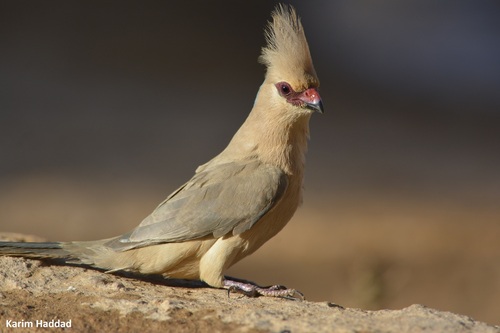
The blue-naped mousebird (Urocolius macrourus), also formerly called the blue-naped coly (Colius macrourus) is a species of bird belonging to the family Coliidae within the order Coliiformes. They are the sister group to the clade Eucavitaves, which contains the families Leptosomiformes (the cuckoo roller), Trogoniformes (trogons), Bucerotiformes (hornbills and hoopoes), Piciformes (woodpeckers, toucans, and barbets) and Coraciformes (kingfishers, bee-eaters, rollers, motmots, and todies).

The species is found in the wild in the drier regions of West Africa to East Africa, as well as Sahel. It is one of the remaining six species of mousebirds. The term "mousebird" comes from its habit of running along branches in a way that resembles the scurrying of a mouse.

There are a total of six recognized subspecies: Urocolius macrourus macrourus (Distribution: Senegambia to east Ethiopia) Urocolius macrourus syntactus (Distribution: Sahel from Mali, southern Niger, and northern Nigeria east to Sudan, Eritrea, and northern Ethiopia)

Urocolius macrourus laeneni (Distribution: Aïr Massif, in NC Niger.) Urocolius macrourus pulcher (Distribution: extreme South East South Sudan, Eastern... Wikipedia →
Sounds

Call1:04

Senegal · 2019

© Bram Piot · XC455704 · CC BY-NC-SA 4.0

Song1:20

Mauritania · 2024

© Julien Birard · XC957108 · CC BY-NC-SA 4.0

Recording0:52

Nigeria · 2021

© Sun Madakan · XC689889 · CC BY-NC-SA 4.0

Global Distribution

Parks Where Found

# Park Country Daily sighting probability
1 Lake Mburo National Park 🇺🇬 Uganda
~50%
2 Akagera National Park 🇷🇼 Rwanda
~50%
3 Tsavo West National Park 🇰🇪 Kenya
~40%
4 Awash National Park 🇪🇹 Ethiopia
~40%
5 Samburu National Reserve 🇰🇪 Kenya
~40%
6 Tsavo East National Park 🇰🇪 Kenya
~40%
7 Queen Elizabeth National Park 🇺🇬 Uganda
~40%
8 Lake Manyara National Park 🇹🇿 Tanzania
~30%
9 Meru National Park 🇰🇪 Kenya
~30%
10 Nairobi National Park 🇰🇪 Kenya
~30%
11 Mkomazi National Park 🇹🇿 Tanzania
~30%
12 Kidepo Valley National Park 🇺🇬 Uganda
~30%
13 Ruaha National Park 🇹🇿 Tanzania
~30%
14 Murchison Falls National Park 🇺🇬 Uganda
~30%
15 Serengeti National Park 🇹🇿 Tanzania
~10%
16 Virunga National Park 🇨🇩 Democratic Republic of the Congo
~10%
17 Amboseli National Park 🇰🇪 Kenya
~10%
18 Tarangire National Park 🇹🇿 Tanzania
~10%
19 Ngorongoro Conservation Area 🇹🇿 Tanzania
~10%
20 Masai Mara National Reserve 🇰🇪 Kenya
~10%
21 Arusha National Park 🇹🇿 Tanzania
<5%
22 Lake Nakuru National Park 🇰🇪 Kenya
<5%
23 Kibale National Park 🇺🇬 Uganda
<5%

Cities Where Found

# City Country Daily sighting probability
1 Dakar 🇸🇳 Senegal
~10%
2 N'Djamena 🇹🇩 Chad
~10%
3 Maiduguri 🇳🇬 Nigeria
~10%
4 Dar es-Salaam 🇹🇿 Tanzania
<5%
5 Nairobi 🇰🇪 Kenya
<5%
6 Kampala 🇺🇬 Uganda
<5%

Zoos & Centres Where Found

# Zoo / Centre Country
1 San Diego Zoo 🇺🇸 United States In captivity
2 Basel Zoo 🇨🇭 Switzerland In captivity
3 North Carolina Zoo 🇺🇸 United States In captivity
4 Memphis Zoo 🇺🇸 United States In captivity
5 Tierwelt Herberstein 🇦🇹 Austria In captivity
6 Schönbrunn Zoo 🇦🇹 Austria In captivity

Before you go

What are the chances of seeing a Blue-naped Mousebird in Ngorongoro Conservation Area?

With luck

About 10% of wildlife watchers report a Blue-naped Mousebird sighting in Ngorongoro Conservation Area on a given day, based on 158 verified sightings from GBIF citizen-science data from 2019 to 2026. It is the 227th most-seen of the 519 birds we can rate there. Over three days the chance rises to about 20%, and over a week to about 40%, if each day is a fresh chance.

When is the best time to see a Blue-naped Mousebird in Ngorongoro Conservation Area?

April and May

In those months about 20% of wildlife watchers report a Blue-naped Mousebird in Ngorongoro Conservation Area on a given day, against under 5% in June–August and October–January, the lowest months. Those are among Ngorongoro Conservation Area's wettest months, with about 120 mm of rain a month against almost none in July.

What time of day is best to see a Blue-naped Mousebird?

Between 3 and 6 pm

Across all the parks we cover, that three-hour window holds the most Blue-naped Mousebird sightings with a recorded time, and about 9 in 10 of them come between 6 am and 6 pm: it is a daytime animal.

Where does the Blue-naped Mousebird sighting chance come from?

GBIF citizen-science records

It is estimated from how often the Blue-naped Mousebird is recorded against all the birds logged in Ngorongoro Conservation Area (158 verified sightings from 2019 to 2026), calibrated against known sighting rates. Figures are rounded to the nearest 10% because citizen-science data supports honest approximations, not decimals, and months with records from fewer than five people show "—". How it works.

← Back to Ngorongoro Conservation Area
