


Completed


White Rhinoceros
Ceratotherium simum
Silhouette: Oscar Sanisidro · PhyloPic
- KingdomAnimalia (Animals)
- PhylumChordata (Chordates)
- ClassMammalia (Mammals)
- OrderPerissodactyla (Odd-toed Ungulates)
- FamilyRhinocerotidae (Rhinoceroses)
- GenusCeratotherium (Wide-lipped Rhinoceroses)
- SpeciesCeratotherium simum (White Rhinoceros)
In 3 days ~30% in a week ~60%
13 Verified sightings at Ngorongoro Conservation Area From 2019 to 2026
2,113 In all 15 parks
July Best month
☀️ Diurnal When it's spotted
About the White Rhinoceros
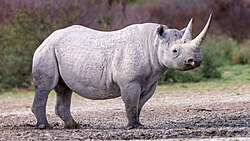
The white rhinoceros, also known as the white rhino or square-lipped rhinoceros (Ceratotherium simum), is the largest extant species of rhinoceros and the most social of all rhino species, characterized by its wide mouth adapted for grazing. The species includes two subspecies with dramatically different conservation outlooks: the southern white rhinoceros, with an estimated 17,464 individuals in the wild as of the end of 2023, and the northern white rhinoceros. The northern subspecies is critically endangered and on the brink of extinction; its last known male, Sudan, died in March 2018, leaving behind only two females. Both subspecies have faced significant threats, primarily from poaching for their horns and habitat loss, which contribute to the species' overall conservation status of Near Threatened. White rhinoceros can run up to 40 mph (64 km/h) for very short bursts. They can maintain speeds of around 30–31 mph (48–50 km/h) for a good amount of time, and they have good stamina.
The origin of the name "white rhinoceros" is unknown, but one popular, though discredited, theory for the origin of the name "white rhinoceros" is a mistranslation of the Dutch word "wijd... Wikipedia →
Sounds
Call0:16
South Africa · 2023
© Marc Anderson · XC979555 · CC BY-NC-ND 4.0
Recent sightings of White Rhinoceros in Ngorongoro Conservation Area
LIVEiNaturalistGlobal Distribution
Parks Where Found
| # | Park | Country | Daily sighting probability |
|---|---|---|---|
| 1 | Lake Nakuru National Park | 🇰🇪 Kenya | |
| 2 | Akagera National Park | 🇷🇼 Rwanda | |
| 3 | Nairobi National Park | 🇰🇪 Kenya | |
| 4 | Meru National Park | 🇰🇪 Kenya | |
| 5 | Pilanesberg National Park | 🇿🇦 South Africa | |
| 6 | Hluhluwe-Imfolozi Park | 🇿🇦 South Africa | |
| 7 | Waterberg Plateau Park | 🇳🇦 Namibia | |
| 8 | uMkhuze Game Reserve | 🇿🇦 South Africa | |
| 9 | Aberdare National Park | 🇰🇪 Kenya | |
| 10 | Kruger National Park | 🇿🇦 South Africa | |
| 11 | Etosha National Park | 🇳🇦 Namibia | |
| 12 | iSimangaliso Wetland Park | 🇿🇦 South Africa | |
| 13 | Ngorongoro Conservation Area | 🇹🇿 Tanzania | |
| 14 | Addo Elephant National Park | 🇿🇦 South Africa | |
| 15 | Masai Mara National Reserve | 🇰🇪 Kenya |
Zoos & Centres Where Found
Closest Relatives at Ngorongoro Conservation Area


Before you go
What are the chances of seeing a White Rhinoceros in Ngorongoro Conservation Area?
With luck
About 10% of wildlife watchers report a White Rhinoceros sighting in Ngorongoro Conservation Area on a given day, based on 13 verified sightings from GBIF citizen-science data from 2019 to 2026. It is the 31st most-seen of the 37 mammals we can rate there. Over three days the chance rises to about 30%, and over a week to about 60%, if each day is a fresh chance.
When is the best time to see a White Rhinoceros in Ngorongoro Conservation Area?
July
In that month about 30% of wildlife watchers report a White Rhinoceros in Ngorongoro Conservation Area on a given day, against under 5% in January–May and October–November, the lowest months. That is one of Ngorongoro Conservation Area's driest months, with almost no rain against 190 mm in April.
What time of day is best to see a White Rhinoceros?
Between 3 and 6 pm
Across all the parks we cover, that three-hour window holds the most White Rhinoceros sightings with a recorded time, and about 9 in 10 of them come between 6 am and 6 pm: it is a daytime animal.
Is Ngorongoro Conservation Area the best place to see a White Rhinoceros?
13th of 15
Of the 15 parks where we can rate White Rhinoceros sightings, Ngorongoro Conservation Area ranks 13th at about 10%. The best odds are in Lake Nakuru National Park (Kenya, about 70%), Akagera National Park (Rwanda, about 60%) and Nairobi National Park (Kenya, about 60%). All parks ranked.
Where does the White Rhinoceros sighting chance come from?
GBIF citizen-science records
It is estimated from how often the White Rhinoceros is recorded against all the mammals logged in Ngorongoro Conservation Area (13 verified sightings from 2019 to 2026), calibrated against known sighting rates. Figures are rounded to the nearest 10% because citizen-science data supports honest approximations, not decimals, and months with records from fewer than five people show "—". How it works.
