Lace Monitor

Lace Monitor

Varanus varius

Silhouette: Steven Traver · PhyloPic

LCLeast ConcernNTVUENCR Endemic
Daily sighting probability ~50% · Likely
at Noosa National Park

In 3 days ~90% in a week >90%

89 Verified sightings at Noosa National Park From 2019 to 2026
659 In all 8 parks
November Best month
☀️ Diurnal When it's spotted

About the Lace Monitor

The lace monitor (Varanus varius), also known as the tree goanna, is a member of the monitor lizard family native to eastern Australia. A large lizard, it can reach 2 metres (6.6 ft) in total length and 14 kilograms (31 lb) in weight. The lace monitor is considered to be a least-concern species according to the International Union for Conservation of Nature.

John White, the surgeon-general of New South Wales, described this species as the variegated lizard (Lacerta varia) in 1790. George Shaw reported that several specimens were taken back to England. French naturalist François Marie Daudin gave it the name Tupinambis variegatus in 1802, and noted two forms. German naturalist Blasius Merrem established the genus Varanus in 1820, with V. varius as the first mentioned member set as its type species by John Edward Gray in 1827.

French zoologists André Marie Constant Duméril and Gabriel Bibron described two specimens in 1836, one in their possession and one from the collection of English zoologist Thomas Bell as Varanus bellii "Le Varan de Bell". This turned out to be a banded colour phase of the lace monitor that coexists with normal-coloured individuals, and is either... Wikipedia →

Sounds

Recording0:20

Australia · 2025

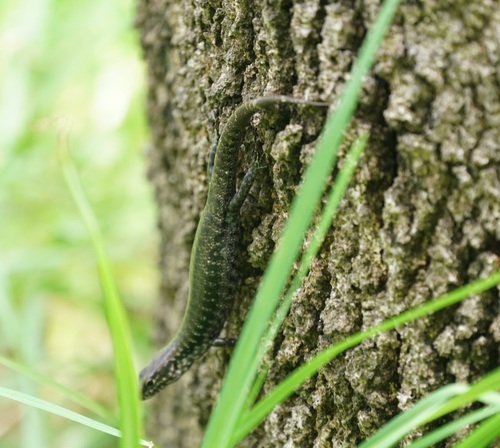
© Tony Gorman · iNaturalist · CC BY-NC 4.0

Global Distribution

Parks Where Found

# Park Country Daily sighting probability
1 Noosa National Park 🇦🇺 Australia
~50%
2 Royal National Park 🇦🇺 Australia
~50%
3 Daintree National Park 🇦🇺 Australia
~50%
4 Hattah-Kulkyne National Park 🇦🇺 Australia
~40%
5 Lamington National Park 🇦🇺 Australia
~30%
6 Springbrook National Park 🇦🇺 Australia
~30%
7 Blue Mountains National Park 🇦🇺 Australia
~30%
8 Grampians National Park 🇦🇺 Australia
~20%

Cities Where Found

# City Country Daily sighting probability
1 Brisbane 🇦🇺 Australia
~20%
2 Sydney 🇦🇺 Australia
~10%

Zoos & Centres Where Found

# Zoo / Centre Country
1 San Diego Zoo 🇺🇸 United States In captivity
2 ZooParc de Beauval 🇫🇷 France In captivity
3 Copenhagen Zoo 🇩🇰 Denmark In captivity
4 Cincinnati Zoo and Botanical Garden 🇺🇸 United States In captivity
5 Barcelona Zoo 🇪🇸 Spain In captivity
6 Australia Zoo 🇦🇺 Australia In captivity
7 Omaha’s Henry Doorly Zoo and Aquarium 🇺🇸 United States In captivity
8 Kyabram Fauna Park 🇦🇺 Australia In captivity
9 Audubon Zoo 🇺🇸 United States In captivity
10 Healesville Sanctuary 🇦🇺 Australia In captivity
11 Wrocław Zoological Garden 🇵🇱 Poland In captivity
12 Gatorland 🇺🇸 United States In captivity
13 Taronga Zoo 🇦🇺 Australia In captivity
14 Melbourne Zoo 🇦🇺 Australia In captivity
15 Lone Pine Koala Sanctuary 🇦🇺 Australia In captivity
16 Fresno Chaffee Zoo 🇺🇸 United States In captivity
17 Phillip Island Wildlife Park 🇦🇺 Australia In captivity
18 Auckland Zoo 🇳🇿 New Zealand In captivity
19 Faunia 🇪🇸 Spain In captivity
20 Aquarama Barcelona 🇪🇸 Spain In captivity
21 Eindhoven Zoo 🇳🇱 Netherlands In captivity
22 Hartley’s Crocodile Adventures 🇦🇺 Australia In captivity
23 Moonlit Sanctuary Wildlife Conservation Park 🇦🇺 Australia In captivity
24 Billabong Sanctuary 🇦🇺 Australia In captivity
25 Sydney Zoo 🇦🇺 Australia In captivity
26 Australian Reptile Park 🇦🇺 Australia In captivity
27 Symbio Wildlife Park 🇦🇺 Australia In captivity
28 Billabong Koala and Wildlife Park 🇦🇺 Australia In captivity
29 Featherdale Sydney Wildlife Park 🇦🇺 Australia In captivity
30 Koala Park Sanctuary 🇦🇺 Australia In captivity
31 St. Augustine Alligator Farm Zoological Park 🇺🇸 United States In captivity
32 Snakes Downunder Reptile Park & Zoo 🇦🇺 Australia In captivity
33 Africarium 🇵🇱 Poland In captivity
34 Alexandra Park Zoo 🇦🇺 Australia In captivity
35 Haus des Meeres 🇦🇹 Austria In captivity
36 Terrariet 🇩🇰 Denmark In captivity
37 Caversham Wildlife Park 🇦🇺 Australia In captivity
38 Reptielenzoo Iguana 🇳🇱 Netherlands In captivity
39 terrarium ogrodu zoologicznego we Wrocławiu 🇵🇱 Poland In captivity

Closest Relatives at Noosa National Park

No species of the same family or order lives in Noosa National Park, so these are its closest relatives here: other reptiles.

Before you go

What are the chances of seeing a Lace Monitor in Noosa National Park?

Likely

About 50% of wildlife watchers report a Lace Monitor sighting in Noosa National Park on a given day, based on 89 verified sightings from GBIF citizen-science data from 2019 to 2026. It is the most-seen of the 15 reptiles we can rate there. Over three days the chance rises to about 90%, and over a week to over 90%, if each day is a fresh chance.

When is the best time to see a Lace Monitor in Noosa National Park?

November and December

In those months about 80% of wildlife watchers report a Lace Monitor in Noosa National Park on a given day, against under 5% in June, the lowest month.

What time of day is best to see a Lace Monitor?

Between 11 am and 2 pm

Across all the parks we cover, that three-hour window holds the most Lace Monitor sightings with a recorded time, and about 9 in 10 of them come between 6 am and 6 pm: it is a daytime animal.

Is Noosa National Park the best place to see a Lace Monitor?

Yes

Of the 8 parks where we can rate Lace Monitor sightings, Noosa National Park has the highest daily chance: about 50%. Next come Royal National Park (Australia, about 50%) and Daintree National Park (Australia, about 50%). All parks ranked.

Where does the Lace Monitor sighting chance come from?

GBIF citizen-science records

It is estimated from how often the Lace Monitor is recorded against all the reptiles logged in Noosa National Park (89 verified sightings from 2019 to 2026), calibrated against known sighting rates. Figures are rounded to the nearest 10% because citizen-science data supports honest approximations, not decimals, and months with records from fewer than five people show "—". How it works.

← Back to Noosa National Park