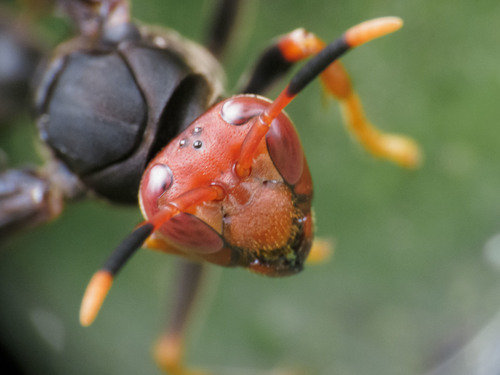
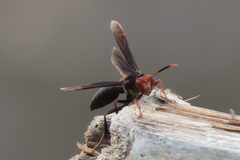
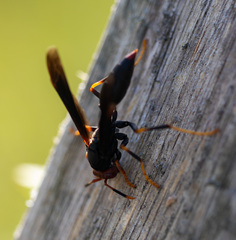
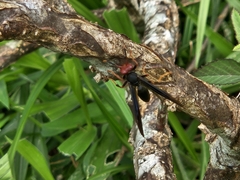
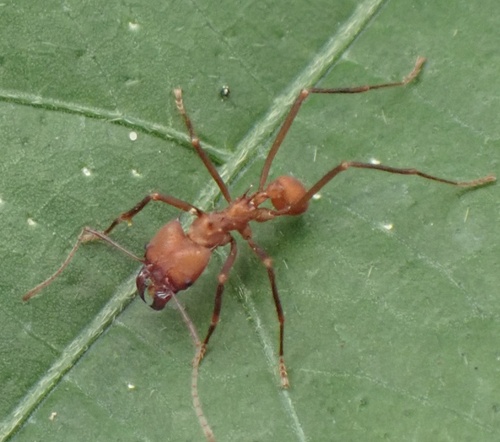
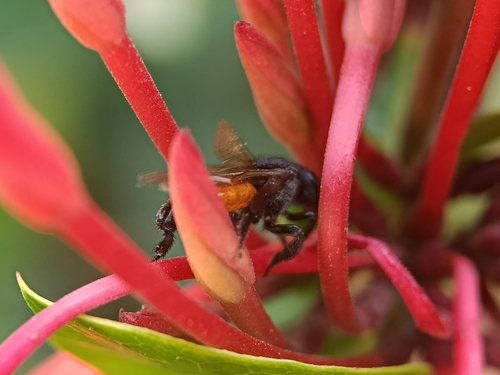
Red-Headed Paper Wasp

Red-Headed Paper Wasp

Polistes erythrocephalus

Daily sighting probability ~20% · Possible
at Piedras Blancas National Park

In 3 days ~50% in a week ~80%

14 Verified sightings at Piedras Blancas National Park From 2019 to 2026
126 In all 11 parks
August Best month
☀️ Diurnal When it's spotted

About the Red-Headed Paper Wasp

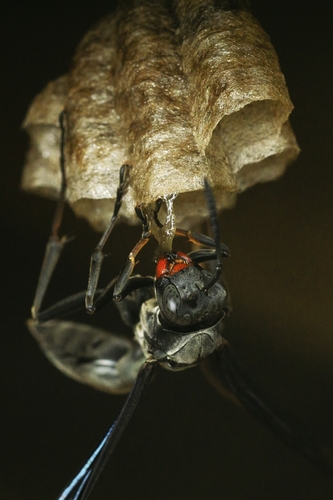
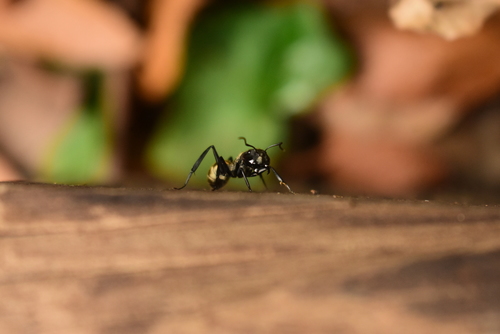
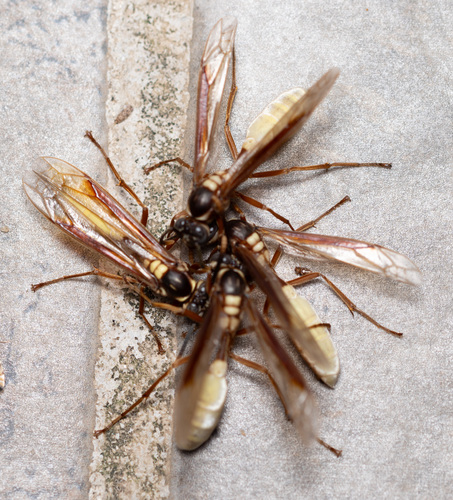
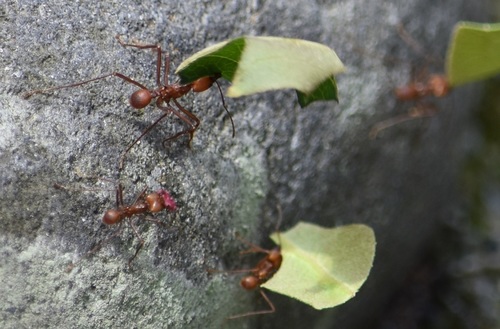
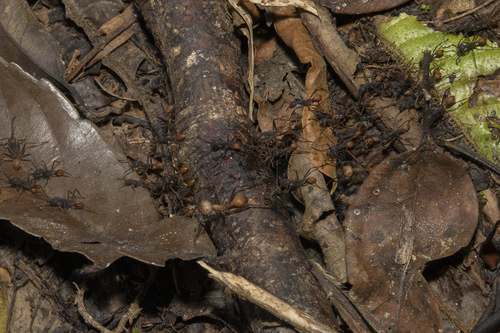
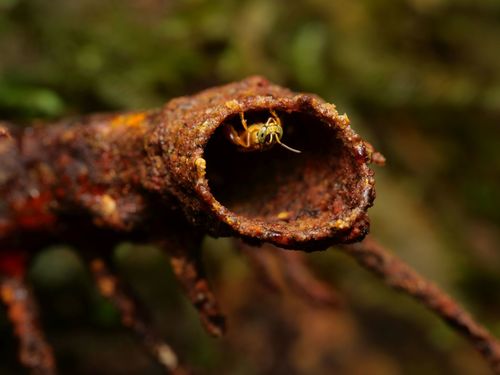
Polistes erythrocephalus is a species of paper wasp in the subfamily Polistinae of family Vespidae found in Central and South America. P. erythrocephalus is a eusocial wasp, meaning that it possesses both reproductive and non-reproductive castes. The cooperation between the two castes to raise young demonstrates the altruistic nature of these wasps. P. erythrocephalus exhibits a four-stage colony cycle, as do many other Polistes wasps. This species generally feeds on larvae, occasionally their own, and is preyed upon by species such as army ants.

Polistes scholars such as K. Yoshikawa, Joseph Charles Bequaert, and Mary Jane West-Eberhard, originally considered Polistes erythrocephalus to be a subspecies of Polistes canadensis. For this reason, much of the research done on P. erythrocephalus has been classified under P. canadensis. Additionally, it was left out of Yoshikawa's list of Polistes species around the world in 1963. More recently however P. erythrocephalus has been recognized as a separate species by Owain Richards though it is sometimes still referred to as Polistes canadensis erythrocephalus. Its closest relatives are Polistes canadensis, Polistes... Wikipedia →

Global Distribution

Parks Where Found

# Park Country Daily sighting probability
1 Ostional Wildlife Refuge 🇨🇷 Costa Rica
~30%
2 Piedras Blancas National Park 🇨🇷 Costa Rica
~20%
3 Gandoca-Manzanillo Wildlife Refuge 🇨🇷 Costa Rica
~20%
4 Bastimentos Island National Marine Park 🇵🇦 Panama
~20%
5 Marino Ballena National Park 🇨🇷 Costa Rica
~20%
6 Cabo Blanco Absolute Nature Reserve 🇨🇷 Costa Rica
~10%
7 Corcovado National Park 🇨🇷 Costa Rica
~10%
8 Cahuita National Park 🇨🇷 Costa Rica
~10%
9 Carara National Park 🇨🇷 Costa Rica
~10%
10 La Amistad International Park (Panama) 🇵🇦 Panama
~10%
11 Braulio Carrillo National Park 🇨🇷 Costa Rica
~10%

Cities Where Found

# City Country Daily sighting probability
1 Medellín 🇨🇴 Colombia
~10%

Before you go

What are the chances of seeing a Red-Headed Paper Wasp in Piedras Blancas National Park?

Possible

About 20% of wildlife watchers report a Red-Headed Paper Wasp sighting in Piedras Blancas National Park on a given day, based on 14 verified sightings from GBIF citizen-science data from 2019 to 2026. It is the 30th most-seen of the 117 insects we can rate there. Over three days the chance rises to about 50%, and over a week to about 80%, if each day is a fresh chance.

When is the best time to see a Red-Headed Paper Wasp in Piedras Blancas National Park?

August

In that month about 40% of wildlife watchers report a Red-Headed Paper Wasp in Piedras Blancas National Park on a given day, against under 5% in February, April–June and September–December, the lowest months. That is one of Piedras Blancas National Park's wettest months, with about 440 mm of rain against 55 mm in February.

What time of day is best to see a Red-Headed Paper Wasp?

Between 10 am and 1 pm

Across all the parks we cover, that three-hour window holds the most Red-Headed Paper Wasp sightings with a recorded time, and about 9 in 10 of them come between 6 am and 6 pm: it is a daytime animal.

Is Piedras Blancas National Park the best place to see a Red-Headed Paper Wasp?

2nd of 11

Of the 11 parks where we can rate Red-Headed Paper Wasp sightings, Piedras Blancas National Park ranks 2nd at about 20%. The best odds are in Ostional Wildlife Refuge (Costa Rica, about 30%).

Where does the Red-Headed Paper Wasp sighting chance come from?

GBIF citizen-science records

It is estimated from how often the Red-Headed Paper Wasp is recorded against all the insects logged in Piedras Blancas National Park (14 verified sightings from 2019 to 2026), calibrated against known sighting rates. Figures are rounded to the nearest 10% because citizen-science data supports honest approximations, not decimals, and months with records from fewer than five people show "—". How it works.

← Back to Piedras Blancas National Park