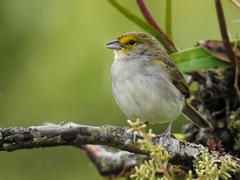
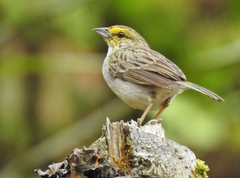
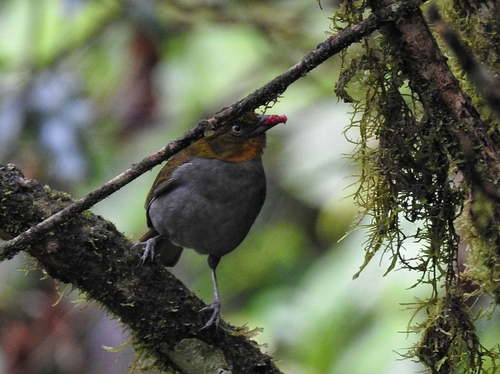
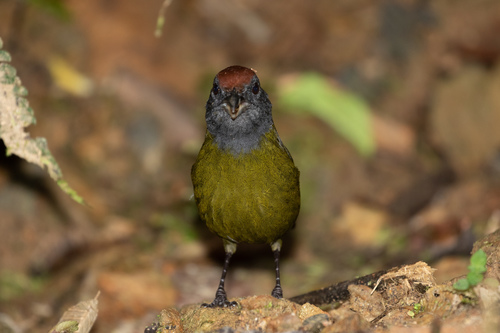
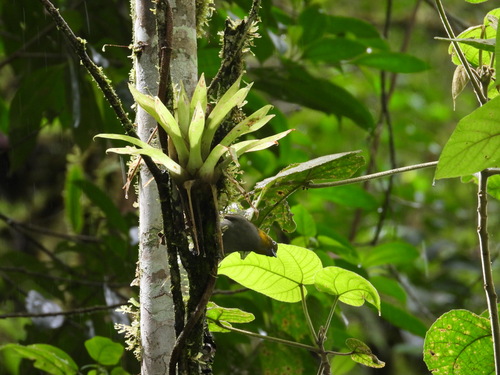
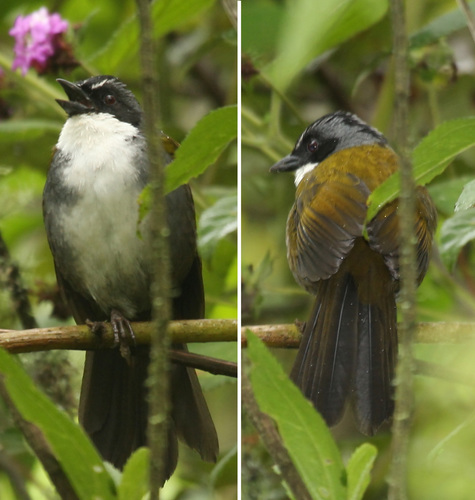
Yellow-browed Sparrow

Yellow-browed Sparrow

Ammodramus aurifrons

Silhouette: Andy Wilson · PhyloPic

LCLeast ConcernNTVUENCR
Daily sighting probability <5% · Rare
at Podocarpus National Park

In 3 days ~10% in a week ~20%

50 Verified sightings at Podocarpus National Park From 2019 to 2026
2,042 In all 8 parks
May Best month
☀️ Diurnal When it's spotted

About the Yellow-browed Sparrow

The yellow-browed sparrow (Ammodramus aurifrons) is a species of bird in the family Passerellidae. First described by Johann Baptist von Spix in 1825, this American sparrow is found across much of the Amazon basin in South America. Its natural habitats are subtropical or tropical moist shrubland, pastureland, and heavily degraded former forest.

When Johann Baptist von Spix first described the yellow-browed sparrow in 1825, he put it in the now-defunct genus Tanagra, believing it to be a tanager. The classification error was soon recognized, and the species was moved first to the genus Ammodramus, then to Myospiza—a genus Robert Ridgway created in 1898 for this and the closely related grassland sparrow. Most taxonomists now subsume Myospiza into Ammodramus. DNA analysis indicates that the yellow-browed sparrow is a sister species to the grassland sparrow, and that these two species make a sister group with the grasshopper sparrow; these three are genetically distinct from the other Ammodramus sparrows. The yellow-browed sparrow has four subspecies, which differ primarily in the extent of yellow on the face and the amount of streaking on the upperparts and crown:

A. a... Wikipedia →

Sounds

Call0:43

Brazil · 2026

© JAYRSON ARAUJO DE OLIVEIRA · XC1183718 · CC BY-NC-SA 4.0

Song0:46

Ecuador · 2023

© Manuel Sánchez-Nivicela · XC1172272 · CC BY-NC-ND 4.0

Begging call0:14

Ecuador · 2011

© Andrew Spencer · XC72586 · CC BY-NC-ND 2.5

Global Distribution

Parks Where Found

# Park Country Daily sighting probability
1 Manu National Park 🇵🇪 Peru
~20%
2 Tambopata National Reserve 🇵🇪 Peru
~20%
3 Anavilhanas National Park 🇧🇷 Brazil
~10%
4 Amacayacu National Natural Park 🇨🇴 Colombia
~10%
5 Yasuní National Park 🇪🇨 Ecuador
~10%
6 Podocarpus National Park 🇪🇨 Ecuador
<5%
7 Sierra de la Macarena National Park 🇨🇴 Colombia
<5%
8 Cuyabeno Wildlife Reserve 🇪🇨 Ecuador
<5%

Cities Where Found

# City Country Daily sighting probability
1 Manaus 🇧🇷 Brazil
~40%

Before you go

What are the chances of seeing a Yellow-browed Sparrow in Podocarpus National Park?

Rare

Under 5% of wildlife watchers report a Yellow-browed Sparrow sighting in Podocarpus National Park on a given day, based on 50 verified sightings from GBIF citizen-science data from 2019 to 2026. It is the 223rd most-seen of the 446 birds we can rate there. Over three days the chance rises to about 10%, and over a week to about 20%, if each day is a fresh chance.

When is the best time to see a Yellow-browed Sparrow in Podocarpus National Park?

April–May and September

In those months about 10% of wildlife watchers report a Yellow-browed Sparrow in Podocarpus National Park on a given day, against under 5% in June–August and October–March, the lowest months.

What time of day is best to see a Yellow-browed Sparrow?

Between 7 and 10 am

Across all the parks we cover, that three-hour window holds the most Yellow-browed Sparrow sightings with a recorded time, and about 8 in 10 of them come between 6 am and 6 pm: it is a daytime animal.

Is Podocarpus National Park the best place to see a Yellow-browed Sparrow?

6th of 8

Of the 8 parks where we can rate Yellow-browed Sparrow sightings, Podocarpus National Park ranks 6th at under 5%. The best odds are in Manu National Park (Peru, about 20%), Tambopata National Reserve (Peru, about 20%) and Anavilhanas National Park (Brazil, about 10%).

Where does the Yellow-browed Sparrow sighting chance come from?

GBIF citizen-science records

It is estimated from how often the Yellow-browed Sparrow is recorded against all the birds logged in Podocarpus National Park (50 verified sightings from 2019 to 2026), calibrated against known sighting rates. Figures are rounded to the nearest 10% because citizen-science data supports honest approximations, not decimals, and months with records from fewer than five people show "—". How it works.

← Back to Podocarpus National Park