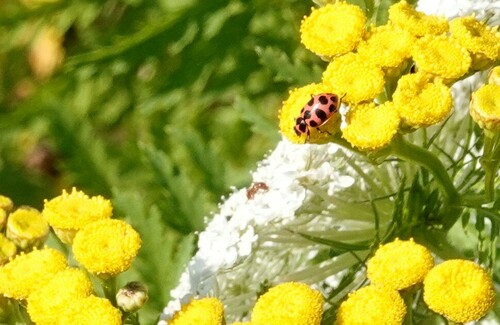
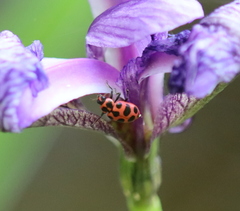
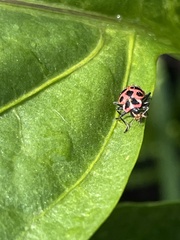
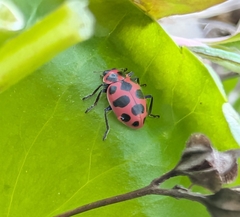
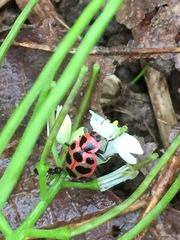


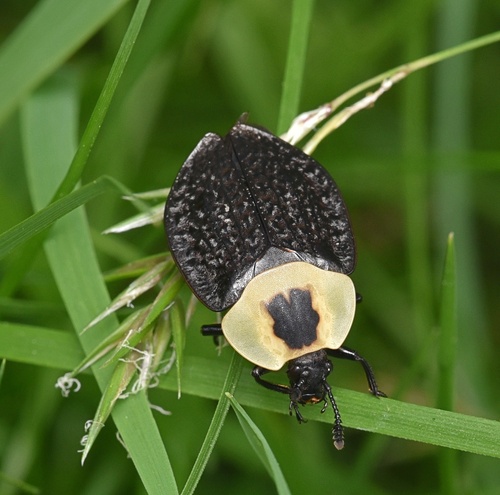
Spotted Pink Lady Beetle

Spotted Pink Lady Beetle

Coleomegilla maculata

Daily sighting probability ~20% · Possible
at Point Pelee National Park

In 3 days ~50% in a week ~80%

38 Verified sightings at Point Pelee National Park From 2019 to 2026
155 In all 5 parks
July Best month
☀️ Diurnal When it's spotted

About the Spotted Pink Lady Beetle

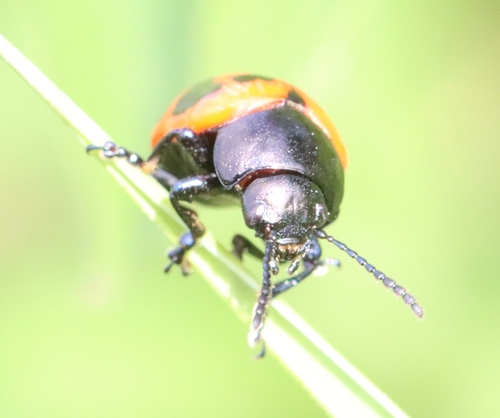
Coleomegilla maculata, commonly known as the spotted lady beetle, pink spotted lady beetle or twelve-spotted lady beetle, is a large coccinellid beetle native across the Americas. The adults and larvae feed primarily on aphids and the species has been used as a biological control agent. Based on name connotation and to avoid confusion with other species also called "spotted lady beetle", the most appropriate common name for this species is probably "spotted pink lady beetle".

Over most of its range the species is pink in coloration, except for the subspecies C. m. fuscilabris, which is bright orange or red. Each elytron features six black markings. The thorax is a similar shade of red with two large triangular black... Wikipedia →

Global Distribution

Parks Where Found

# Park Country Daily sighting probability
1 Point Pelee National Park 🇨🇦 Canada
~20%
2 Great Smoky Mountains National Park 🇺🇸 United States
~10%
3 Shenandoah National Park 🇺🇸 United States
~10%
4 Saguaro National Park 🇺🇸 United States
<5%
5 Cumbres de Monterrey National Park 🇲🇽 Mexico
<5%

Cities Where Found

# City Country Daily sighting probability
1 Detroit 🇺🇸 United States
~10%
2 Montreal 🇨🇦 Canada
~10%
3 Toronto 🇨🇦 Canada
~10%
4 Philadelphia 🇺🇸 United States
~10%
5 Chicago 🇺🇸 United States
~10%
6 Minneapolis [Saint Paul] 🇺🇸 United States
~10%
7 Baltimore 🇺🇸 United States
~10%
8 Washington 🇺🇸 United States
~10%
9 Lima 🇵🇪 Peru
~10%
10 Houston 🇺🇸 United States
~10%

Before you go

What are the chances of seeing a Spotted Pink Lady Beetle in Point Pelee National Park?

Possible

About 20% of wildlife watchers report a Spotted Pink Lady Beetle sighting in Point Pelee National Park on a given day, based on 38 verified sightings from GBIF citizen-science data from 2019 to 2026. It is the 21st most-seen of the 196 insects we can rate there. Over three days the chance rises to about 50%, and over a week to about 80%, if each day is a fresh chance.

When is the best time to see a Spotted Pink Lady Beetle in Point Pelee National Park?

July

In that month about 30% of wildlife watchers report a Spotted Pink Lady Beetle in Point Pelee National Park on a given day, against under 5% in June and November–March, the lowest months.

What time of day is best to see a Spotted Pink Lady Beetle?

Between 10 am and 1 pm

Across all the parks we cover, that three-hour window holds the most Spotted Pink Lady Beetle sightings with a recorded time, and nearly all of them come between 6 am and 6 pm: it is a daytime animal.

Is Point Pelee National Park the best place to see a Spotted Pink Lady Beetle?

Yes

Of the 5 parks where we can rate Spotted Pink Lady Beetle sightings, Point Pelee National Park has the highest daily chance: about 20%. Next come Great Smoky Mountains National Park (United States, about 10%) and Shenandoah National Park (United States, about 10%).

Which relatives of the Spotted Pink Lady Beetle live in Point Pelee National Park?

Same family: Coccinellidae

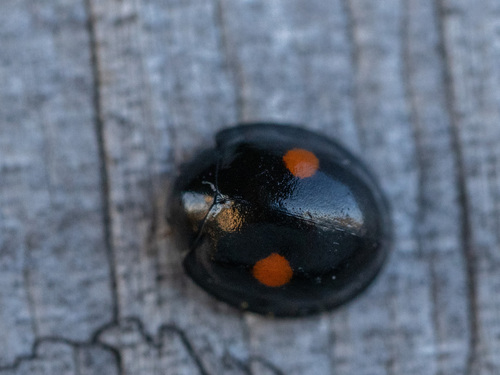
The closest relatives of the Spotted Pink Lady Beetle that you can see in Point Pelee National Park (family Coccinellidae, Lady Beetles) are Asian Lady Beetle (about 20%), Seven-Spotted Lady Beetle (about 10%) and Twice-Stabbed Lady Beetle (about 10%), with each one's daily chance of a sighting.

Where does the Spotted Pink Lady Beetle sighting chance come from?

GBIF citizen-science records

It is estimated from how often the Spotted Pink Lady Beetle is recorded against all the insects logged in Point Pelee National Park (38 verified sightings from 2019 to 2026), calibrated against known sighting rates. Figures are rounded to the nearest 10% because citizen-science data supports honest approximations, not decimals, and months with records from fewer than five people show "—". How it works.

← Back to Point Pelee National Park