Common Field Grasshopper

Common Field Grasshopper

Chorthippus brunneus

Daily sighting probability <5% · Rare
at Pyrénées National Park

In 3 days ~10% in a week ~30%

13 Verified sightings at Pyrénées National Park From 2019 to 2026
125 In all 6 parks
October Best month
☀️ Diurnal When it's spotted

About the Common Field Grasshopper

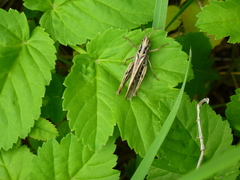
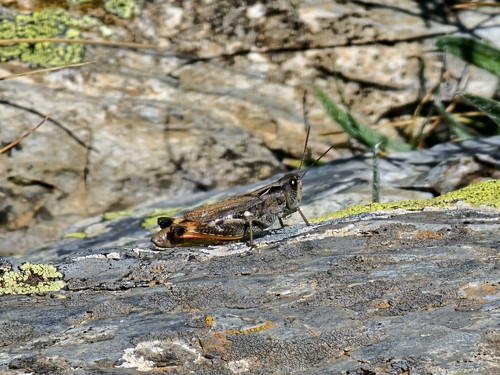
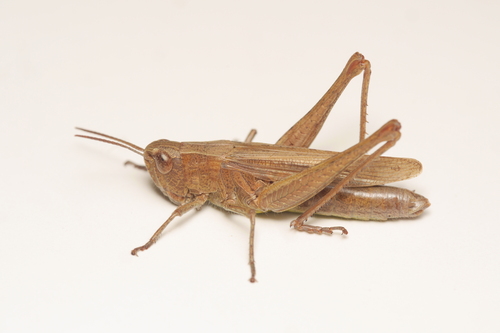
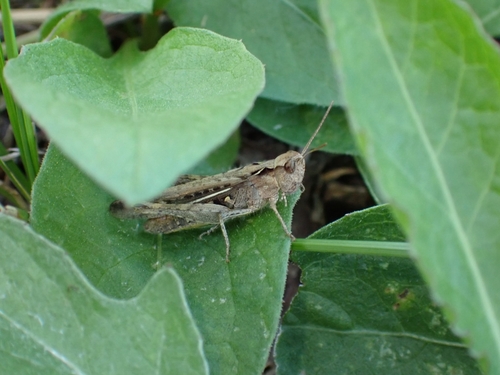
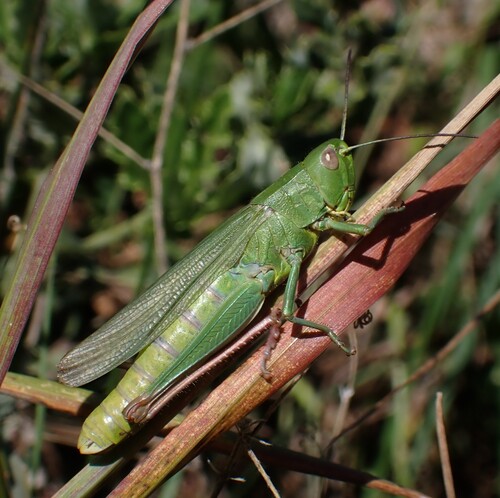
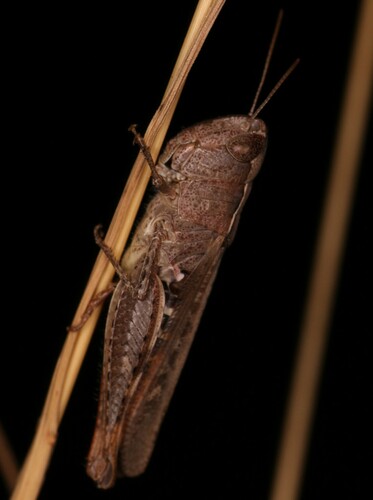
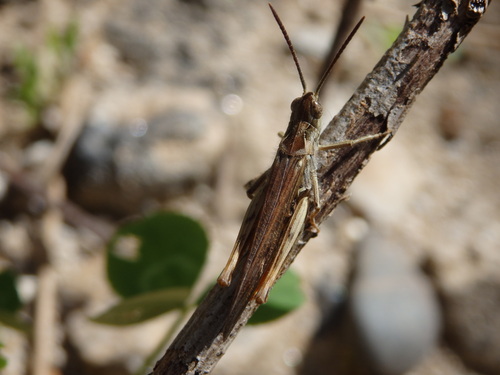
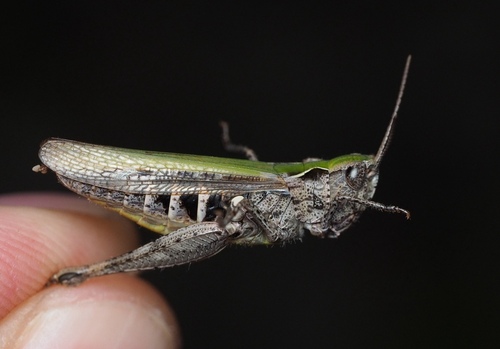
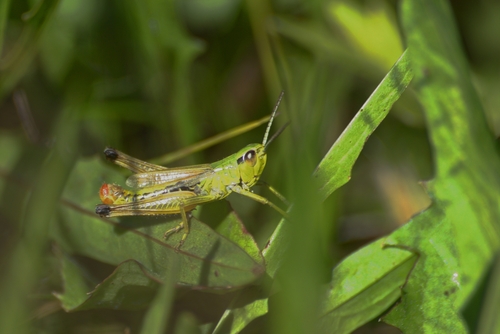
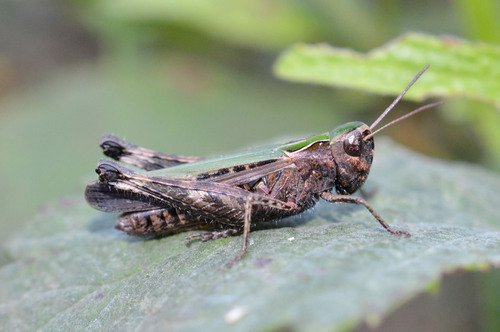
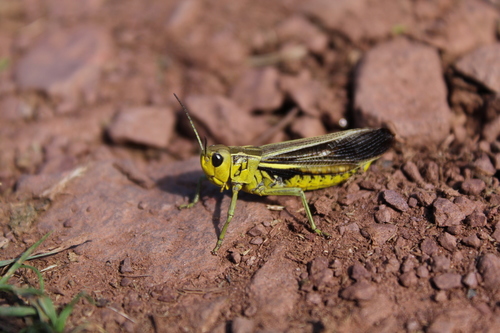
Chorthippus brunneus, also known as the common field grasshopper, is a species of grasshopper of the subfamily Gomphocerinae. The species is common and widespread in the Western Palearctic, and the IUCN lists it as Least Concern.

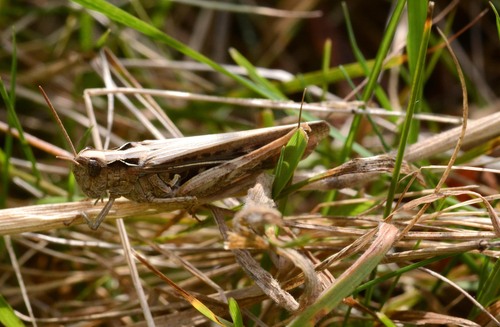
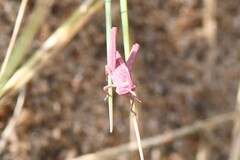
C. brunneus are predominantly brown. However, they show a large variation in colour and can also be black, green, purple, or white. Wing patterns vary between individuals and can be mottled, striped, striped-mottled, or plain. Both green and purple grasshoppers tend to have plain forewing patterns while black grasshoppers primarily have mottled forewing patterns. Brown grasshoppers do not consistently have the same forewing pattern instead they have variable forewing patterns.

At least two loci are responsible for pronotum color in C. brunneus. Green alleles are dominant to all other colors while brown alleles are recessive to all other colors. Wing pattern is determined by a separate locus than colour. The plain forewing pattern is dominant and the striped and mottled forewing patterns are codominant.

C. brunneus are found in Europe, north Africa, and temperate Asia. They prefer dry habitats. They are present in higher... Wikipedia →
Global Distribution

Parks Where Found

# Park Country Daily sighting probability
1 Snowdonia National Park 🇬🇧 United Kingdom
~20%
2 Mercantour National Park 🇫🇷 France
~10%
3 Bavarian Forest National Park 🇩🇪 Germany
~10%
4 Wadden Sea National Park 🇩🇪 Germany
~10%
5 Cévennes National Park 🇫🇷 France
~10%
6 Pyrénées National Park 🇫🇷 France
<5%

Cities Where Found

# City Country Daily sighting probability
1 Liverpool 🇬🇧 United Kingdom
~20%
2 Birmingham 🇬🇧 United Kingdom
~20%
3 London 🇬🇧 United Kingdom
~20%
4 Manchester 🇬🇧 United Kingdom
~20%
5 Vienna 🇦🇹 Austria
~10%
6 Helsinki 🇫🇮 Finland
~10%
7 Leeds 🇬🇧 United Kingdom
~10%
8 Warsaw 🇵🇱 Poland
~10%
9 Lyon 🇫🇷 France
~10%
10 Berlin 🇩🇪 Germany
~10%

Before you go

What are the chances of seeing a Common Field Grasshopper in Pyrénées National Park?

Rare

Under 5% of wildlife watchers report a Common Field Grasshopper sighting in Pyrénées National Park on a given day, based on 13 verified sightings from GBIF citizen-science data from 2019 to 2026. It is the 703rd most-seen of the 1277 insects we can rate there. Over three days the chance rises to about 10%, and over a week to about 30%, if each day is a fresh chance.

When is the best time to see a Common Field Grasshopper in Pyrénées National Park?

April, August and October

In those months about 10% of wildlife watchers report a Common Field Grasshopper in Pyrénées National Park on a given day, against under 5% in May–July, September and November–March, the lowest months.

What time of day is best to see a Common Field Grasshopper?

Between 11 am and 2 pm

Across all the parks we cover, that three-hour window holds the most Common Field Grasshopper sightings with a recorded time, and about 8 in 10 of them come between 6 am and 6 pm: it is a daytime animal.

Which relatives of the Common Field Grasshopper live in Pyrénées National Park?

Same genus: Chorthippus

The closest relatives of the Common Field Grasshopper that you can see in Pyrénées National Park (genus Chorthippus, Eurasian Field Grasshoppers) are French Grasshopper (about 10%), Locomotive Grasshopper (about 10%) and Steppe Grasshopper (about 10%), with each one's daily chance of a sighting.

Where does the Common Field Grasshopper sighting chance come from?

GBIF citizen-science records

It is estimated from how often the Common Field Grasshopper is recorded against all the insects logged in Pyrénées National Park (13 verified sightings from 2019 to 2026), calibrated against known sighting rates. Figures are rounded to the nearest 10% because citizen-science data supports honest approximations, not decimals, and months with records from fewer than five people show "—". How it works.

← Back to Pyrénées National Park