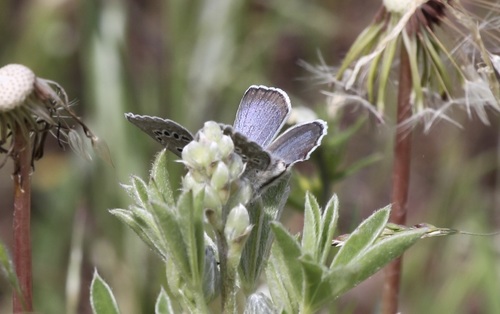
Juniper Hairstreak

Juniper Hairstreak

Mitoura gryneus

Daily sighting probability ~10% · With luck
at Rocky Mountain National Park

In 3 days ~20% in a week ~30%

16 Verified sightings at Rocky Mountain National Park From 2019 to 2026
126 In all 9 parks
June Best month
☀️ Diurnal When it's spotted

About the Juniper Hairstreak

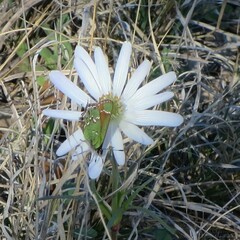
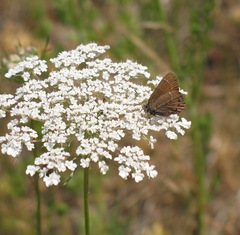
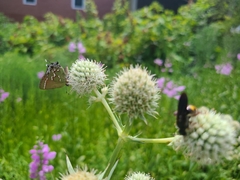
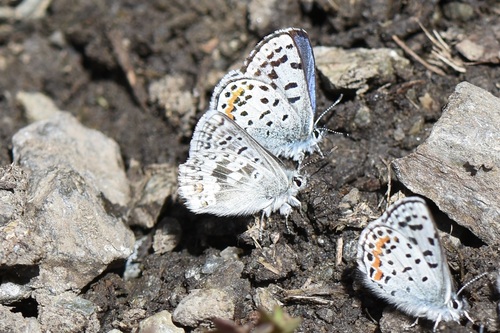
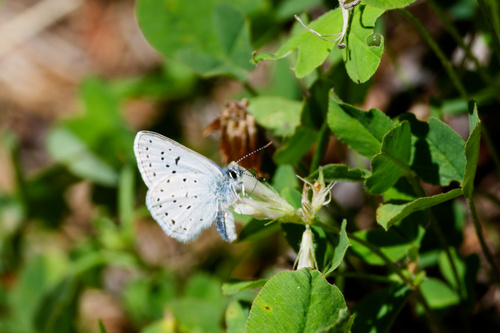
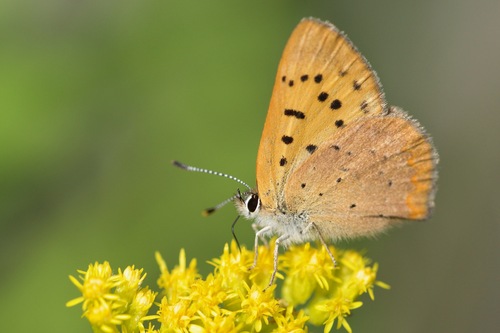
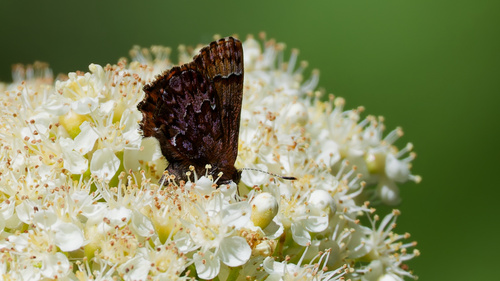
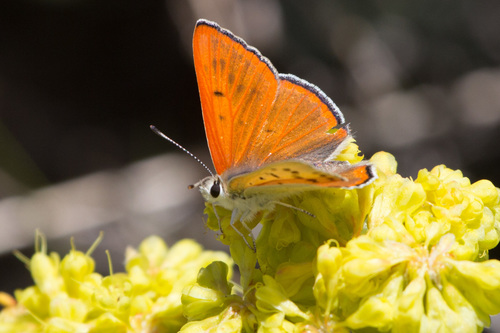
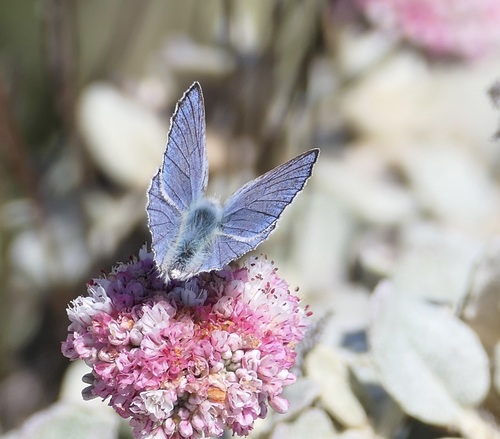
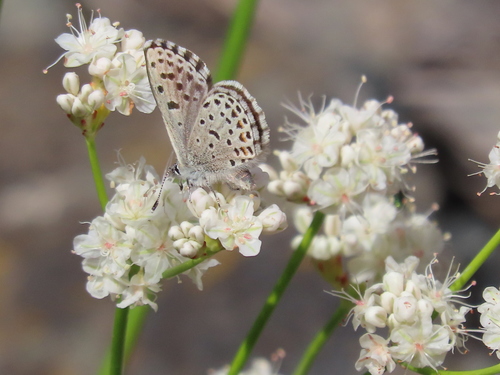
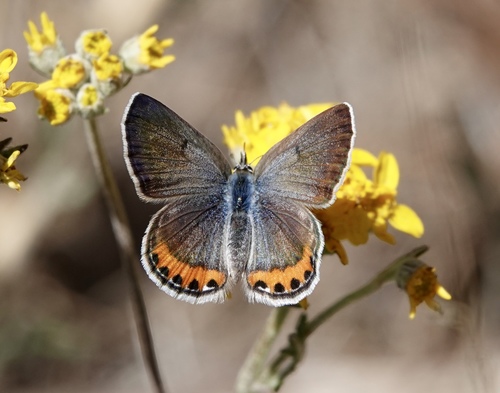
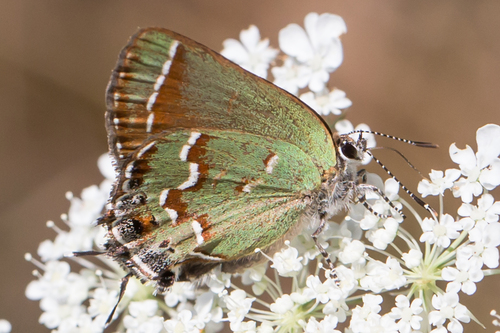
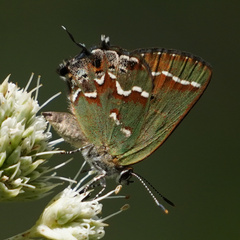
Callophrys gryneus, the juniper hairstreak or olive hairstreak, is a butterfly native to North America. It belongs in the family Lycaenidae. The juniper hairstreak has many subspecies or races, some of which may even be separate species. The upper side of the "olive" juniper hairstreak (C. g. gryneus) is tawny orange or a bronzy color in males, and blackish brown in females. The underside of the wings is bright green with a variable amount of brown scaling. There are two white postbasal spots and a white zigzag postmedian line edged inward with brown on the hindwing.

"Sweadner's" juniper hairstreak (C. g. sweadneri) is very similar to the gryneus race except the two white postbasal spots are reduced. The "Siva" juniper hairstreak (C. g. siva) is also similar to the gryneus race. It lacks the postbasal spots, the postmedian line is straight, and some individuals are brown. Intermediates of the gryneus and siva races occur in west Texas and New Mexico.

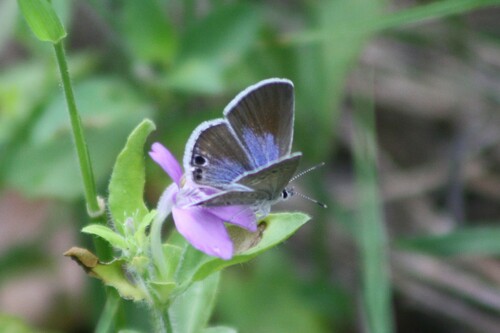
The underside of "Nelson's" juniper hairstreak (C. g. nelsoni) is brown with a violet sheen; the white postmedian line is faint, sometimes partial or absent; and the postbasal spots are lacking. "Muir's" juniper hairstreak... Wikipedia →
Global Distribution

Parks Where Found

# Park Country Daily sighting probability
1 Grand Canyon National Park 🇺🇸 United States
~10%
2 Badlands National Park 🇺🇸 United States
~10%
3 Zion National Park 🇺🇸 United States
~10%
4 Big Bend National Park 🇺🇸 United States
~10%
5 Yosemite National Park 🇺🇸 United States
~10%
6 Olympic National Park 🇺🇸 United States
~10%
7 Rocky Mountain National Park 🇺🇸 United States
~10%
8 Saguaro National Park 🇺🇸 United States
<5%
9 Great Smoky Mountains National Park 🇺🇸 United States
<5%

Cities Where Found

# City Country Daily sighting probability
1 San Antonio 🇺🇸 United States
~10%
2 Austin 🇺🇸 United States
~10%
3 Vancouver 🇨🇦 Canada
<5%
4 Portland 🇺🇸 United States
<5%
5 Seattle 🇺🇸 United States
<5%

Before you go

What are the chances of seeing a Juniper Hairstreak in Rocky Mountain National Park?

With luck

About 10% of wildlife watchers report a Juniper Hairstreak sighting in Rocky Mountain National Park on a given day, based on 16 verified sightings from GBIF citizen-science data from 2019 to 2026. It is the 104th most-seen of the 191 insects we can rate there. Over three days the chance rises to about 20%, and over a week to about 30%, if each day is a fresh chance.

When is the best time to see a Juniper Hairstreak in Rocky Mountain National Park?

June and July

In those months about 10% of wildlife watchers report a Juniper Hairstreak in Rocky Mountain National Park on a given day, against under 5% in August to May, the lowest months.

What time of day is best to see a Juniper Hairstreak?

Between 11 am and 2 pm

Across all the parks we cover, that three-hour window holds the most Juniper Hairstreak sightings with a recorded time, and nearly all of them come between 6 am and 6 pm: it is a daytime animal.

Is Rocky Mountain National Park the best place to see a Juniper Hairstreak?

Among the best

Of the 9 parks where we can rate Juniper Hairstreak sightings, Rocky Mountain National Park ranks 7th at about 10%, level with the leaders once rounded. The best odds are in Grand Canyon National Park (United States, about 10%), Badlands National Park (United States, about 10%) and Zion National Park (United States, about 10%).

Where does the Juniper Hairstreak sighting chance come from?

GBIF citizen-science records

It is estimated from how often the Juniper Hairstreak is recorded against all the insects logged in Rocky Mountain National Park (16 verified sightings from 2019 to 2026), calibrated against known sighting rates. Figures are rounded to the nearest 10% because citizen-science data supports honest approximations, not decimals, and months with records from fewer than five people show "—". How it works.

← Back to Rocky Mountain National Park