


Completed


Great Indian Rhinoceros
Rhinoceros unicornis
Silhouette: H. F. O. March (vectorized by T. Michael Keesey) · PhyloPic
- KingdomAnimalia (Animals)
- PhylumChordata (Chordates)
- ClassMammalia (Mammals)
- OrderPerissodactyla (Odd-toed Ungulates)
- FamilyRhinocerotidae (Rhinoceroses)
- GenusRhinoceros (One-horned Rhinoceroses)
- SpeciesRhinoceros unicornis (Great Indian Rhinoceros)
In 3 days ~60% in a week ~90%
14 Verified sightings at Royal Manas National Park From 2019 to 2026
726 In all 5 parks
December Best month
🌅 Crepuscular When it's spotted
Completed
About the Great Indian Rhinoceros
The Indian rhinoceros (Rhinoceros unicornis), also known as the greater one-horned rhinoceros, great Indian rhinoceros or Indian rhino, is a rhinoceros species native to the Indian subcontinent. It is the second largest living rhinoceros and the largest in Asia, with adult males weighing 2.07–2.2 t (2.04–2.17 long tons; 2.28–2.43 short tons) and adult females 1.6 t (1.6 long tons; 1.8 short tons). Its thick skin is grey-brown with pinkish skin folds. It has a single horn on its snout that grows up to 57.2–61.6 cm (22.5–24.3 in) long. Its upper legs and shoulders are covered in wart-like bumps, and it is nearly hairless aside from the eyelashes, ear fringes and tail brush.
The Indian rhinoceros occurs in the Indo-Gangetic Plain in 12 protected areas in northern India and southern Nepal. It is a grazer, eating mainly grass, but also twigs, leaves, branches, shrubs, flowers, fruits and aquatic plants. It is a largely solitary animal, only associating in the breeding season and when rearing calves. Females give birth to a single calf after a gestation of 15.7 months. The birth interval is 34–51 months. Captive individuals can live up to 47 years. It is susceptible to diseases such as anthrax, and those caused by parasites such as leeches, ticks and nematodes.
The Indian rhinoceros is listed as Vulnerable on the IUCN Red List, as the population is fragmented and restricted to less than 20,000 km2 (7,700 sq mi). Excessive hunting and agricultural development reduced its range drastically. In the early 1990s, the global population was estimated at between 1,870 and 1,895 individuals. Since then, the population increased due to conservation measures taken by the governments. As of March 2025, it was estimated to comprise 4,075 individuals. However, poaching remains a continuous threat. Wikipedia →
Sounds
Call0:17
Nepal · 2023
© Marc Anderson · XC979553 · CC BY-NC-ND 4.0
Recent sightings of Great Indian Rhinoceros in Royal Manas National Park
LIVEiNaturalistGlobal Distribution
Parks Where Found
| # | Park | Country | Daily sighting probability |
|---|---|---|---|
| 1 | Kaziranga National Park | 🇮🇳 India | |
| 2 | Chitwan National Park | 🇳🇵 Nepal | |
| 3 | Royal Bardia National Park | 🇳🇵 Nepal | |
| 4 | Manas National Park | 🇮🇳 India | |
| 5 | Royal Manas National Park | 🇧🇹 Bhutan |
Zoos & Centres Where Found
Closest Relatives at Royal Manas National Park
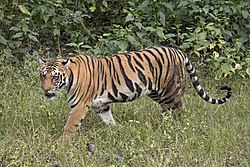
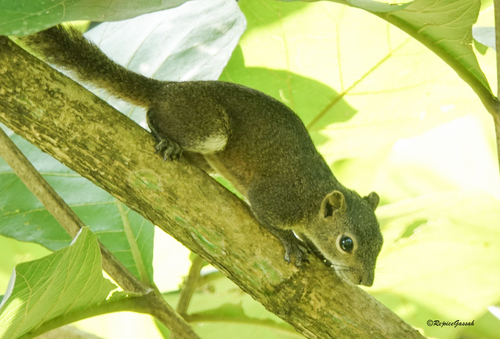
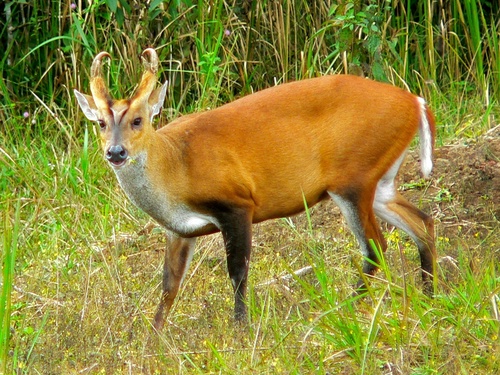
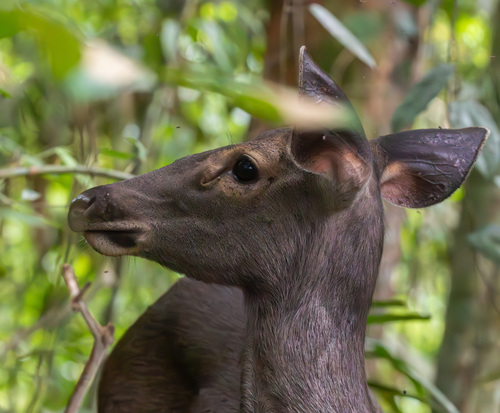
No species of the same family or order lives in Royal Manas National Park, so these are its closest relatives here: other mammals.








Before you go
What are the chances of seeing a Great Indian Rhinoceros in Royal Manas National Park?
Possible
About 30% of wildlife watchers report a Great Indian Rhinoceros sighting in Royal Manas National Park on a given day, based on 14 verified sightings from GBIF citizen-science data from 2019 to 2026. It is the 9th most-seen of the 11 mammals we can rate there. Over three days the chance rises to about 60%, and over a week to about 90%, if each day is a fresh chance.
When is the best time to see a Great Indian Rhinoceros in Royal Manas National Park?
December
In that month about 50% of wildlife watchers report a Great Indian Rhinoceros in Royal Manas National Park on a given day, against under 5% in January and March, the lowest months. That is one of Royal Manas National Park's driest months, with about 10 mm of rain against 930 mm in July. September has too few records to rate.
What time of day is best to see a Great Indian Rhinoceros?
Between 10 am and 1 pm
Across all the parks we cover, that three-hour window holds the most Great Indian Rhinoceros sightings with a recorded time, and about 7 in 10 of them come between 6 am and 6 pm: it is most active around dawn and dusk.
Is Royal Manas National Park the best place to see a Great Indian Rhinoceros?
5th of 5
Of the 5 parks where we can rate Great Indian Rhinoceros sightings, Royal Manas National Park ranks 5th at about 30%. The best odds are in Kaziranga National Park (India, about 90%), Chitwan National Park (Nepal, about 90%) and Royal Bardia National Park (Nepal, about 60%). All parks ranked.
Where does the Great Indian Rhinoceros sighting chance come from?
GBIF citizen-science records
It is estimated from how often the Great Indian Rhinoceros is recorded against all the mammals logged in Royal Manas National Park (14 verified sightings from 2019 to 2026), calibrated against known sighting rates. Figures are rounded to the nearest 10% because citizen-science data supports honest approximations, not decimals, and months with records from fewer than five people show "—". How it works.
