Grey-headed Flying-fox

Grey-headed Flying-fox

Pteropus poliocephalus

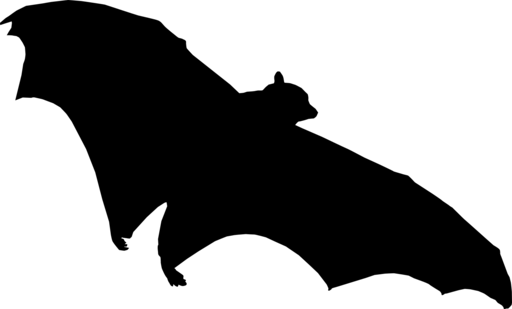
Silhouette: Margot Michaud · PhyloPic

LCNTVUVulnerableENCR Endemic
Daily sighting probability ~20% · Possible
at Royal National Park

In 3 days ~60% in a week ~90%

47 Verified sightings at Royal National Park From 2019 to 2026
273 In all 5 parks
March Best month
☀️ Diurnal When it's spotted

About the Grey-headed Flying-fox

The grey-headed flying fox (Pteropus poliocephalus) is a megabat native to Australia. The species shares mainland Australia with three other members of the genus Pteropus: the little red P. scapulatus, spectacled P. conspicillatus, and the black P. alecto. The grey-headed flying fox is the largest bat in Australia.

The grey-headed flying fox is endemic to the south-eastern forested areas of Australia, principally east of the Great Dividing Range. Its range extends approximately from Bundaberg in Queensland to Geelong in Victoria, with outlying colonies in Ingham and Finch Hatton in the north, and in Adelaide in the south. In the southern parts of its range it occupies more extreme latitudes than any other Pteropus species.

As of 2021, the species is listed as "vulnerable" on the IUCN Red List of Threatened Species and Australian Government's Environment Protection and Biodiversity Conservation Act threatened species list. A description of the species was published by Coenraad Temminck in his 1825 monograph of mammals. Hybridisation with the species Pteropus alecto has been noted where their ranges intersect.

The common names for Pteropus poliocephalus include grey-headed... Wikipedia →

Sounds

Uncertain1:22

Australia · 2023

© Romuald Mikusek · XC1072072 · CC BY-NC-SA 4.0

Social call0:37

Australia · 2023

© Janine Duffy · XC843622 · CC BY-NC-SA 4.0

Uncertain0:15

Australia · 2014

© Nick Talbot · XC1048699 · CC BY-NC-SA 4.0

Global Distribution

Parks Where Found

# Park Country Daily sighting probability
1 Royal National Park 🇦🇺 Australia
~20%
2 Springbrook National Park 🇦🇺 Australia
~20%
3 Booderee National Park 🇦🇺 Australia
~10%
4 Great Otway National Park 🇦🇺 Australia
~10%
5 Blue Mountains National Park 🇦🇺 Australia
~10%

Cities Where Found

# City Country Daily sighting probability
1 Sydney 🇦🇺 Australia
~30%
2 Melbourne 🇦🇺 Australia
~20%
3 Brisbane 🇦🇺 Australia
~10%

Zoos & Centres Where Found

# Zoo / Centre Country
1 Pairi Daiza 🇧🇪 Belgium In captivity
2 ZooParc de Beauval 🇫🇷 France In captivity
3 Natura Artis Magistra 🇳🇱 Netherlands In captivity
4 Kyabram Fauna Park 🇦🇺 Australia In captivity
5 Australia Walkabout Wildlife Park 🇦🇺 Australia In captivity
6 Jerusalem Biblical Zoo 🇮🇱 Israel In captivity
7 Currumbin Wildlife Sanctuary 🇦🇺 Australia In captivity
8 Lone Pine Koala Sanctuary 🇦🇺 Australia In captivity
9 Bandung Zoo 🇮🇩 Indonesia In captivity
10 Australian Reptile Park 🇦🇺 Australia In captivity
11 Gorge Wildlife Park 🇦🇺 Australia In captivity
12 National Aquarium 🇺🇸 United States In captivity
13 Birdworld Kuranda 🇦🇺 Australia In captivity
14 Kuranda Koala Gardens 🇦🇺 Australia In captivity
15 Caversham Wildlife Park 🇦🇺 Australia In captivity
16 Ranger Red’s Zoo & Conservation Park 🇦🇺 Australia In captivity

Closest Relatives at Royal National Park

No species of the same family or order lives in Royal National Park, so these are its closest relatives here: other mammals.

Before you go

What are the chances of seeing a Grey-headed Flying-fox in Royal National Park?

Possible

About 20% of wildlife watchers report a Grey-headed Flying-fox sighting in Royal National Park on a given day, based on 47 verified sightings from GBIF citizen-science data from 2019 to 2026. It is the 6th most-seen of the 15 mammals we can rate there. Over three days the chance rises to about 60%, and over a week to about 90%, if each day is a fresh chance.

When is the best time to see a Grey-headed Flying-fox in Royal National Park?

February–April and June–August

In those months about 30% of wildlife watchers report a Grey-headed Flying-fox in Royal National Park on a given day, against about 20% in May and September–January, the lowest months.

What time of day is best to see a Grey-headed Flying-fox?

Between noon and 3 pm

Across all the parks we cover, that three-hour window holds the most Grey-headed Flying-fox sightings with a recorded time, and about 8 in 10 of them come between 6 am and 6 pm: it is a daytime animal.

Is Royal National Park the best place to see a Grey-headed Flying-fox?

Yes

Of the 5 parks where we can rate Grey-headed Flying-fox sightings, Royal National Park has the highest daily chance: about 20%. Next come Springbrook National Park (Australia, about 20%) and Booderee National Park (Australia, about 10%).

Where does the Grey-headed Flying-fox sighting chance come from?

GBIF citizen-science records

It is estimated from how often the Grey-headed Flying-fox is recorded against all the mammals logged in Royal National Park (47 verified sightings from 2019 to 2026), calibrated against known sighting rates. Figures are rounded to the nearest 10% because citizen-science data supports honest approximations, not decimals, and months with records from fewer than five people show "—". How it works.

← Back to Royal National Park