Imperial Moth

Imperial Moth

Eacles imperialis

Daily sighting probability ~30% · Possible
at Santa Rosa National Park

In 3 days ~60% in a week ~90%

16 Verified sightings at Santa Rosa National Park From 2019 to 2026
534 In all 14 parks
October Best month
☀️🌙 Day & Night When it's spotted

About the Imperial Moth

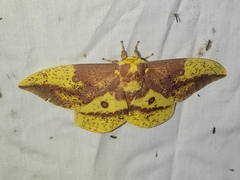
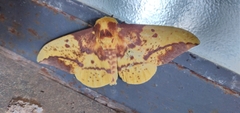
Eacles imperialis, the imperial moth, is a member of the family Saturniidae and subfamily Ceratocampinae. It is found mainly in the East of South America and North America, from the center of Argentina to south Canada. The species was first described by Dru Drury in 1773.

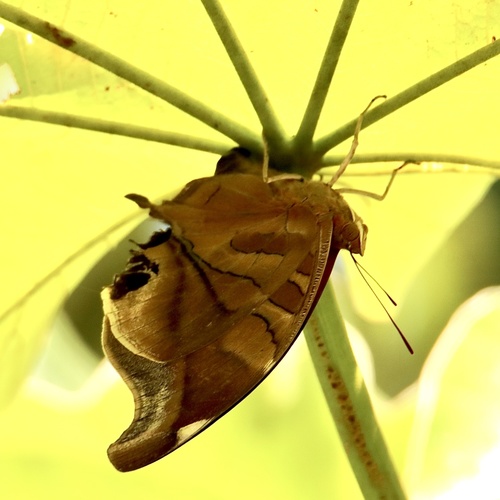
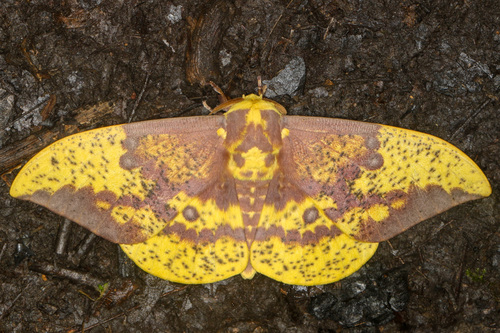
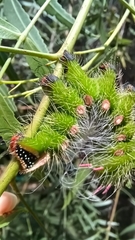
The wingspan of an adult is between 80 and 175 mm (3+1⁄8 and 6+7⁄8 inches). There is a high amount of variation within this species. The colors of the adult are always primarily yellow with red, brown, and purple blotches but can vary distinctly on this. Light and dark morphs of this species are found in both the northern and southern regions of their range. Individuals from the northern regions of their native range may tend to have fewer dark markings. Larvae can be small (approximately 10–15 mm long) and orange with black transverse bands and large spines in the first instar, to 3–5.5 inches (75–100 mm) long in the fifth instar with long hairs and shorter spines and color morphs varying between dark brown and burgundy with white spiracle patches, and green with yellow spiracle patches.

Imperial moths (their many regional morphs, subspecies, and sibling species) range from Argentina... Wikipedia →

Global Distribution

Parks Where Found

# Park Country Daily sighting probability
1 Itatiaia National Park 🇧🇷 Brazil
~30%
2 Palo Verde National Park 🇨🇷 Costa Rica
~30%
3 Santa Rosa National Park 🇨🇷 Costa Rica
~30%
4 Great Smoky Mountains National Park 🇺🇸 United States
~20%
5 Big Cypress National Preserve 🇺🇸 United States
~20%
6 Calakmul Biosphere Reserve 🇲🇽 Mexico
~20%
7 Braulio Carrillo National Park 🇨🇷 Costa Rica
~20%
8 Shenandoah National Park 🇺🇸 United States
~10%
9 Ría Lagartos Biosphere Reserve 🇲🇽 Mexico
~10%
10 Cumbres de Monterrey National Park 🇲🇽 Mexico
~10%
11 Manu National Park 🇵🇪 Peru
~10%
12 Everglades National Park 🇺🇸 United States
~10%
13 La Amistad International Park (Panama) 🇵🇦 Panama
~10%
14 Parque Natural Metropolitano 🇵🇦 Panama
<5%

Cities Where Found

# City Country Daily sighting probability
1 Campo Grande 🇧🇷 Brazil
~10%
2 Buenos Aires 🇦🇷 Argentina
~10%
3 Montevideo 🇺🇾 Uruguay
~10%
4 Curitiba 🇧🇷 Brazil
~10%
5 Porto Alegre 🇧🇷 Brazil
~10%
6 Washington 🇺🇸 United States
~10%
7 Panama City 🇵🇦 Panama
~10%
8 Orlando 🇺🇸 United States
~10%
9 Austin 🇺🇸 United States
<5%
10 Baltimore 🇺🇸 United States
<5%

Before you go

What are the chances of seeing an Imperial Moth in Santa Rosa National Park?

Possible

About 30% of wildlife watchers report an Imperial Moth sighting in Santa Rosa National Park on a given day, based on 16 verified sightings from GBIF citizen-science data from 2019 to 2026. It is the 4th most-seen of the 25 insects we can rate there. Over three days the chance rises to about 60%, and over a week to about 90%, if each day is a fresh chance.

When is the best time to see an Imperial Moth in Santa Rosa National Park?

May and August–October

In those months about 40% of wildlife watchers report an Imperial Moth in Santa Rosa National Park on a given day, against under 5% in December to April, the lowest months. Those are among Santa Rosa National Park's wettest months, with about 320 mm of rain a month against almost none in February.

What time of day is best to see an Imperial Moth?

Between 7 and 10 am

Across all the parks we cover, that three-hour window holds the most Imperial Moth sightings with a recorded time, and about 6 in 10 of them come between 6 am and 6 pm: it is seen both by day and at night.

Is Santa Rosa National Park the best place to see an Imperial Moth?

Among the best

Of the 14 parks where we can rate Imperial Moth sightings, Santa Rosa National Park ranks 3rd at about 30%, level with the leaders once rounded. The best odds are in Itatiaia National Park (Brazil, about 30%) and Palo Verde National Park (Costa Rica, about 30%).

Which relatives of the Imperial Moth live in Santa Rosa National Park?

Same order: Lepidoptera

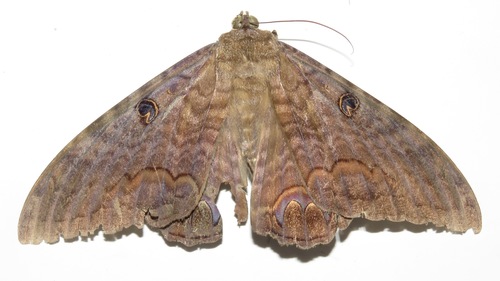
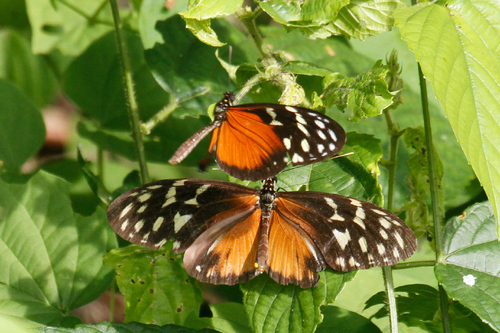
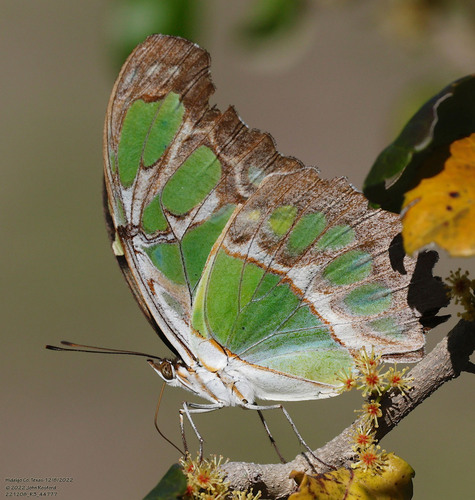
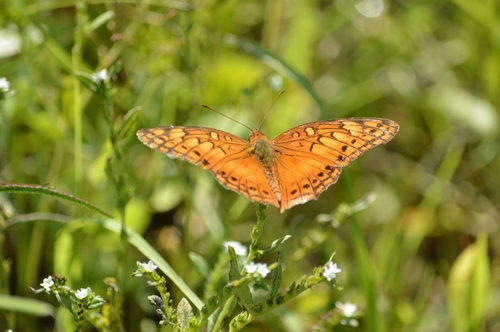
The closest relatives of the Imperial Moth that you can see in Santa Rosa National Park (order Lepidoptera, Butterflies and Moths) are Black Witch (about 20%), Tiger Longwing (about 20%) and Malachite (about 20%), with each one's daily chance of a sighting.

Where does the Imperial Moth sighting chance come from?

GBIF citizen-science records

It is estimated from how often the Imperial Moth is recorded against all the insects logged in Santa Rosa National Park (16 verified sightings from 2019 to 2026), calibrated against known sighting rates. Figures are rounded to the nearest 10% because citizen-science data supports honest approximations, not decimals, and months with records from fewer than five people show "—". How it works.
← Back to Santa Rosa National Park