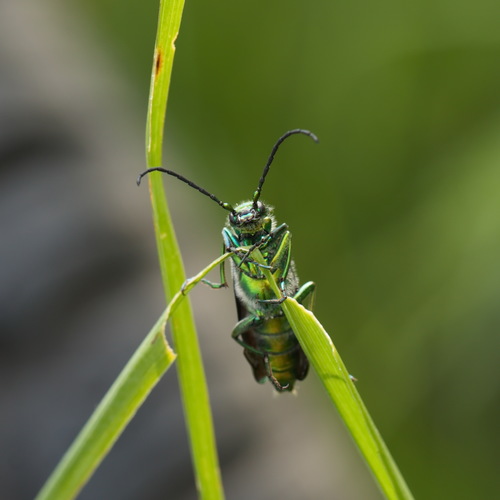
Bronze Beetle

Bronze Beetle

Chrysolina bankii

Daily sighting probability ~10% · With luck
at Sierra de Guadarrama National Park

In 3 days ~20% in a week ~30%

13 Verified sightings at Sierra de Guadarrama National Park From 2019 to 2026
57 In all 6 parks
September Best month
☀️🌙 Day & Night When it's spotted

About the Bronze Beetle

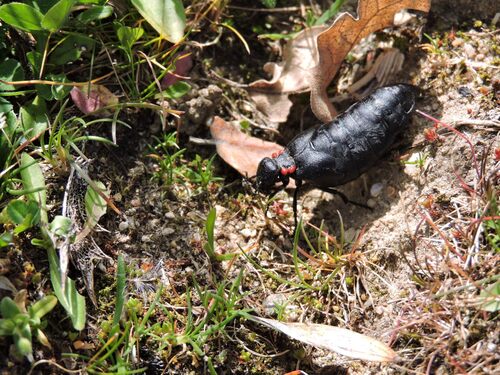
Chrysolina bankii, the bronze beetle or Bank's leaf beetle, is a species of leaf beetle native to western Europe and the western Mediterranean Basin, (including Macaronesia). European countries this species lives in include Italy, France, Spain, Portugal, Ireland, and the United Kingdom. It has also been introduced to the US, where its range is expanding. It has an established population in California, where it is present around the San Francisco Bay and has further populations extending north to coastal regions in cities in and around Fort Bragg, and south to northern parts of Monterey County. There is an additional population in Richmond, Virginia. This species lives in various habitats such as open grasslands, meadows, woodland edges, and coastal areas, mainly prefereing those that are open, sunny, and have a variety of plants to feed on. Females lay eggs on the underside of leaves. When overwintering, species can mainly be found as larva in cold climates, however adults can also be found in warmer locations.

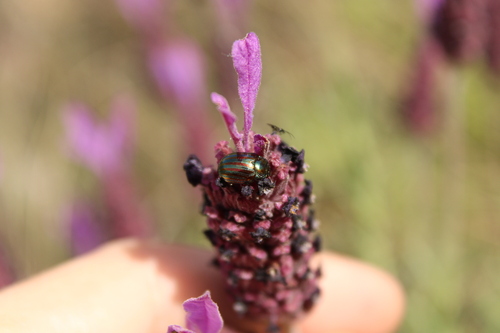
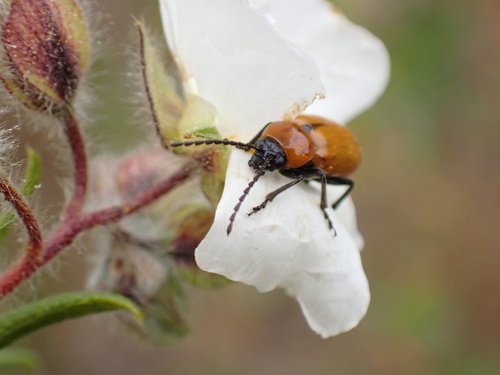
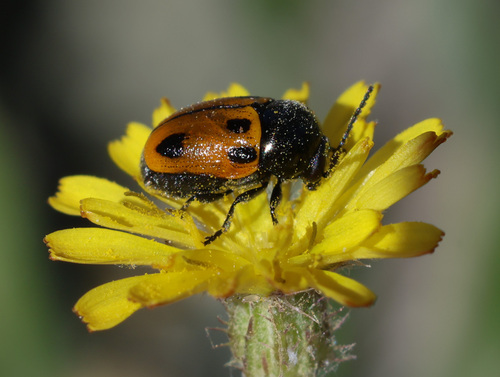
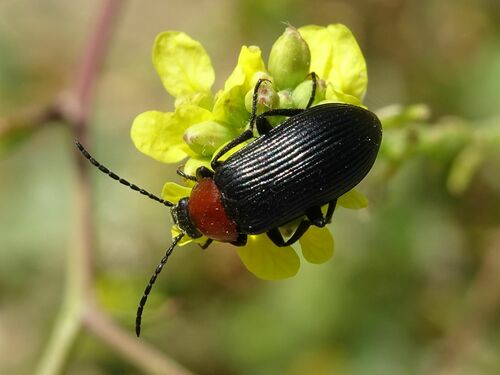
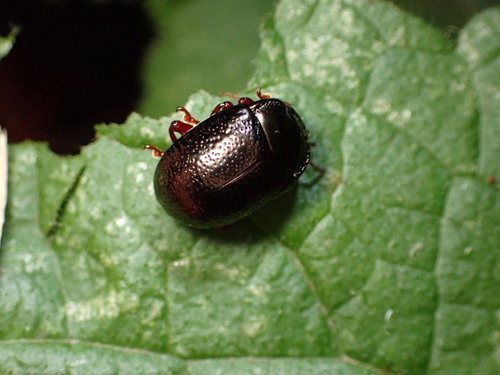
Chrysolina bankii adults are 8-10.7 mm in length. They are metallic bronze in color, with orange-brown legs. Their elytra have puncture marks. They feed on numerous types of leaves, but especially those in Asteraceae and Lamiaceae. Ribwort plantain is also a favorite plant for this species to feed on. Wikipedia →
Global Distribution

Parks Where Found

# Park Country Daily sighting probability
1 Monfragüe National Park 🇪🇸 Spain
~10%
2 Sierra Nevada National Park 🇪🇸 Spain
~10%
3 Doñana National Park 🇪🇸 Spain
~10%
4 Cévennes National Park 🇫🇷 France
~10%
5 Sierra de Guadarrama National Park 🇪🇸 Spain
~10%
6 Pyrénées National Park 🇫🇷 France
~10%

Cities Where Found

# City Country Daily sighting probability
1 Madrid 🇪🇸 Spain
~20%
2 Algiers 🇩🇿 Algeria
~10%
3 Porto 🇵🇹 Portugal
~10%
4 Lisbon 🇵🇹 Portugal
~10%
5 Barcelona 🇪🇸 Spain
~10%
6 San Francisco 🇺🇸 United States
~10%
7 Valencia 🇪🇸 Spain
~10%
8 Rome 🇮🇹 Italy
~10%
9 Dublin 🇮🇪 Ireland
~10%
10 London 🇬🇧 United Kingdom
~10%

Before you go

What are the chances of seeing a Bronze Beetle in Sierra de Guadarrama National Park?

With luck

About 10% of wildlife watchers report a Bronze Beetle sighting in Sierra de Guadarrama National Park on a given day, based on 13 verified sightings from GBIF citizen-science data from 2019 to 2026. It is the 258th most-seen of the 597 insects we can rate there. Over three days the chance rises to about 20%, and over a week to about 30%, if each day is a fresh chance.

When is the best time to see a Bronze Beetle in Sierra de Guadarrama National Park?

April–June and September–November

In those months about 10% of wildlife watchers report a Bronze Beetle in Sierra de Guadarrama National Park on a given day, against under 5% in July–August and December–March, the lowest months.

What time of day is best to see a Bronze Beetle?

Between 2 and 5 pm

Across all the parks we cover, that three-hour window holds the most Bronze Beetle sightings with a recorded time, and about 6 in 10 of them come between 6 am and 6 pm: it is seen both by day and at night.

Is Sierra de Guadarrama National Park the best place to see a Bronze Beetle?

Among the best

Of the 6 parks where we can rate Bronze Beetle sightings, Sierra de Guadarrama National Park ranks 5th at about 10%, level with the leaders once rounded. The best odds are in Monfragüe National Park (Spain, about 10%), Sierra Nevada National Park (Spain, about 10%) and Doñana National Park (Spain, about 10%).

Where does the Bronze Beetle sighting chance come from?

GBIF citizen-science records

It is estimated from how often the Bronze Beetle is recorded against all the insects logged in Sierra de Guadarrama National Park (13 verified sightings from 2019 to 2026), calibrated against known sighting rates. Figures are rounded to the nearest 10% because citizen-science data supports honest approximations, not decimals, and months with records from fewer than five people show "—". How it works.

← Back to Sierra de Guadarrama National Park