Elm Leaf Beetle

Elm Leaf Beetle

Xanthogaleruca luteola

Daily sighting probability ~10% · With luck
at Sierra Nevada National Park

In 3 days ~30% in a week ~50%

8 Verified sightings at Sierra Nevada National Park From 2019 to 2026
54 In all 4 parks
August Best month
☀️🌙 Day & Night When it's spotted

About the Elm Leaf Beetle

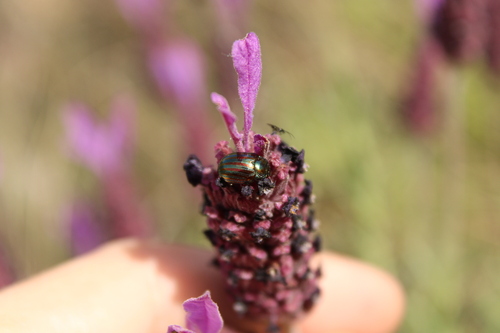
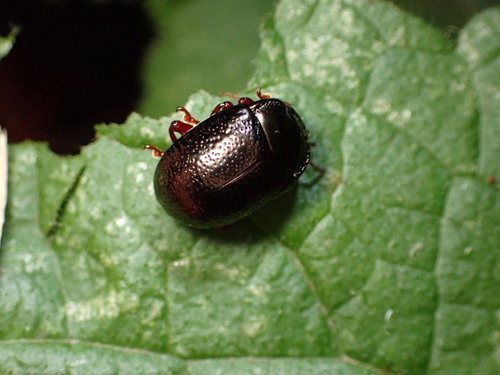
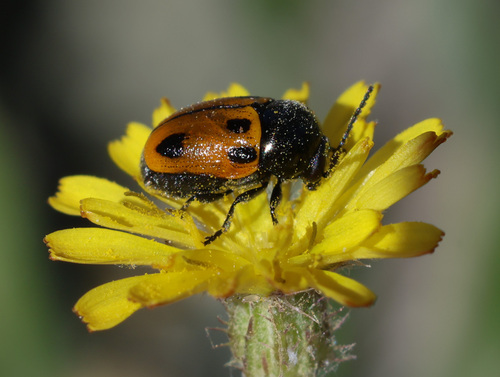
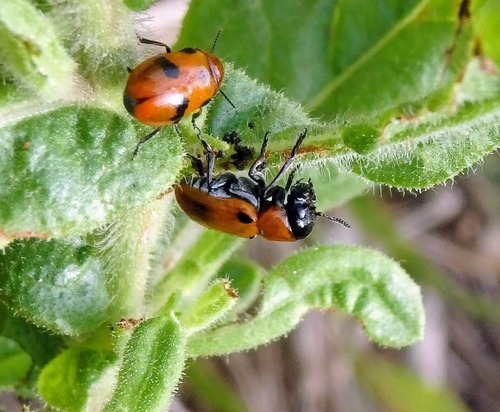
Xanthogaleruca luteola, commonly known as the elm-leaf beetle, is a beetle species in the family Chrysomelidae that is native to Europe but invasive in other parts of the world. The imago (adult beetle) is 6–8 mm in length, and ranges from yellow to green in colour, with a spot on its head, an hourglass mark and two spots on the pronotum, and a broad, dark stripe along the edge of each elytron. The larvae are usually black, occasionally black and yellow, with multiple rows of dots on the back and on the sides and < 13 mm long. The pupae are orange-yellow with black chaetae. The eggs are yellow, and laid in spindle-like clusters of < 25 on the undersides of the elm leaves.

These beetles are common in the Western Palearctic realm from Portugal to Central Asia. Indigenous to Europe, they were accidentally introduced to North America and Australia, and are now widespread, and are serious pests in Australia and parts of North America.

X. luteola is a serious pest of the elm. Both the adults and larvae feed on the emergent leaves of the elm. Repeated heavy infestation rarely kills the tree outright, but weakens it, rendering... Wikipedia →
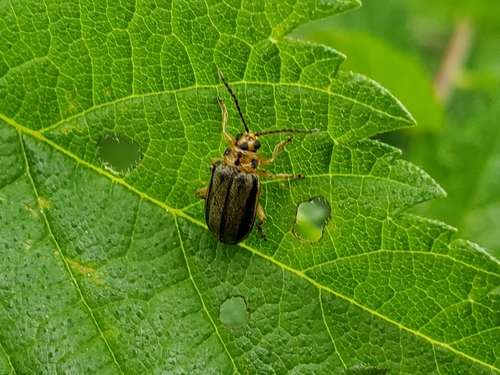
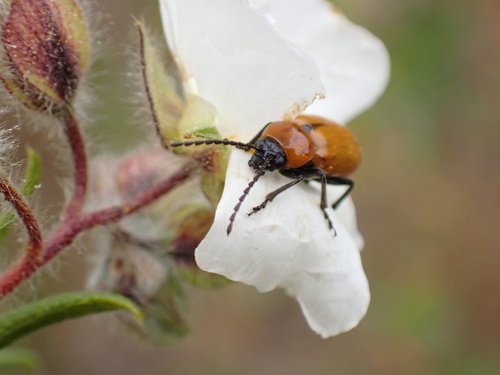
Global Distribution

Parks Where Found

# Park Country Daily sighting probability
1 Camargue 🇫🇷 France
~10%
2 Sierra Nevada National Park 🇪🇸 Spain
~10%
3 Cévennes National Park 🇫🇷 France
~10%
4 Pyrénées National Park 🇫🇷 France
<5%

Cities Where Found

# City Country Daily sighting probability
1 Madrid 🇪🇸 Spain
~20%
2 Mendoza 🇦🇷 Argentina
~20%
3 Barcelona 🇪🇸 Spain
~20%
4 Rome 🇮🇹 Italy
~20%
5 Yerevan 🇦🇲 Armenia
~20%
6 Ciudad Juárez 🇲🇽 México
~20%
7 Valencia 🇪🇸 Spain
~10%
8 Santiago 🇨🇱 Chile
~10%
9 Melbourne 🇦🇺 Australia
~10%
10 Bucharest 🇷🇴 Romania
~10%

Before you go

What are the chances of seeing an Elm Leaf Beetle in Sierra Nevada National Park?

With luck

About 10% of wildlife watchers report an Elm Leaf Beetle sighting in Sierra Nevada National Park on a given day, based on 8 verified sightings from GBIF citizen-science data from 2019 to 2026. It is the 282nd most-seen of the 479 insects we can rate there. Over three days the chance rises to about 30%, and over a week to about 50%, if each day is a fresh chance.

When is the best time to see an Elm Leaf Beetle in Sierra Nevada National Park?

August

In that month about 20% of wildlife watchers report an Elm Leaf Beetle in Sierra Nevada National Park on a given day, against under 5% in October to May, the lowest months.

What time of day is best to see an Elm Leaf Beetle?

Between 9 pm and midnight

Across all the parks we cover, that three-hour window holds the most Elm Leaf Beetle sightings with a recorded time, and about half of them come between 6 pm and 6 am: it is seen both by day and at night.

Is Sierra Nevada National Park the best place to see an Elm Leaf Beetle?

Among the best

Of the 4 parks where we can rate Elm Leaf Beetle sightings, Sierra Nevada National Park ranks 2nd at about 10%, level with the leaders once rounded. The best odds are in Camargue (France, about 10%).

Which relatives of the Elm Leaf Beetle live in Sierra Nevada National Park?

Same family: Chrysomelidae

The closest relatives of the Elm Leaf Beetle that you can see in Sierra Nevada National Park (family Chrysomelidae, Leaf Beetles) are Daffodil Leaf-Beetle (about 20%), Rosemary Beetle (about 10%) and Bronze Beetle (about 10%), with each one's daily chance of a sighting.

Where does the Elm Leaf Beetle sighting chance come from?

GBIF citizen-science records

It is estimated from how often the Elm Leaf Beetle is recorded against all the insects logged in Sierra Nevada National Park (8 verified sightings from 2019 to 2026), calibrated against known sighting rates. Figures are rounded to the nearest 10% because citizen-science data supports honest approximations, not decimals, and months with records from fewer than five people show "—". How it works.

← Back to Sierra Nevada National Park