
Lowland Hump-nosed Viper

Lowland Hump-nosed Viper

Hypnale zara

Silhouette: Steven Traver · PhyloPic

LCNTNear ThreatenedVUENCR Endemic
Daily sighting probability ~50% · Likely
at Sinharaja Forest Reserve

In 3 days ~80% in a week >90%

52 Verified sightings at Sinharaja Forest Reserve From 2019 to 2026
52 In 1 park
November Best month
🌅 Crepuscular When it's spotted

About the Lowland Hump-nosed Viper

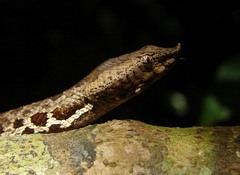
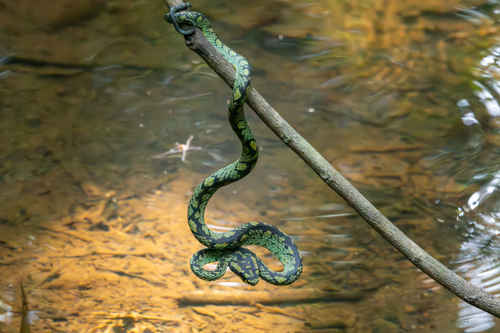
Hypnale zara, the lowlands hump-nosed pit viper, is a venomous pit viper species endemic to Sri Lanka. It is distinguished from Hypnale nepa by variably colored body and less upcurved snout. No subspecies are currently recognized.

Hypnale zara has 10–19 minute scales extending from wart-like protuberances on the snout tip. Additionally, there are 18–39 heterogeneous small scales in the internasal to prefrontal regions, along with six scales around the eye and seven to eight supralabials. The costal scales are keeled, and there are 134–157 ventrals. Subcaudals may range from 34 to 51.

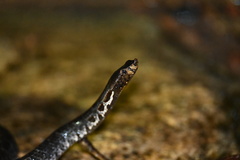
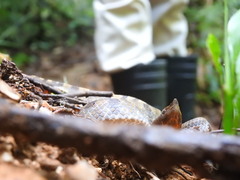
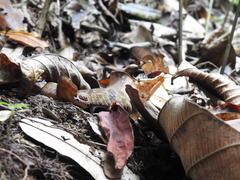
Dorsum color ranges from yellowish brown to dark brown, sometimes deep red. Two rows of distinct sub-oval or sub-triangular blotches meet in the vertebral region. There is a dark stripe across the eye and cheek. Venter is lighter than dorsum, sometimes light ash-gray.

Hypnale zara is ovoviviparous. Wikipedia →

Global Distribution

Parks Where Found

# Park Country Daily sighting probability
1 Sinharaja Forest Reserve 🇱🇰 Sri Lanka
~50%

More parks will be added in future updates.

Before you go

What are the chances of seeing a Lowland Hump-nosed Viper in Sinharaja Forest Reserve?

Likely

About 50% of wildlife watchers report a Lowland Hump-nosed Viper sighting in Sinharaja Forest Reserve on a given day, based on 52 verified sightings from GBIF citizen-science data from 2019 to 2026. It is the 8th most-seen of the 32 reptiles we can rate there. Over three days the chance rises to about 80%, and over a week to over 90%, if each day is a fresh chance.

When is the best time to see a Lowland Hump-nosed Viper in Sinharaja Forest Reserve?

November

In that month about 80% of wildlife watchers report a Lowland Hump-nosed Viper in Sinharaja Forest Reserve on a given day, against about 30% in February and March, the lowest months. That is one of Sinharaja Forest Reserve's wettest months, with about 490 mm of rain against 150 mm in March.

What time of day is best to see a Lowland Hump-nosed Viper?

Between 6 and 9 am

Across all the parks we cover, that three-hour window holds the most Lowland Hump-nosed Viper sightings with a recorded time, and about 7 in 10 of them come between 6 am and 6 pm: it is most active around dawn and dusk.

Where else can you see a Lowland Hump-nosed Viper?

Only Sinharaja Forest Reserve, in our data

Sinharaja Forest Reserve is the only park on Wallace's Line with enough records to rate Lowland Hump-nosed Viper sightings: about 50% of wildlife watchers there report one on a given day.

Which relatives of the Lowland Hump-nosed Viper live in Sinharaja Forest Reserve?

Same family: Viperidae

The closest relatives of the Lowland Hump-nosed Viper that you can see in Sinharaja Forest Reserve (family Viperidae, Vipers) are Ceylon Pit Viper (about 80%) and Russell's Viper (about 20%), with each one's daily chance of a sighting.

Where does the Lowland Hump-nosed Viper sighting chance come from?

GBIF citizen-science records

It is estimated from how often the Lowland Hump-nosed Viper is recorded against all the reptiles logged in Sinharaja Forest Reserve (52 verified sightings from 2019 to 2026), calibrated against known sighting rates. Figures are rounded to the nearest 10% because citizen-science data supports honest approximations, not decimals, and months with records from fewer than five people show "—". How it works.

← Back to Sinharaja Forest Reserve