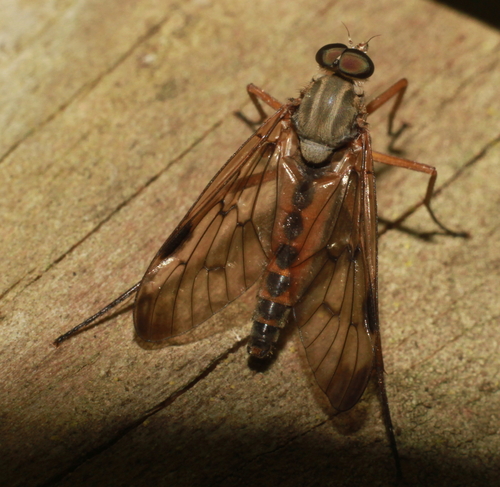
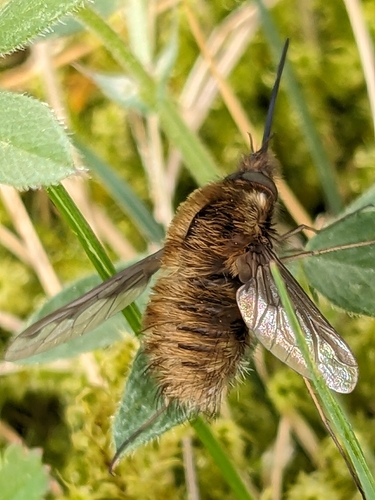
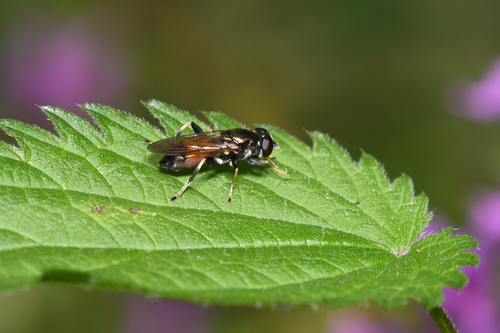
Golden Dung Fly

Golden Dung Fly

Scathophaga stercoraria

Daily sighting probability ~10% · With luck
at Snowdonia National Park

In 3 days ~30% in a week ~60%

16 Verified sightings at Snowdonia National Park From 2019 to 2026
126 In all 11 parks
March Best month
☀️ Diurnal When it's spotted

About the Golden Dung Fly

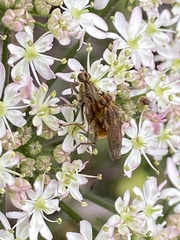
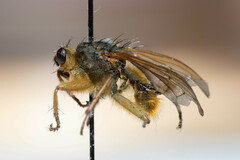
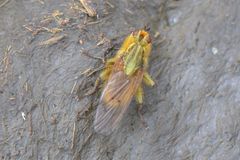
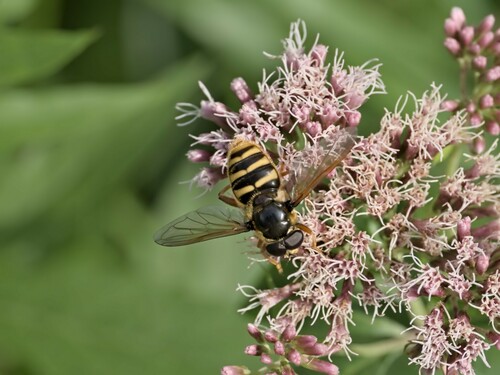
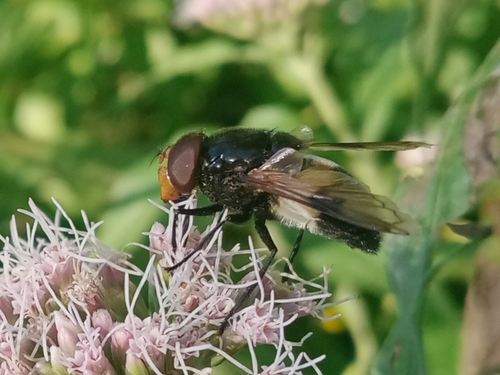
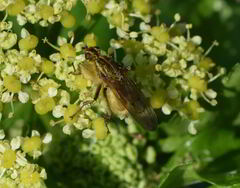
Scathophaga stercoraria, commonly known as the yellow dung fly or the golden dung fly, is one of the most familiar and abundant flies in many parts of the Northern Hemisphere. As its common name suggests, it is often found on the feces of large mammals, such as horses, cattle, sheep, deer, and wild boar, where it goes to breed. The distribution of S. stercoraria is likely influenced by human agriculture, especially in northern Europe and North America. The Scathophaga are integral in the animal kingdom due to their role in the natural decomposition of dung in fields. They are also very important in the scientific world due to their short life cycles and susceptibility to experimental manipulations; thus, they have contributed significant knowledge about animal behavior.

Scathophaga stercoraria is sexually dimorphic, with an average lifespan of one to two months. The adult males are bright golden-yellow with orange-yellow fur on the front legs. Females are a little duller in color, with pronounced green-brown tinges, and no brightly colored fur on the front legs. The adults range from 5 to 11 mm in length, and the males are generally larger than the females. The physical... Wikipedia →
Global Distribution

Parks Where Found

# Park Country Daily sighting probability
1 Snowdonia National Park 🇬🇧 United Kingdom
~10%
2 Elk Island National Park 🇨🇦 Canada
~10%
3 Cairngorms National Park 🇬🇧 United Kingdom
~10%
4 Sierra Nevada National Park 🇪🇸 Spain
~10%
5 Pyrénées National Park 🇫🇷 France
~10%
6 Wadden Sea National Park 🇩🇪 Germany
~10%
7 Sierra de Guadarrama National Park 🇪🇸 Spain
~10%
8 Shenandoah National Park 🇺🇸 United States
~10%
9 Bavarian Forest National Park 🇩🇪 Germany
<5%
10 Great Smoky Mountains National Park 🇺🇸 United States
<5%
11 Yellowstone National Park 🇺🇸 United States
<5%

Cities Where Found

# City Country Daily sighting probability
1 Birmingham 🇬🇧 United Kingdom
~10%
2 Liverpool 🇬🇧 United Kingdom
~10%
3 Manchester 🇬🇧 United Kingdom
~10%
4 Dublin 🇮🇪 Ireland
~10%
5 London 🇬🇧 United Kingdom
~10%
6 Brussels 🇧🇪 Belgium
~10%
7 Amsterdam 🇳🇱 Netherlands
~10%
8 Rotterdam [The Hague] 🇳🇱 Netherlands
~10%
9 Leeds 🇬🇧 United Kingdom
~10%
10 Istanbul 🇹🇷 Turkey
~10%

Before you go

What are the chances of seeing a Golden Dung Fly in Snowdonia National Park?

With luck

About 10% of wildlife watchers report a Golden Dung Fly sighting in Snowdonia National Park on a given day, based on 16 verified sightings from GBIF citizen-science data from 2019 to 2026. It is the 127th most-seen of the 387 insects we can rate there. Over three days the chance rises to about 30%, and over a week to about 60%, if each day is a fresh chance.

When is the best time to see a Golden Dung Fly in Snowdonia National Park?

March

In that month about 30% of wildlife watchers report a Golden Dung Fly in Snowdonia National Park on a given day, against under 5% in November to February, the lowest months.

What time of day is best to see a Golden Dung Fly?

Between 1 and 4 pm

Across all the parks we cover, that three-hour window holds the most Golden Dung Fly sightings with a recorded time, and about 9 in 10 of them come between 6 am and 6 pm: it is a daytime animal.

Is Snowdonia National Park the best place to see a Golden Dung Fly?

Yes

Of the 11 parks where we can rate Golden Dung Fly sightings, Snowdonia National Park has the highest daily chance: about 10%. Next come Elk Island National Park (Canada, about 10%) and Cairngorms National Park (United Kingdom, about 10%).

Which relatives of the Golden Dung Fly live in Snowdonia National Park?

Same order: Diptera

The closest relatives of the Golden Dung Fly that you can see in Snowdonia National Park (order Diptera, Flies) are Tapered Drone Fly (about 20%), Marmalade Hover Fly (about 20%) and Dark Giant Horse Fly (about 20%), with each one's daily chance of a sighting.

Where does the Golden Dung Fly sighting chance come from?

GBIF citizen-science records

It is estimated from how often the Golden Dung Fly is recorded against all the insects logged in Snowdonia National Park (16 verified sightings from 2019 to 2026), calibrated against known sighting rates. Figures are rounded to the nearest 10% because citizen-science data supports honest approximations, not decimals, and months with records from fewer than five people show "—". How it works.

← Back to Snowdonia National Park