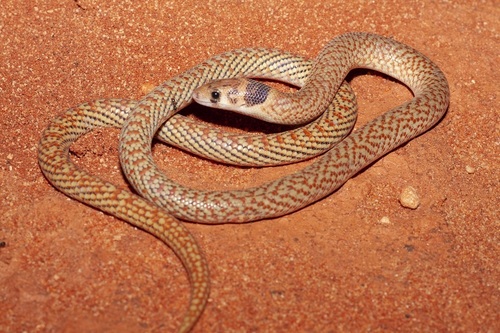
Perentie

Perentie

Varanus giganteus

Silhouette: Steven Traver · PhyloPic

LCLeast ConcernNTVUENCR Endemic
Daily sighting probability ~30% · Possible
at Uluru-Kata Tjuta National Park

In 3 days ~60% in a week ~90%

12 Verified sightings at Uluru-Kata Tjuta National Park From 2019 to 2026
34 In all 3 parks
October Best month
🌅 Crepuscular When it's spotted

About the Perentie

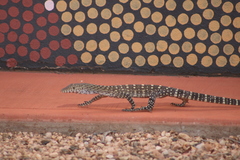
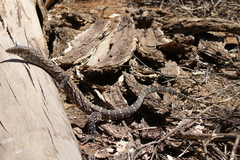
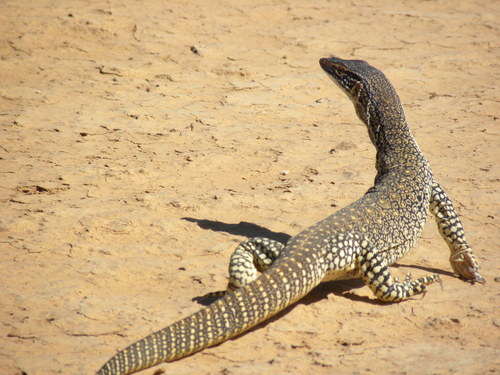
The perentie (Varanus giganteus) is a species of monitor lizard. It is one of the largest living lizards, after the Komodo dragon, Asian water monitor, and the crocodile monitor. Found west of the Great Dividing Range in the arid areas of Australia, it is rarely seen because of its shyness and the remoteness of much of its range from human habitation. The species is considered to be a least-concern species according to the International Union for Conservation of Nature.

Its status in many Aboriginal cultures is evident in the totemic relationships, and part of the Ngiṉṯaka dreaming, as well as bush tucker. It was a favoured food item among desert Aboriginal tribes, and the fat was used for medicinal and ceremonial purposes.

British zoologist John Edward Gray described the perentie in 1845 as Hydrosaurus giganteus, calling it the "gigantic water lizard". George Albert Boulenger moved it to the genus Varanus. Within the monitor genus Varanus, it belongs to the subgenus Varanus.

Perenties are found in the arid desert areas of Western Australia, South Australia, the Northern Territory, and Queensland. Their habitats consist of rocky outcroppings... Wikipedia →

Global Distribution

Parks Where Found

# Park Country Daily sighting probability
1 Uluru-Kata Tjuta National Park 🇦🇺 Australia
~30%
2 Ningaloo Marine Park 🇦🇺 Australia
~20%
3 Cape Range 🇦🇺 Australia
~20%

Zoos & Centres Where Found

# Zoo / Centre Country
1 North Carolina Zoo 🇺🇸 United States In captivity
2 Australia Zoo 🇦🇺 Australia In captivity
3 Omaha’s Henry Doorly Zoo and Aquarium 🇺🇸 United States In captivity
4 Los Angeles Zoo 🇺🇸 United States In captivity
5 Dallas Zoo 🇺🇸 United States In captivity
6 Alice Springs Desert Park 🇦🇺 Australia In captivity
7 Toledo Zoo 🇺🇸 United States In captivity
8 Virginia Zoological Park 🇺🇸 United States In captivity
9 Currumbin Wildlife Sanctuary 🇦🇺 Australia In captivity
10 Lone Pine Koala Sanctuary 🇦🇺 Australia In captivity
11 Perth Zoo 🇦🇺 Australia In captivity
12 Cameron Park Zoo 🇺🇸 United States In captivity
13 Hartley’s Crocodile Adventures 🇦🇺 Australia In captivity
14 Billabong Sanctuary 🇦🇺 Australia In captivity
15 Sydney Zoo 🇦🇺 Australia In captivity
16 Reptile Gardens 🇺🇸 United States In captivity
17 Australian Reptile Park 🇦🇺 Australia In captivity
18 Featherdale Sydney Wildlife Park 🇦🇺 Australia In captivity
19 Rockhampton Zoo 🇦🇺 Australia In captivity
20 Snakes Downunder Reptile Park & Zoo 🇦🇺 Australia In captivity
21 Terrariet 🇩🇰 Denmark In captivity
22 Cali Zoo 🇨🇴 Colombia In captivity
23 Caversham Wildlife Park 🇦🇺 Australia In captivity

Before you go

What are the chances of seeing a Perentie in Uluru-Kata Tjuta National Park?

Possible

About 30% of wildlife watchers report a Perentie sighting in Uluru-Kata Tjuta National Park on a given day, based on 12 verified sightings from GBIF citizen-science data from 2019 to 2026. It is the 7th most-seen of the 25 reptiles we can rate there. Over three days the chance rises to about 60%, and over a week to about 90%, if each day is a fresh chance.

When is the best time to see a Perentie in Uluru-Kata Tjuta National Park?

January and October–November

In those months about 40% of wildlife watchers report a Perentie in Uluru-Kata Tjuta National Park on a given day, against under 5% in February, June–August and December, the lowest months. Those are among Uluru-Kata Tjuta National Park's wettest months, with about 35 mm of rain a month against almost none in July.

What time of day is best to see a Perentie?

Between 8 and 11 am

Across all the parks we cover, that three-hour window holds the most Perentie sightings with a recorded time, and about half of them come between 6 am and 6 pm: it is most active around dawn and dusk.

Is Uluru-Kata Tjuta National Park the best place to see a Perentie?

Yes

Of the 3 parks where we can rate Perentie sightings, Uluru-Kata Tjuta National Park has the highest daily chance: about 30%. Next come Ningaloo Marine Park (Australia, about 20%) and Cape Range (Australia, about 20%).

Which relatives of the Perentie live in Uluru-Kata Tjuta National Park?

Same genus: Varanus

The closest relatives of the Perentie that you can see in Uluru-Kata Tjuta National Park (genus Varanus, Monitor Lizards) are Gould's Goanna (about 50%), Black-headed Monitor (about 20%) and Rusty Desert Monitor (about 20%), with each one's daily chance of a sighting.

Where does the Perentie sighting chance come from?

GBIF citizen-science records

It is estimated from how often the Perentie is recorded against all the reptiles logged in Uluru-Kata Tjuta National Park (12 verified sightings from 2019 to 2026), calibrated against known sighting rates. Figures are rounded to the nearest 10% because citizen-science data supports honest approximations, not decimals, and months with records from fewer than five people show "—". How it works.

← Back to Uluru-Kata Tjuta National Park