Bearded Reedling

Bearded Reedling

Panurus biarmicus

Silhouette: Sheatherius · PhyloPic

LCLeast ConcernNTVUENCR
Daily sighting probability <5% · Rare
at Wadden Sea National Park

In 3 days ~10% in a week ~30%

336 Verified sightings at Wadden Sea National Park From 2019 to 2026
1,510 In all 8 parks
June Best month
☀️ Diurnal When it's spotted

About the Bearded Reedling

The bearded reedling (Panurus biarmicus) is a small, long-tailed passerine bird found in reed beds near water in the temperate zone of Eurasia. It is frequently known as the bearded tit or occasionally as bearded parrotbill, as historically it was believed to be closely related to either the tits or parrotbills. Today it is known to lack close relatives and it is the only species in the family Panuridae.

Bearded reedlings are strongly sexually dimorphic and form life-long pairs. They are highly productive and can breed several times in a season. They mainly feed on small invertebrates in summer and reed (Phragmites australis) seeds in winter.

The bearded reedling was scientifically described in 1758 by the Swedish naturalist Carl Linnaeus in his 10th edition of Systema Naturae. He placed it with the tits in the genus Parus and coined the binomial name Parus biarmicus. Linnaeus based his entry on the "beardmanica or bearded tit-mouse" that had been described and illustrated in 1731 by the English naturalist Eleazar Albin and the "least butcher-bird" that had been described and illustrated in 1747 by George Edwards.

The bearded reedling was later moved... Wikipedia →

Sounds

Call0:07

Poland · 2024

© Jarek Matusiak · XC955703 · CC BY-NC-ND 4.0

Flight call0:43

Netherlands · 2022

© Joost van Bruggen · XC758147 · CC BY-NC-ND 4.0

Alarm call0:39

United Kingdom · 2021

© Peter Stronach · XC694567 · CC BY-NC-SA 4.0

Global Distribution

Parks Where Found

# Park Country Daily sighting probability
1 Hortobágy National Park 🇭🇺 Hungary
~40%
2 Fertő-Hanság National Park 🇭🇺 Hungary
~20%
3 Kiskunság National Park 🇭🇺 Hungary
~20%
4 Camargue 🇫🇷 France
~10%
5 Monfragüe National Park 🇪🇸 Spain
~10%
6 Wadden Sea National Park 🇩🇪 Germany
<5%
7 Biebrza National Park 🇵🇱 Poland
<5%
8 Białowieża National Park 🇵🇱 Poland
<5%

Cities Where Found

# City Country Daily sighting probability
1 Novosibirsk 🇷🇺 Russia
~10%
2 Helsinki 🇫🇮 Finland
<5%
3 Bucharest 🇷🇴 Romania
<5%
4 Kyiv 🇺🇦 Ukraine
<5%
5 Copenhagen 🇩🇰 Denmark
<5%
6 Beijing 🇨🇳 China
<5%
7 Istanbul 🇹🇷 Turkey
<5%
8 Warsaw 🇵🇱 Poland
<5%
9 London 🇬🇧 United Kingdom
<5%

Zoos & Centres Where Found

# Zoo / Centre Country
1 Dresden Zoo 🇩🇪 Germany In captivity
2 Zoo Pilsen 🇨🇿 Czechia In captivity
3 Cotswold Wildlife Park 🇬🇧 United Kingdom In captivity
4 Slimbridge Wetland Centre 🇬🇧 United Kingdom In captivity
5 Yerevan Zoo 🇦🇲 Armenia In captivity
6 Natur- und Tierpark Goldau 🇨🇭 Switzerland In captivity
7 Alpenzoo Innsbruck 🇦🇹 Austria In captivity

Before you go

What are the chances of seeing a Bearded Reedling in Wadden Sea National Park?

Rare

Under 5% of wildlife watchers report a Bearded Reedling sighting in Wadden Sea National Park on a given day, based on 336 verified sightings from GBIF citizen-science data from 2019 to 2026. It is the 133rd most-seen of the 285 birds we can rate there. Over three days the chance rises to about 10%, and over a week to about 30%, if each day is a fresh chance.

When is the best time to see a Bearded Reedling in Wadden Sea National Park?

June, August and October–November

In those months about 10% of wildlife watchers report a Bearded Reedling in Wadden Sea National Park on a given day, against under 5% in July, September and December–May, the lowest months.

What time of day is best to see a Bearded Reedling?

Between 7 and 10 am

Across all the parks we cover, that three-hour window holds the most Bearded Reedling sightings with a recorded time, and about 8 in 10 of them come between 6 am and 6 pm: it is a daytime animal.

Which relatives of the Bearded Reedling live in Wadden Sea National Park?

Same order: Passeriformes

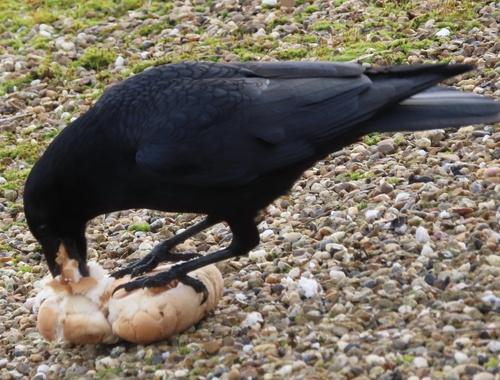
The closest relatives of the Bearded Reedling that you can see in Wadden Sea National Park (order Passeriformes, Perching Birds) are Carrion Crow (about 60%), European Starling (about 60%) and Meadow Pipit (about 50%), with each one's daily chance of a sighting.

Where does the Bearded Reedling sighting chance come from?

GBIF citizen-science records

It is estimated from how often the Bearded Reedling is recorded against all the birds logged in Wadden Sea National Park (336 verified sightings from 2019 to 2026), calibrated against known sighting rates. Figures are rounded to the nearest 10% because citizen-science data supports honest approximations, not decimals, and months with records from fewer than five people show "—". How it works.

← Back to Wadden Sea National Park