

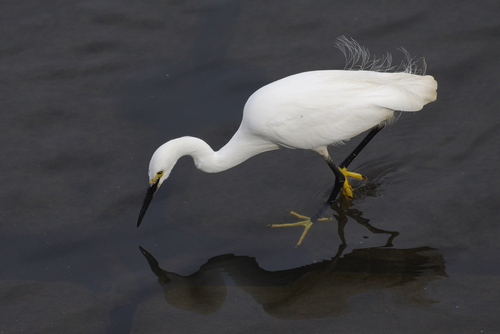

Eurasian Bittern

Eurasian Bittern

Botaurus stellaris

Silhouette: Sheatherius · PhyloPic

LCLeast ConcernNTVUENCR
Daily sighting probability <5% · Rare
at Wadden Sea National Park

In 3 days <5% in a week ~10%

78 Verified sightings at Wadden Sea National Park From 2019 to 2026
875 In all 9 parks
May Best month
☀️ Diurnal When it's spotted

About the Eurasian Bittern

The Eurasian bittern or great bittern (Botaurus stellaris) is a wading bird in the bittern subfamily (Botaurinae) of the heron family Ardeidae. It is a secretive bird, seldom seen in the open as it prefers to skulk in reed beds and thick vegetation near water bodies. Its presence is apparent in the spring, when the booming call of the male during the breeding season can be heard. It feeds on fish, small mammals, fledgling birds, amphibians, crustaceans and insects.

The nest is usually built among reeds at the edge of bodies of water. The female incubates the clutch of eggs and feeds the young chicks, which leave the nest when about two weeks old. She continues to care for them until they are fully fledged some six weeks later.

With its specific habitat requirements and the general reduction in wetlands across its range, the population is thought to be in decline globally. However the decline is slow, and the International Union for Conservation of Nature has assessed its overall conservation status as being of "least concern". Nevertheless, some local populations are at risk and the population of the southern race has declined more dramatically and is cause for concern. In the United Kingdom it is one of the most threatened of all bird species. Wikipedia →

Sounds

Nocturnal flight call0:05

France · 2026

© MILLON Xavier · XC1187008 · CC BY-NC-SA 4.0

Song0:12

Denmark · 2023

© Christian Bøggild · XC1000766 · CC BY-NC-SA 4.0

Flight call0:14

Poland · 2023

© Jarek Matusiak · XC883762 · CC BY-NC-ND 4.0

Global Distribution

Parks Where Found

# Park Country Daily sighting probability
1 Biebrza National Park 🇵🇱 Poland
~20%
2 Hortobágy National Park 🇭🇺 Hungary
~10%
3 Camargue 🇫🇷 France
~10%
4 Fertő-Hanság National Park 🇭🇺 Hungary
~10%
5 Kiskunság National Park 🇭🇺 Hungary
~10%
6 Białowieża National Park 🇵🇱 Poland
<5%
7 Wadden Sea National Park 🇩🇪 Germany
<5%
8 Doñana National Park 🇪🇸 Spain
<5%
9 Monfragüe National Park 🇪🇸 Spain
<5%

Cities Where Found

# City Country Daily sighting probability
1 Tianjin 🇨🇳 China
<5%
2 Beijing 🇨🇳 China
<5%
3 Saint Petersburg 🇷🇺 Russia
<5%
4 Rotterdam [The Hague] 🇳🇱 Netherlands
<5%
5 Tel Aviv 🇮🇱 Israel
<5%
6 Antalya 🇹🇷 Turkey
<5%
7 Helsinki 🇫🇮 Finland
<5%
8 Suzhou 🇨🇳 China
<5%
9 Turin 🇮🇹 Italy
<5%
10 London 🇬🇧 United Kingdom
<5%

Zoos & Centres Where Found

# Zoo / Centre Country
1 Nanjing Hongshan Forest Zoo 🇨🇳 China In captivity
2 Yaroslavl Zoo 🇷🇺 Russia In captivity
3 Zoopark Limpopo 🇷🇺 Russia In captivity
4 Grodno Zoo 🇧🇾 Belarus In captivity

Before you go

What are the chances of seeing a Eurasian Bittern in Wadden Sea National Park?

Rare

Under 5% of wildlife watchers report a Eurasian Bittern sighting in Wadden Sea National Park on a given day, based on 78 verified sightings from GBIF citizen-science data from 2019 to 2026. It is the 203rd most-seen of the 285 birds we can rate there. Over three days the chance rises to under 5%, and over a week to about 10%, if each day is a fresh chance.

When is the best time to see a Eurasian Bittern in Wadden Sea National Park?

Any time of year

In every month with enough records, under 5% of wildlife watchers report a Eurasian Bittern in Wadden Sea National Park on a given day, so our monthly data shows no clear season.

What time of day is best to see a Eurasian Bittern?

Between 7 and 10 am

Across all the parks we cover, that three-hour window holds the most Eurasian Bittern sightings with a recorded time, and about 8 in 10 of them come between 6 am and 6 pm: it is a daytime animal.

Is Wadden Sea National Park the best place to see a Eurasian Bittern?

7th of 9

Of the 9 parks where we can rate Eurasian Bittern sightings, Wadden Sea National Park ranks 7th at under 5%. The best odds are in Biebrza National Park (Poland, about 20%), Hortobágy National Park (Hungary, about 10%) and Camargue (France, about 10%).

Which relatives of the Eurasian Bittern live in Wadden Sea National Park?

Same family: Ardeidae

The closest relatives of the Eurasian Bittern that you can see in Wadden Sea National Park (family Ardeidae, Herons, Egrets, and Bitterns) are Grey Heron (about 40%), Great Egret (about 30%) and Little Egret (about 10%), with each one's daily chance of a sighting.

Where does the Eurasian Bittern sighting chance come from?

GBIF citizen-science records

It is estimated from how often the Eurasian Bittern is recorded against all the birds logged in Wadden Sea National Park (78 verified sightings from 2019 to 2026), calibrated against known sighting rates. Figures are rounded to the nearest 10% because citizen-science data supports honest approximations, not decimals, and months with records from fewer than five people show "—". How it works.

← Back to Wadden Sea National Park