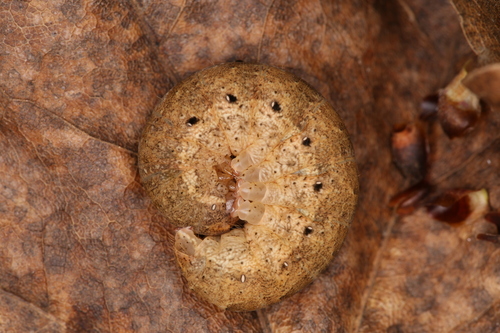
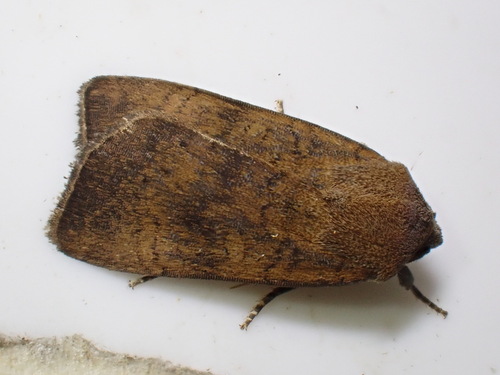
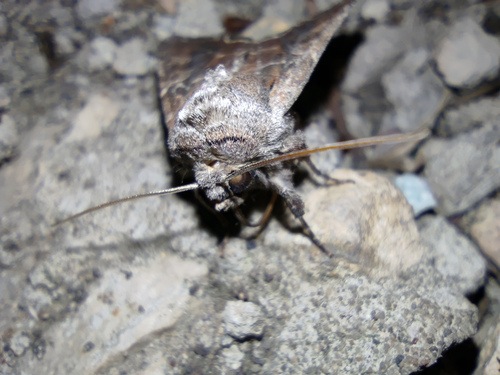
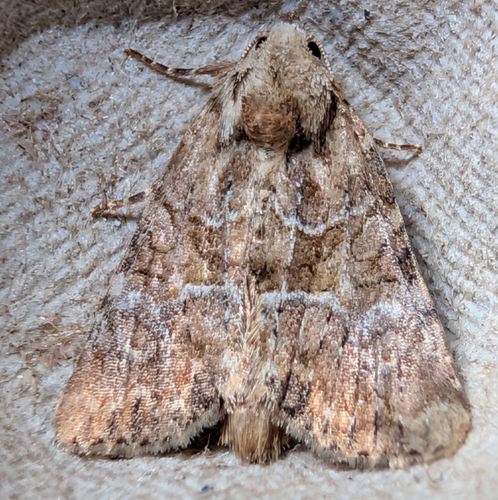
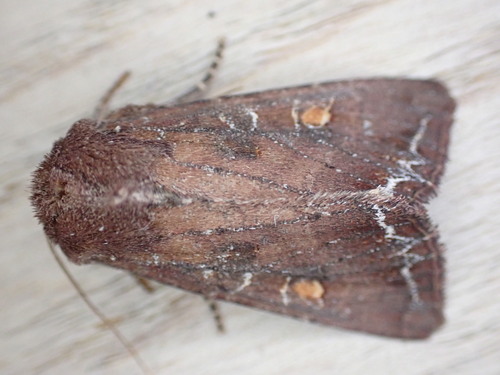
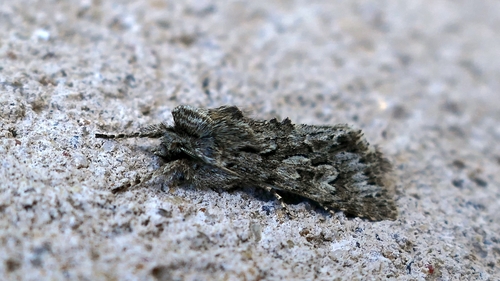
Lesser Yellow Underwing

Lesser Yellow Underwing

Noctua comes

Daily sighting probability ~10% · With luck
at Wadden Sea National Park

In 3 days ~30% in a week ~50%

74 Verified sightings at Wadden Sea National Park From 2019 to 2026
192 In all 9 parks
July Best month
☀️🌙 Day & Night When it's spotted

About the Lesser Yellow Underwing

The lesser yellow underwing (Noctua comes) is a moth of the family Noctuidae. It is found in the Palearctic realm (Europe, North Africa, Canary Islands, Middle East, South Russia, Caucasus, Transcaucasia, Turkey, Iraq, Iran, Afghanistan, north-west India, Novosibirsk, Central Asia). It was introduced into British Columbia in about 1982 and has spread southward in the Pacific Northwest. It has recently been reported from Ontario (Crolla 2008). Full synonymy given in Lafontaine. It is a common species but not as abundant as its larger relative large yellow underwing (Noctua pronuba).

This species generally has the appearance of a smaller (wingspan 38–48 mm) version of the large yellow underwing Noctua pronuba. The forewings are equally variable in pattern and colour, from pale clay to reddish clay, light brown to almost black. The stigmata are dark and outlined with pale yellow. The crosslines are weak. The wavy line flows on to the front edge as a no more than dark brown (never black) stain, which is sometimes extended down the entire wavy line. The hindwings are orange-yellow with a broad black sub-terminal band and central discal lunule (usually... Wikipedia →
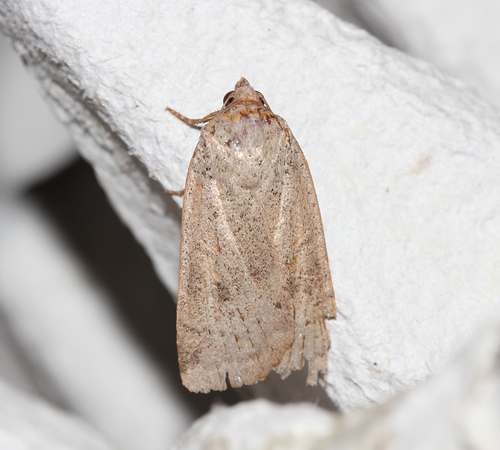

Global Distribution

Parks Where Found

# Park Country Daily sighting probability
1 Snowdonia National Park 🇬🇧 United Kingdom
~10%
2 Cairngorms National Park 🇬🇧 United Kingdom
~10%
3 Wadden Sea National Park 🇩🇪 Germany
~10%
4 Sierra Nevada National Park 🇪🇸 Spain
~10%
5 Cévennes National Park 🇫🇷 France
~10%
6 Fertő-Hanság National Park 🇭🇺 Hungary
~10%
7 Bavarian Forest National Park 🇩🇪 Germany
~10%
8 Pyrénées National Park 🇫🇷 France
~10%
9 Sierra de Guadarrama National Park 🇪🇸 Spain
<5%

Cities Where Found

# City Country Daily sighting probability
1 Liverpool 🇬🇧 United Kingdom
~40%
2 London 🇬🇧 United Kingdom
~20%
3 Manchester 🇬🇧 United Kingdom
~20%
4 Birmingham 🇬🇧 United Kingdom
~10%
5 Budapest 🇭🇺 Hungary
~10%
6 Vienna 🇦🇹 Austria
~10%
7 Rotterdam [The Hague] 🇳🇱 Netherlands
~10%
8 Paris 🇫🇷 France
~10%
9 Berlin 🇩🇪 Germany
~10%
10 Lyon 🇫🇷 France
~10%

Before you go

What are the chances of seeing a Lesser Yellow Underwing in Wadden Sea National Park?

With luck

About 10% of wildlife watchers report a Lesser Yellow Underwing sighting in Wadden Sea National Park on a given day, based on 74 verified sightings from GBIF citizen-science data from 2019 to 2026. It is the 84th most-seen of the 818 insects we can rate there. Over three days the chance rises to about 30%, and over a week to about 50%, if each day is a fresh chance.

When is the best time to see a Lesser Yellow Underwing in Wadden Sea National Park?

July

In that month about 20% of wildlife watchers report a Lesser Yellow Underwing in Wadden Sea National Park on a given day, against under 5% in October to May, the lowest months.

What time of day is best to see a Lesser Yellow Underwing?

Between 11 pm and 2 am

Across all the parks we cover, that three-hour window holds the most Lesser Yellow Underwing sightings with a recorded time, and about half of them come between 6 am and 6 pm: it is seen both by day and at night.

Is Wadden Sea National Park the best place to see a Lesser Yellow Underwing?

Among the best

Of the 9 parks where we can rate Lesser Yellow Underwing sightings, Wadden Sea National Park ranks 3rd at about 10%, level with the leaders once rounded. The best odds are in Snowdonia National Park (United Kingdom, about 10%) and Cairngorms National Park (United Kingdom, about 10%).

Where does the Lesser Yellow Underwing sighting chance come from?

GBIF citizen-science records

It is estimated from how often the Lesser Yellow Underwing is recorded against all the insects logged in Wadden Sea National Park (74 verified sightings from 2019 to 2026), calibrated against known sighting rates. Figures are rounded to the nearest 10% because citizen-science data supports honest approximations, not decimals, and months with records from fewer than five people show "—". How it works.

← Back to Wadden Sea National Park