Roesel's Bush-Cricket

Roesel's Bush-Cricket

Roeseliana roeselii

Daily sighting probability ~10% · With luck
at Wadden Sea National Park

In 3 days ~20% in a week ~40%

32 Verified sightings at Wadden Sea National Park From 2019 to 2026
239 In all 11 parks
July Best month
☀️ Diurnal When it's spotted

About the Roesel's Bush-Cricket

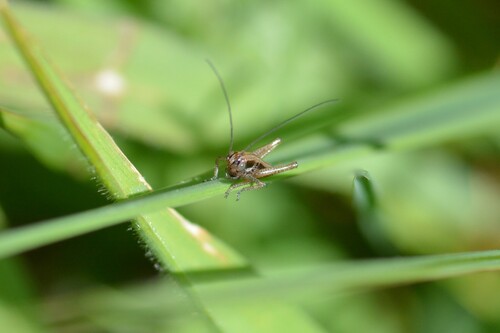
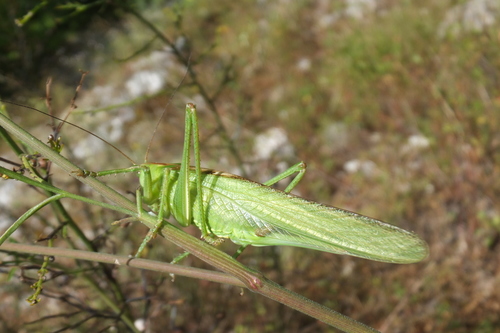
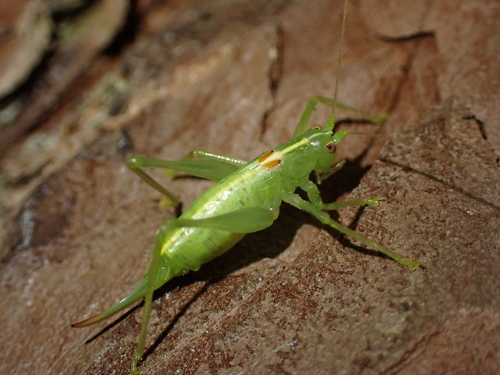
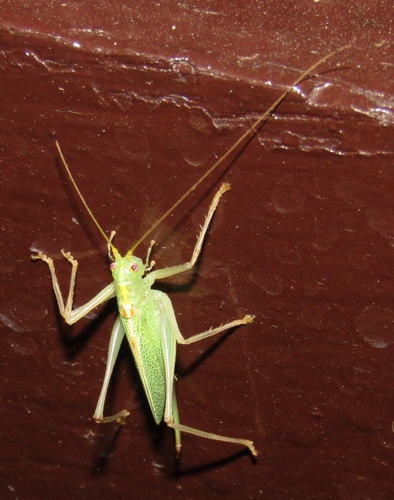
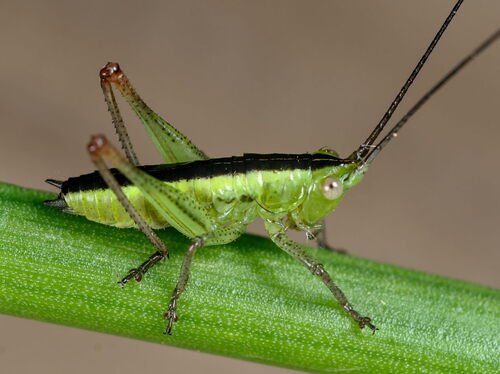
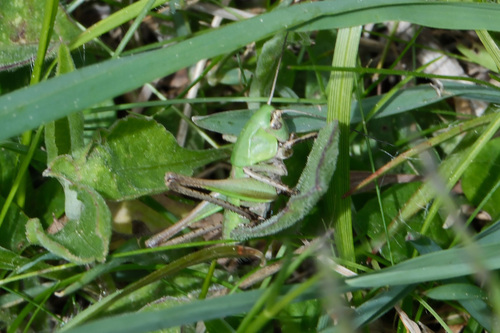
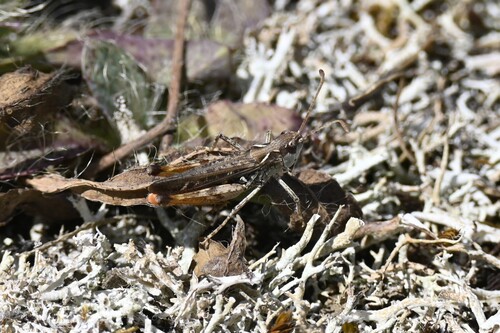
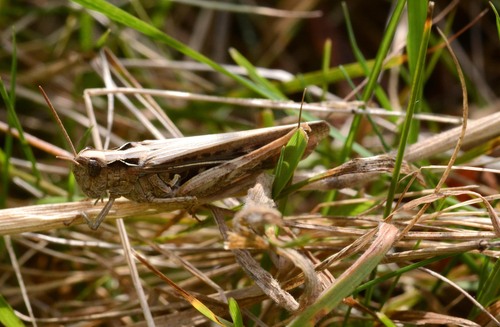
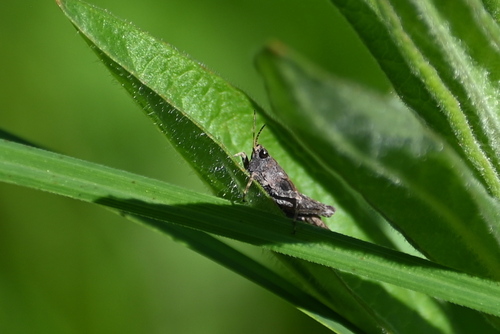
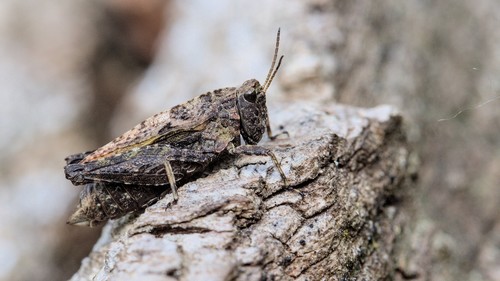
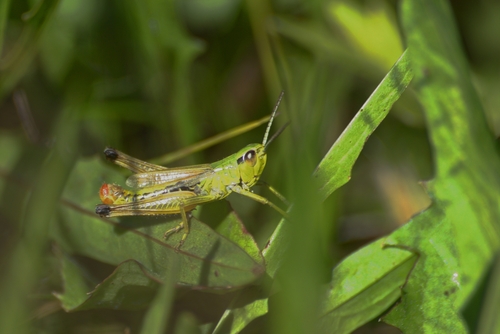
Roesel's bush-cricket (Roeseliana roeselii) (synonym Metrioptera roeselii) is a European bush-cricket, named after August Johann Rösel von Rosenhof, a German entomologist. Adult Roesel's bush-crickets are medium-sized Tettigoniid between 13–26 mm in length. They are normally brown or yellow, often with a greenish shade and a rarer green form also sometimes occurs. An identifying feature is the yellow-green spots along the abdomen, just behind the pronotum, along with a matching margin along the border of the pronotum. This margin is entire, unlike the bog bush-cricket.

Males and females can be easily differentiated, as the females have a long sword-like ovipositor at the end of their abdomen, which the males lack. Both male and female adults are normally brachypterous. However, a macropterous form, f. diluta (described by Charpentier 1825) also exists. These have much longer wings, and usually make up less than 1% of the total population, but in some populations occur in much higher numbers, usually in areas where the bush-cricket's range has recently expanded to.

They are more common in long, warm summers where populations... Wikipedia →

Global Distribution

Parks Where Found

# Park Country Daily sighting probability
1 Tatra National Park 🇸🇰 Slovakia
~20%
2 Mercantour National Park 🇫🇷 France
~20%
3 Elk Island National Park 🇨🇦 Canada
~20%
4 Bavarian Forest National Park 🇩🇪 Germany
~10%
5 Aigüestortes National Park 🇪🇸 Spain
~10%
6 Triglav National Park 🇸🇮 Slovenia
~10%
7 Białowieża National Park 🇵🇱 Poland
~10%
8 Pyrénées National Park 🇫🇷 France
~10%
9 Fertő-Hanság National Park 🇭🇺 Hungary
~10%
10 Wadden Sea National Park 🇩🇪 Germany
~10%
11 Acadia National Park 🇺🇸 United States
~10%

Cities Where Found

# City Country Daily sighting probability
1 Birmingham 🇬🇧 United Kingdom
~20%
2 London 🇬🇧 United Kingdom
~10%
3 Warsaw 🇵🇱 Poland
~10%
4 Helsinki 🇫🇮 Finland
~10%
5 Manchester 🇬🇧 United Kingdom
~10%
6 Kharkiv 🇺🇦 Ukraine
~10%
7 Hamburg 🇩🇪 Germany
~10%
8 Berlin 🇩🇪 Germany
~10%
9 Minneapolis [Saint Paul] 🇺🇸 United States
~10%
10 Liverpool 🇬🇧 United Kingdom
~10%

Before you go

What are the chances of seeing a Roesel's Bush-Cricket in Wadden Sea National Park?

With luck

About 10% of wildlife watchers report a Roesel's Bush-Cricket sighting in Wadden Sea National Park on a given day, based on 32 verified sightings from GBIF citizen-science data from 2019 to 2026. It is the 185th most-seen of the 818 insects we can rate there. Over three days the chance rises to about 20%, and over a week to about 40%, if each day is a fresh chance.

When is the best time to see a Roesel's Bush-Cricket in Wadden Sea National Park?

May to September

In those months about 10% of wildlife watchers report a Roesel's Bush-Cricket in Wadden Sea National Park on a given day, against under 5% in October to April, the lowest months.

What time of day is best to see a Roesel's Bush-Cricket?

Between noon and 3 pm

Across all the parks we cover, that three-hour window holds the most Roesel's Bush-Cricket sightings with a recorded time, and about 9 in 10 of them come between 6 am and 6 pm: it is a daytime animal.

Is Wadden Sea National Park the best place to see a Roesel's Bush-Cricket?

10th of 11

Of the 11 parks where we can rate Roesel's Bush-Cricket sightings, Wadden Sea National Park ranks 10th at about 10%. The best odds are in Tatra National Park (Slovakia, about 20%), Mercantour National Park (France, about 20%) and Elk Island National Park (Canada, about 20%).

Where does the Roesel's Bush-Cricket sighting chance come from?

GBIF citizen-science records

It is estimated from how often the Roesel's Bush-Cricket is recorded against all the insects logged in Wadden Sea National Park (32 verified sightings from 2019 to 2026), calibrated against known sighting rates. Figures are rounded to the nearest 10% because citizen-science data supports honest approximations, not decimals, and months with records from fewer than five people show "—". How it works.

← Back to Wadden Sea National Park