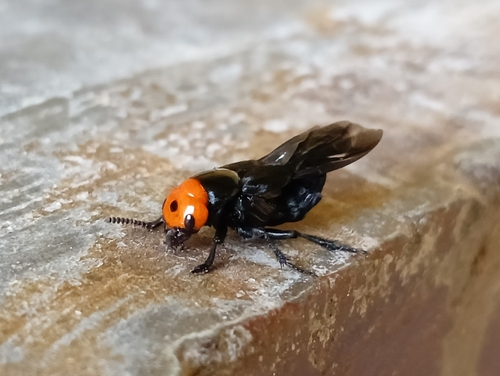
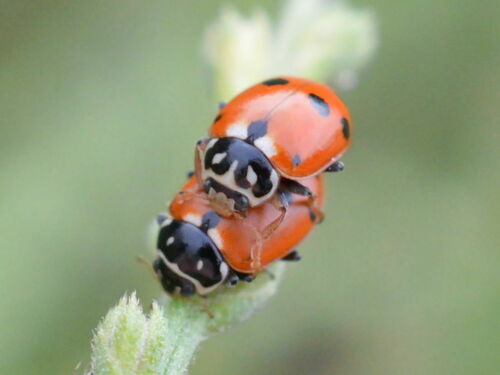
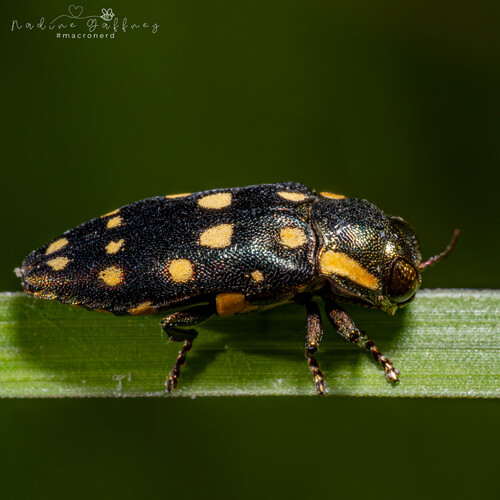
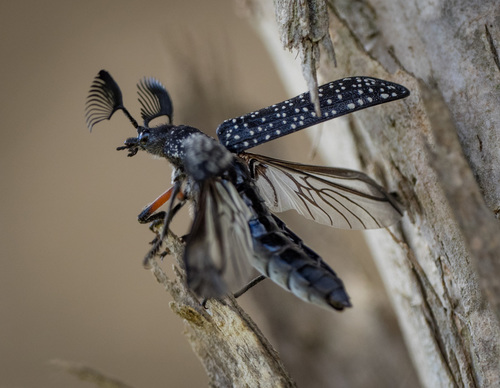
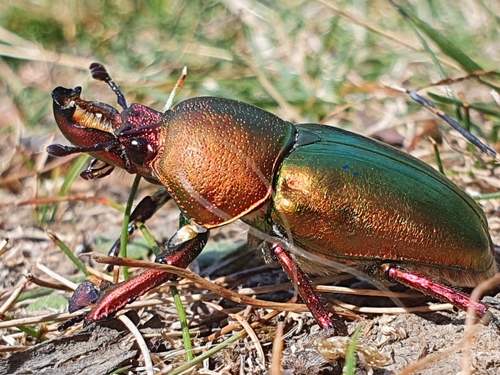
Golden Stag Beetle

Golden Stag Beetle

Lamprima aurata

Endemic
Daily sighting probability ~30% · Possible
at Wilsons Promontory National Park

In 3 days ~60% in a week ~90%

34 Verified sightings at Wilsons Promontory National Park From 2019 to 2026
106 In all 7 parks
January Best month
☀️ Diurnal When it's spotted

About the Golden Stag Beetle

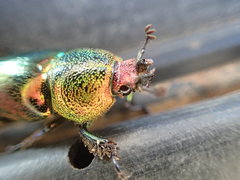
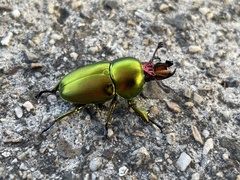
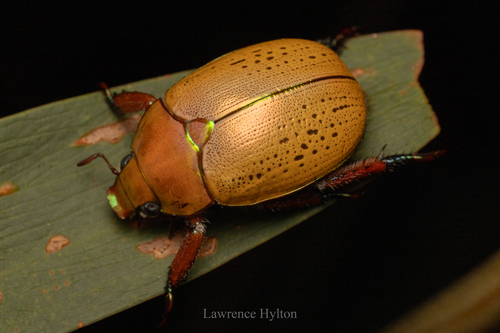
Lamprima aurata, the golden stag beetle, is a species of beetle in the family Lucanidae. In Tasmania, this species is referred to by the common name of Christmas beetle, a name that is normally used for beetles in the family Scarabaeidae, genus Anoplognathus.

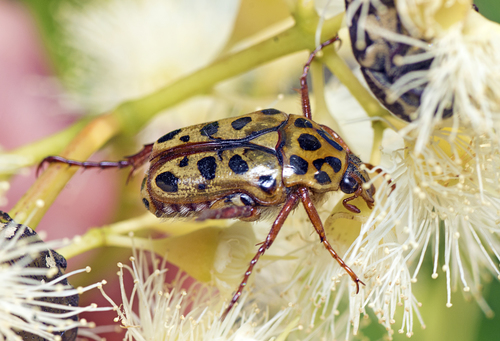
This beetle has an oval, shiny body. It measures between 15 and 25 mm in length. It is fairly variable in coloration, so it has been given many names by various authors. The colour of the males is typically metallic golden green or yellow with colorful legs, while females may be blue, blue-green or dull brown. Females are smaller than the males, and males have larger mandibles prolonged forwards used for fighting.

Lamprima aurata is native to Australia and can be found in Tasmania and south-eastern mainland Australia in dry sclerophyll forests. Of the five species in the genus Lamprima, only two occur on the Australian mainland: L. aurata and the closely related L. imberbis, which live in northeastern New South Wales.

The larvae are sapro-xylophagous and will spend two years feeding on rotting logs. Adults are free-flying and will move about on the ground during the... Wikipedia →
Global Distribution

Parks Where Found

# Park Country Daily sighting probability
1 Wilsons Promontory National Park 🇦🇺 Australia
~30%
2 Freycinet National Park 🇦🇺 Australia
~20%
3 Grampians National Park 🇦🇺 Australia
~10%
4 Royal National Park 🇦🇺 Australia
~10%
5 Great Otway National Park 🇦🇺 Australia
~10%
6 Lamington National Park 🇦🇺 Australia
~10%
7 Blue Mountains National Park 🇦🇺 Australia
~10%

Cities Where Found

# City Country Daily sighting probability
1 Hobart 🇦🇺 Australia
~40%
2 Melbourne 🇦🇺 Australia
~10%
3 Brisbane 🇦🇺 Australia
<5%
4 Sydney 🇦🇺 Australia
<5%

Before you go

What are the chances of seeing a Golden Stag Beetle in Wilsons Promontory National Park?

Possible

About 30% of wildlife watchers report a Golden Stag Beetle sighting in Wilsons Promontory National Park on a given day, based on 34 verified sightings from GBIF citizen-science data from 2019 to 2026. It is the 5th most-seen of the 60 insects we can rate there. Over three days the chance rises to about 60%, and over a week to about 90%, if each day is a fresh chance.

When is the best time to see a Golden Stag Beetle in Wilsons Promontory National Park?

December and January

In those months about 50% of wildlife watchers report a Golden Stag Beetle in Wilsons Promontory National Park on a given day, against under 5% in March to November, the lowest months.

What time of day is best to see a Golden Stag Beetle?

Between 10 am and 1 pm

Across all the parks we cover, that three-hour window holds the most Golden Stag Beetle sightings with a recorded time, and about 9 in 10 of them come between 6 am and 6 pm: it is a daytime animal.

Is Wilsons Promontory National Park the best place to see a Golden Stag Beetle?

Yes

Of the 7 parks where we can rate Golden Stag Beetle sightings, Wilsons Promontory National Park has the highest daily chance: about 30%. Next come Freycinet National Park (Australia, about 20%) and Grampians National Park (Australia, about 10%).

Which relatives of the Golden Stag Beetle live in Wilsons Promontory National Park?

Same order: Coleoptera

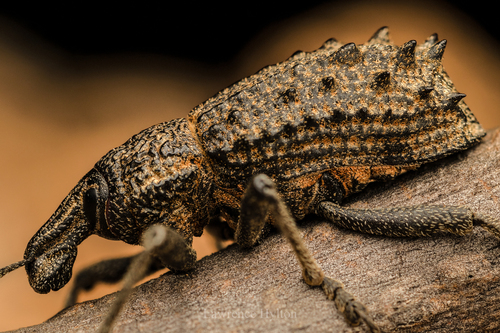
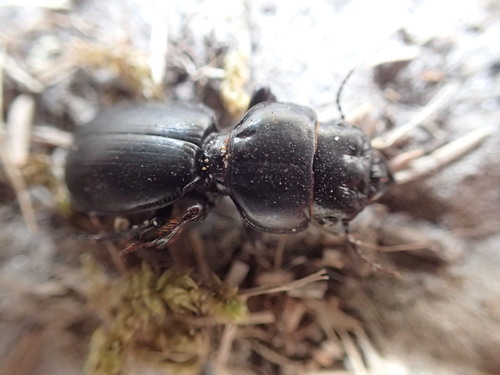
The closest relatives of the Golden Stag Beetle that you can see in Wilsons Promontory National Park (order Coleoptera, Beetles) are Broad-Back Weevil (about 30%), Scaraphites rotundipennis (about 20%) and Punctate Flower Chafer (about 20%), with each one's daily chance of a sighting.

Where does the Golden Stag Beetle sighting chance come from?

GBIF citizen-science records

It is estimated from how often the Golden Stag Beetle is recorded against all the insects logged in Wilsons Promontory National Park (34 verified sightings from 2019 to 2026), calibrated against known sighting rates. Figures are rounded to the nearest 10% because citizen-science data supports honest approximations, not decimals, and months with records from fewer than five people show "—". How it works.

← Back to Wilsons Promontory National Park