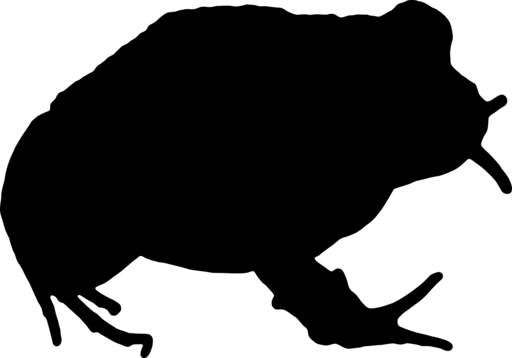
Pobblebonk

Pobblebonk

Limnodynastes dumerilii

Silhouette: Jose Carlos Arenas-Monroy · PhyloPic

LCLeast ConcernNTVUENCR Endemic
Daily sighting probability ~20% · Possible
at Wilsons Promontory National Park

In 3 days ~40% in a week ~70%

21 Verified sightings at Wilsons Promontory National Park From 2019 to 2026
175 In all 6 parks
December Best month
🌅 Crepuscular When it's spotted

About the Pobblebonk

Limnodynastes dumerilii is a frog species from the family Limnodynastidae. The informal names for the species and its subspecies include eastern or southern banjo frog, and bull frog. The frog is also called the pobblebonk after its distinctive "bonk" call, which is likened to a banjo string being plucked. There are five subspecies of L. dumerilii, each with different skin coloration. The species is native to eastern Australia. There has been one occurrence in New Zealand, when tadpoles of the species were found in 1999 and destroyed.

Adults are roughly seven to eight centimetres (2.8 to 3.1 in) long with dark warty backs, a prominent tibial gland, fleshy metatarsal tubercules and a smooth white or mottled belly. The tadpole stage is relatively long, lasting up to fifteen months. The species is common.

The five subspecies of Limnodynastes dumerilii are: This is the most widespread of the five subspecies. It is found in South-East Queensland, the Australian Capital Territory, the slopes and ranges of New South Wales, northern Victoria and the Murray River into South Australia. This subspecies... Wikipedia →

Sounds

Uncertain1:01

Australia · 2026

© Khristos Nizamis · XC1178175 · CC BY-NC-ND 4.0

Territorial call0:54

Australia · 2023

© Romuald Mikusek · XC1062822 · CC BY-NC-SA 4.0

Advertisement call0:35

Australia · 2013

© Marc Anderson · XC883141 · CC BY-NC-ND 4.0

Global Distribution

Parks Where Found

# Park Country Daily sighting probability
1 Hattah-Kulkyne National Park 🇦🇺 Australia
~30%
2 Grampians National Park 🇦🇺 Australia
~30%
3 Kosciuszko National Park 🇦🇺 Australia
~20%
4 Wilsons Promontory National Park 🇦🇺 Australia
~20%
5 Great Otway National Park 🇦🇺 Australia
~10%
6 Blue Mountains National Park 🇦🇺 Australia
~10%

Cities Where Found

# City Country Daily sighting probability
1 Melbourne 🇦🇺 Australia
~10%

Zoos & Centres Where Found

# Zoo / Centre Country
1 National Zoo & Aquarium 🇦🇺 Australia In captivity

Before you go

What are the chances of seeing a Pobblebonk in Wilsons Promontory National Park?

Possible

About 20% of wildlife watchers report a Pobblebonk sighting in Wilsons Promontory National Park on a given day, based on 21 verified sightings from GBIF citizen-science data from 2019 to 2026. It is the 2nd most-seen of the 5 amphibians we can rate there. Over three days the chance rises to about 40%, and over a week to about 70%, if each day is a fresh chance.

When is the best time to see a Pobblebonk in Wilsons Promontory National Park?

September and November–December

In those months about 30% of wildlife watchers report a Pobblebonk in Wilsons Promontory National Park on a given day, against under 5% in January–February, May and July–August, the lowest months.

What time of day is best to see a Pobblebonk?

Between 6 and 9 pm

Across all the parks we cover, that three-hour window holds the most Pobblebonk sightings with a recorded time, and about 6 in 10 of them come between 6 pm and 6 am: it is most active around dawn and dusk.

Where does the Pobblebonk sighting chance come from?

GBIF citizen-science records

It is estimated from how often the Pobblebonk is recorded against all the amphibians logged in Wilsons Promontory National Park (21 verified sightings from 2019 to 2026), calibrated against known sighting rates. Figures are rounded to the nearest 10% because citizen-science data supports honest approximations, not decimals, and months with records from fewer than five people show "—". How it works.

← Back to Wilsons Promontory National Park