

Completed


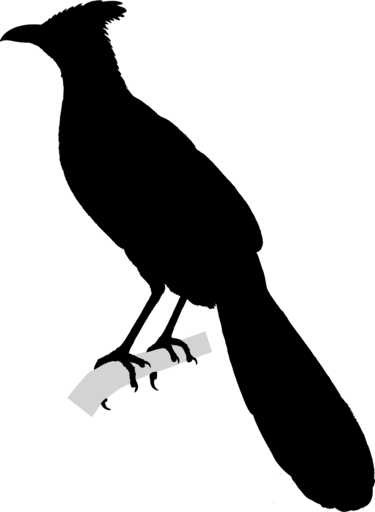
Greater Roadrunner
Geococcyx californianus
Silhouette: Nicolas Huet le Jeune and Jean-Gabriel Prêtre (vectorized by T. Michael Keesey) · PhyloPic
- KingdomAnimalia (Animals)
- PhylumChordata (Chordates)
- ClassAves (Birds)
- OrderCuculiformes (Cuckoos)
- FamilyCuculidae (Cuckoos)
- GenusGeococcyx (Roadrunners)
- SpeciesGeococcyx californianus (Greater Roadrunner)
In 3 days ~20% in a week ~30%
245 Verified sightings at Zion National Park From 2019 to 2026
7,233 In all 11 parks
September Best month
☀️ Diurnal When it's spotted
About the Greater Roadrunner
The greater roadrunner (Geococcyx californianus) is a long-legged bird in the cuckoo family, Cuculidae, from the Aridoamerica region in the Southwestern United States and Mexico. The scientific name means "Californian earth-cuckoo". Along with the lesser roadrunner, it is one of two species in the genus Geococcyx. This roadrunner is also known as the chaparral cock, ground cuckoo, and snake killer.
Greater roadrunner fossils dating from the Holocene and Pleistocene have been found in California,Arizona, New Mexico, and Texas, in the United States, and the Mexican state of Nuevo León. The oldest known fossil comes from a cave in New Mexico, estimated at an age of 33,500 years. In the La Brea Tar Pits, fragments from 25 greater roadrunner fossils have been found. Several other fossils are also known from Santa Barbara and Kern Counties, as well as Northern Mexico.
Prehistoric remains indicate that until 8,000 years ago, the greater roadrunner was found in sparse forests rather than scrubby deserts; only later did it adapt to arid environments. Due to this, along with human transformation of the landscape, it has recently started to move northeast of its... Wikipedia →
Recent sightings of Greater Roadrunner in Zion National Park
LIVEiNaturalistGlobal Distribution
Parks Where Found
| # | Park | Country | Daily sighting probability |
|---|---|---|---|
| 1 | Big Bend National Park | 🇺🇸 United States | |
| 2 | Cabo Pulmo National Park | 🇲🇽 Mexico | |
| 3 | Saguaro National Park | 🇺🇸 United States | |
| 4 | Death Valley National Park | 🇺🇸 United States | |
| 5 | Joshua Tree National Park | 🇺🇸 United States | |
| 6 | El Vizcaíno Biosphere Reserve | 🇲🇽 Mexico | |
| 7 | Zion National Park | 🇺🇸 United States | |
| 8 | Bahía de Loreto National Park | 🇲🇽 Mexico | |
| 9 | Cumbres de Monterrey National Park | 🇲🇽 Mexico | |
| 10 | Guadalupe Mountains National Park | 🇺🇸 United States | |
| 11 | Grand Canyon National Park | 🇺🇸 United States |
Cities Where Found
| # | City | Country | Daily sighting probability |
|---|---|---|---|
| 1 | Las Vegas | 🇺🇸 United States | |
| 2 | Mesa | 🇺🇸 United States | |
| 3 | Phoenix | 🇺🇸 United States | |
| 4 | Houston | 🇺🇸 United States | |
| 5 | San Francisco | 🇺🇸 United States | |
| 6 | Los Angeles | 🇺🇸 United States | |
| 7 | San Diego | 🇺🇸 United States | |
| 8 | Austin | 🇺🇸 United States | |
| 9 | San Antonio | 🇺🇸 United States | |
| 10 | Dallas | 🇺🇸 United States |
Zoos & Centres Where Found
| # | Zoo / Centre | Country | |
|---|---|---|---|
| 1 | Pairi Daiza | 🇧🇪 Belgium | |
| 2 | North Carolina Zoo | 🇺🇸 United States | |
| 3 | Walsrode World Bird Park | 🇩🇪 Germany | |
| 4 | Abilene Zoological Gardens | 🇺🇸 United States | |
| 5 | Living Desert Zoo and Gardens | 🇺🇸 United States | |
| 6 | Brookfield Zoo | 🇺🇸 United States | |
| 7 | Omaha’s Henry Doorly Zoo and Aquarium | 🇺🇸 United States | |
| 8 | Los Angeles Zoo | 🇺🇸 United States | |
| 9 | Dallas Zoo | 🇺🇸 United States | |
| 10 | Phoenix Zoo | 🇺🇸 United States | |
| 11 | Oklahoma City Zoo and Botanical Garden | 🇺🇸 United States | |
| 12 | Burgers' Ocean | 🇳🇱 Netherlands | |
| 13 | Royal Burgers' Zoo | 🇳🇱 Netherlands | |
| 14 | Franklin Park Zoo | 🇺🇸 United States | |
| 15 | Fort Worth Zoo | 🇺🇸 United States | |
| 16 | Wilhelma | 🇩🇪 Germany | |
| 17 | Arizona-Sonora Desert Museum | 🇺🇸 United States | |
| 18 | San Antonio Zoo | 🇺🇸 United States | |
| 19 | California Living Museum | 🇺🇸 United States | |
| 20 | The Abilene Zoo | 🇺🇸 United States | |
| 21 | Queens Zoo | 🇺🇸 United States | |
| 22 | Hutchinson Zoo | 🇺🇸 United States | |
| 23 | Stone Zoo | 🇺🇸 United States | |
| 24 | Sacramento Zoo | 🇺🇸 United States | |
| 25 | Salisbury Zoo | 🇺🇸 United States | |
| 26 | ZooAmerica | 🇺🇸 United States | |
| 27 | Staten Island Zoo | 🇺🇸 United States | |
| 28 | Tracy Aviary | 🇺🇸 United States | |
| 29 | Oceanium | 🇳🇱 Netherlands | |
| 30 | Lindsay Wildlife Experience | 🇺🇸 United States |
Closest Relatives at Zion National Park
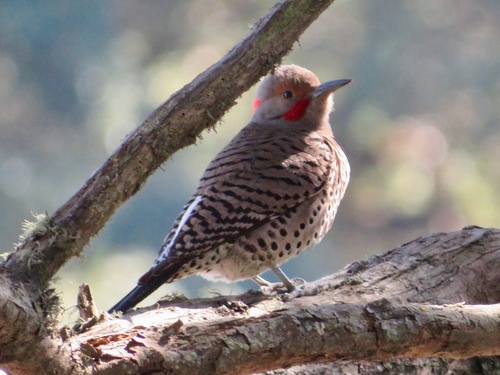
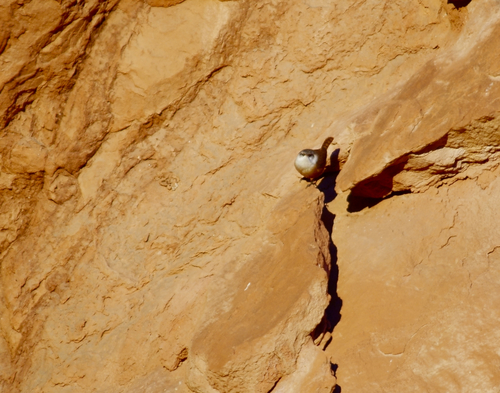
No species of the same family or order lives in Zion National Park, so these are its closest relatives here: other birds.








Before you go
What are the chances of seeing a Greater Roadrunner in Zion National Park?
With luck
About 10% of wildlife watchers report a Greater Roadrunner sighting in Zion National Park on a given day, based on 245 verified sightings from GBIF citizen-science data from 2019 to 2026. It is the 84th most-seen of the 183 birds we can rate there. Over three days the chance rises to about 20%, and over a week to about 30%, if each day is a fresh chance.
When is the best time to see a Greater Roadrunner in Zion National Park?
January, April, June and September–November
In those months about 10% of wildlife watchers report a Greater Roadrunner in Zion National Park on a given day, against under 5% in February–March, May, July–August and December, the lowest months.
What time of day is best to see a Greater Roadrunner?
Between 7 and 10 am
Across all the parks we cover, that three-hour window holds the most Greater Roadrunner sightings with a recorded time, and about 9 in 10 of them come between 6 am and 6 pm: it is a daytime animal.
Is Zion National Park the best place to see a Greater Roadrunner?
7th of 11
Of the 11 parks where we can rate Greater Roadrunner sightings, Zion National Park ranks 7th at about 10%. The best odds are in Big Bend National Park (United States, about 60%), Cabo Pulmo National Park (Mexico, about 20%) and Saguaro National Park (United States, about 20%).
Where does the Greater Roadrunner sighting chance come from?
GBIF citizen-science records
It is estimated from how often the Greater Roadrunner is recorded against all the birds logged in Zion National Park (245 verified sightings from 2019 to 2026), calibrated against known sighting rates. Figures are rounded to the nearest 10% because citizen-science data supports honest approximations, not decimals, and months with records from fewer than five people show "—". How it works.
