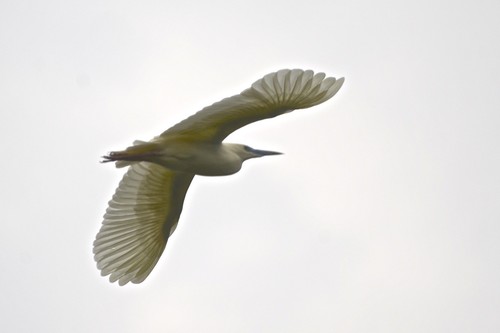
Goliath Heron

Goliath Heron

Ardea goliath

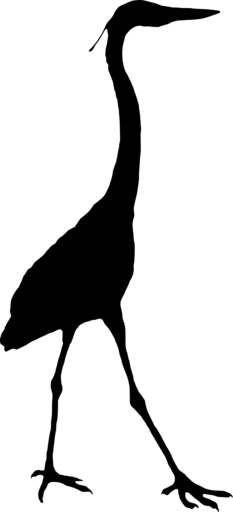
Silhouette: Kai Caspar · PhyloPic

LCLeast ConcernNTVUENCR
Daily sighting probability ~50% · Likely
at Amboseli National Park

In 3 days ~90% in a week >90%

595 Verified sightings at Amboseli National Park From 2019 to 2026
6,911 In all 35 parks
October Best month
☀️ Diurnal When it's spotted

About the Goliath Heron

The Goliath heron (Ardea goliath), also known as the giant heron, is a very large wading bird in the heron family, Ardeidae. It is primarily found in sub-Saharan Africa, with smaller, declining numbers in Southwest and South Asia. Asian records are now very rare, but it does still known as an occasional vagrant.

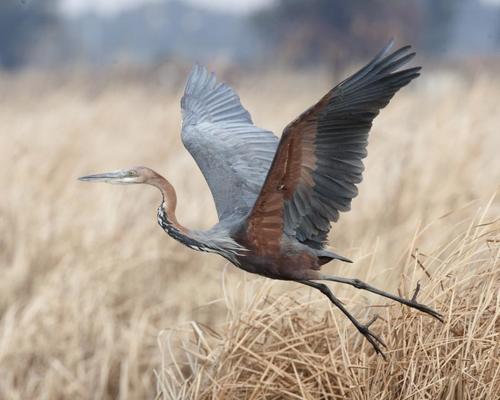
It is the world's largest living heron, though the extinct Bennu heron may have been larger. The height of the goliath heron is 120–152 cm (3 ft 11 in – 5 ft 0 in), the wingspan is 185–230 cm (6 ft 1 in – 7 ft 7 in), and the weight is 4–5 kg (8.8–11.0 lb). The tarsus measures from 21.2 to 25.5 cm (8.3 to 10.0 in) and the wing chord averages around 60.7 cm (23.9 in) in length. The culmen measures from 18 to 20 cm (7.1 to 7.9 in), while the bill from the gape measures around 24 cm (9.4 in). In flight it has a slow and rather ponderous look and, unlike some other herons, its legs are not held horizontally. Males and females look similar, with an overall covering of slate-grey and chestnut feathers. The head and its bushy crest, face, back, and sides of the neck are chestnut. The chin, throat, fore neck, and upper breast are white, with black streaks across the... Wikipedia →
Sounds

Song0:12

Zambia · 2023

© Marc Anderson · XC1065484 · CC BY-NC-ND 4.0

Song0:04

South Africa · 2017

© Jane Trembath · XC995428 · CC BY-NC-SA 4.0

Global Distribution

Parks Where Found

# Park Country Daily sighting probability
1 Lower Zambezi National Park 🇿🇲 Zambia
~50%
2 Gonarezhou National Park 🇿🇼 Zimbabwe
~50%
3 Amboseli National Park 🇰🇪 Kenya
~50%
4 Murchison Falls National Park 🇺🇬 Uganda
~50%
5 Akagera National Park 🇷🇼 Rwanda
~40%
6 Mana Pools National Park 🇿🇼 Zimbabwe
~40%
7 Ruaha National Park 🇹🇿 Tanzania
~30%
8 Chobe National Park 🇧🇼 Botswana
~30%
9 Moremi Game Reserve 🇧🇼 Botswana
~30%
10 Liwonde National Park 🇲🇼 Malawi
~30%
11 uMkhuze Game Reserve 🇿🇦 South Africa
~20%
12 Virunga National Park 🇨🇩 Democratic Republic of the Congo
~20%
13 Gorongosa National Park 🇲🇿 Mozambique
~20%
14 Kruger National Park 🇿🇦 South Africa
~20%
15 Queen Elizabeth National Park 🇺🇬 Uganda
~20%
16 Lake Nakuru National Park 🇰🇪 Kenya
~20%
17 Kafue National Park 🇿🇲 Zambia
~20%
18 South Luangwa National Park 🇿🇲 Zambia
~20%
19 iSimangaliso Wetland Park 🇿🇦 South Africa
~20%
20 Meru National Park 🇰🇪 Kenya
~10%
21 Addo Elephant National Park 🇿🇦 South Africa
~10%
22 Hwange National Park 🇿🇼 Zimbabwe
~10%
23 Samburu National Reserve 🇰🇪 Kenya
~10%
24 Masai Mara National Reserve 🇰🇪 Kenya
~10%
25 Garden Route National Park 🇿🇦 South Africa
<5%
26 Tarangire National Park 🇹🇿 Tanzania
<5%
27 Semuliki National Park 🇺🇬 Uganda
<5%
28 Lake Mburo National Park 🇺🇬 Uganda
<5%
29 Serengeti National Park 🇹🇿 Tanzania
<5%
30 Tsavo East National Park 🇰🇪 Kenya
<5%
31 Lake Manyara National Park 🇹🇿 Tanzania
<5%
32 Pilanesberg National Park 🇿🇦 South Africa
<5%
33 West Coast National Park 🇿🇦 South Africa
<5%
34 Tsavo West National Park 🇰🇪 Kenya
<5%
35 Ngorongoro Conservation Area 🇹🇿 Tanzania
<5%

Cities Where Found

# City Country Daily sighting probability
1 Brazzaville 🇨🇬 Republic of the Congo
~10%
2 Durban 🇿🇦 South Africa
~10%
3 Johannesburg 🇿🇦 South Africa
<5%
4 Pretoria 🇿🇦 South Africa
<5%
5 Kampala 🇺🇬 Uganda
<5%
6 Cape Town 🇿🇦 South Africa
<5%

Zoos & Centres Where Found

# Zoo / Centre Country
1 Zoo Pilsen 🇨🇿 Czechia In captivity
2 Réserve africaine de Sigean 🇫🇷 France In captivity
3 Walsrode World Bird Park 🇩🇪 Germany In captivity
4 Parc des oiseaux 🇫🇷 France In captivity
5 San Diego Zoo Safari Park 🇺🇸 United States In captivity
6 Al Ain Zoo 🇦🇪 United Arab Emirates In captivity
7 Vogelpark Niendorf 🇩🇪 Germany In captivity

Before you go

What are the chances of seeing a Goliath Heron in Amboseli National Park?

Likely

About 50% of wildlife watchers report a Goliath Heron sighting in Amboseli National Park on a given day, based on 595 verified sightings from GBIF citizen-science data from 2019 to 2026. It is the 24th most-seen of the 362 birds we can rate there. Over three days the chance rises to about 90%, and over a week to over 90%, if each day is a fresh chance.

When is the best time to see a Goliath Heron in Amboseli National Park?

October and November

In those months about 60% of wildlife watchers report a Goliath Heron in Amboseli National Park on a given day, against about 40% in January–February, April and August–September, the lowest months.

What time of day is best to see a Goliath Heron?

Between 9 am and noon

Across all the parks we cover, that three-hour window holds the most Goliath Heron sightings with a recorded time, and about 9 in 10 of them come between 6 am and 6 pm: it is a daytime animal.

Is Amboseli National Park the best place to see a Goliath Heron?

Among the best

Of the 35 parks where we can rate Goliath Heron sightings, Amboseli National Park ranks 3rd at about 50%, level with the leaders once rounded. The best odds are in Lower Zambezi National Park (Zambia, about 50%) and Gonarezhou National Park (Zimbabwe, about 50%). All parks ranked.

Which relatives of the Goliath Heron live in Amboseli National Park?

Same genus: Ardea

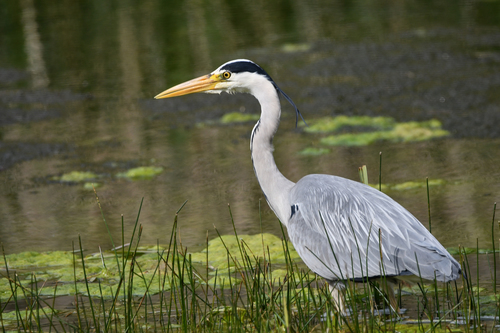
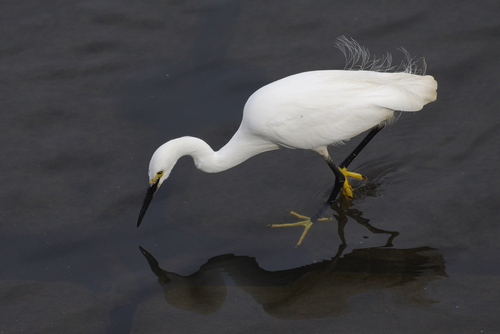
The closest relatives of the Goliath Heron that you can see in Amboseli National Park (genus Ardea, Great Herons and Egrets) are Grey Heron (about 50%), Great Egret (about 50%) and Black-headed Heron (about 40%), with each one's daily chance of a sighting.

Where does the Goliath Heron sighting chance come from?

GBIF citizen-science records

It is estimated from how often the Goliath Heron is recorded against all the birds logged in Amboseli National Park (595 verified sightings from 2019 to 2026), calibrated against known sighting rates. Figures are rounded to the nearest 10% because citizen-science data supports honest approximations, not decimals, and months with records from fewer than five people show "—". How it works.

← Back to Amboseli National Park