Sleepy Orange

Sleepy Orange

Abaeis nicippe

Daily sighting probability ~10% · With luck
at Bahía de Loreto National Park

In 3 days ~30% in a week ~60%

15 Verified sightings at Bahía de Loreto National Park From 2019 to 2026
774 In all 10 parks
January Best month
☀️ Diurnal When it's spotted

About the Sleepy Orange

Eurema nicippe, the sleepy orange, is a North American butterfly in the family Pieridae. Its range spans from Central America to north along the United States–Mexico border, and it often travels further to non-mountainous regions of the Southeastern United States.

This species occupies a wide range of habitats in open and disturbed environments such as roadsides, agricultural land, and scrub habitats. In addition to its broad distribution, E. nicippe displays complex behavioral and ecological interactions such as host plant specialization and oviposition decision making based on both visual and chemical cues.

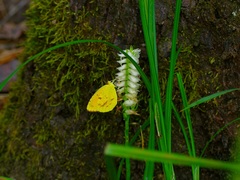
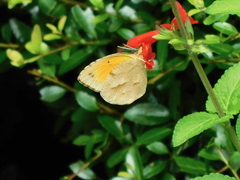
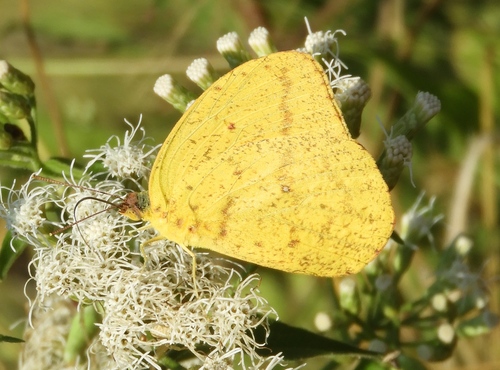
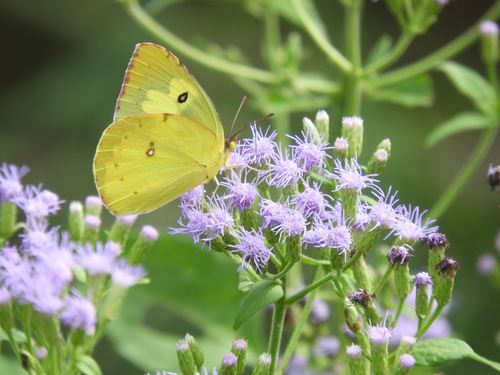
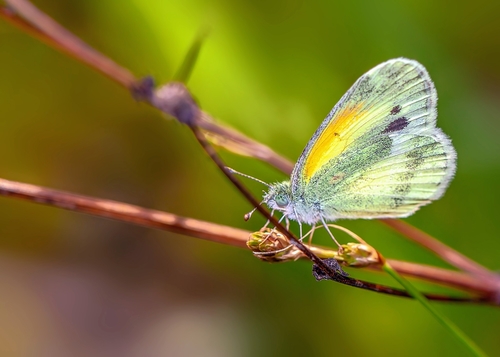
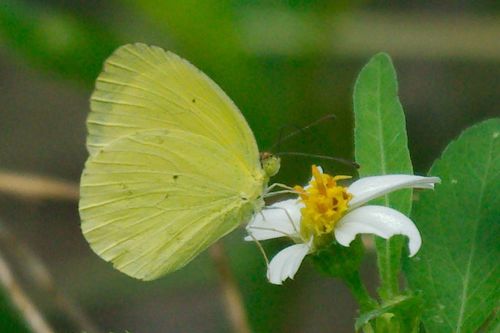
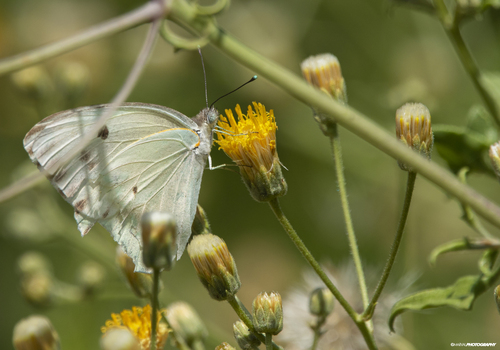
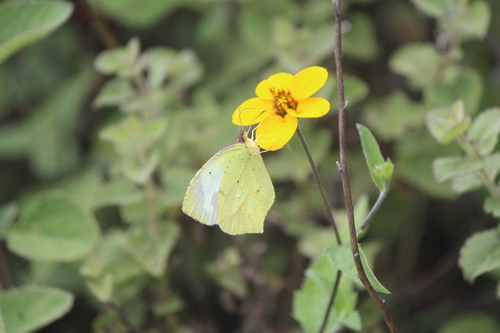
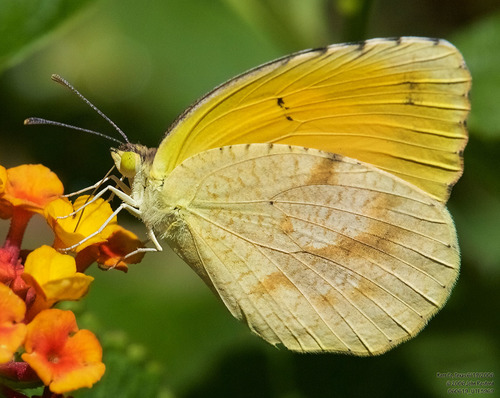
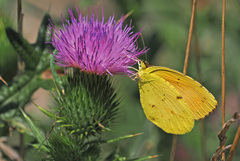
The sleepy orange is a bright orange butterfly with the upperside of the wings having wide black borders. The forewing costal margin has a small, narrow black marking that resembles a closed eye. Contrary to popular belief, its name originates from this wing patterning, rather than its behavior; the butterfly has a very rapid flight pattern when disturbed. The underside of the wings varies seasonally: summer forms are bright yellow with brick-red markings, while winter forms are browner and more heavily marked. It has a wingspan of 13⁄8–21⁄4 inches (35–50 mm... Wikipedia →
Global Distribution

Parks Where Found

# Park Country Daily sighting probability
1 Big Bend National Park 🇺🇸 United States
~30%
2 Congaree National Park 🇺🇸 United States
~30%
3 Joshua Tree National Park 🇺🇸 United States
~20%
4 Saguaro National Park 🇺🇸 United States
~20%
5 Guadalupe Mountains National Park 🇺🇸 United States
~20%
6 Shenandoah National Park 🇺🇸 United States
~10%
7 Bahía de Loreto National Park 🇲🇽 Mexico
~10%
8 Great Smoky Mountains National Park 🇺🇸 United States
~10%
9 Grand Canyon National Park 🇺🇸 United States
~10%
10 Cumbres de Monterrey National Park 🇲🇽 Mexico
~10%

Cities Where Found

# City Country Daily sighting probability
1 Ciudad Juárez 🇲🇽 México
~20%
2 San Antonio 🇺🇸 United States
~20%
3 Austin 🇺🇸 United States
~10%
4 Torreón 🇲🇽 México
~10%
5 Mesa 🇺🇸 United States
~10%
6 Phoenix 🇺🇸 United States
~10%
7 Washington 🇺🇸 United States
~10%
8 San Luis Potosí 🇲🇽 México
~10%
9 Monterrey 🇲🇽 México
~10%
10 Las Vegas 🇺🇸 United States
~10%

Before you go

What are the chances of seeing a Sleepy Orange in Bahía de Loreto National Park?

With luck

About 10% of wildlife watchers report a Sleepy Orange sighting in Bahía de Loreto National Park on a given day, based on 15 verified sightings from GBIF citizen-science data from 2019 to 2026. It is the 27th most-seen of the 57 insects we can rate there. Over three days the chance rises to about 30%, and over a week to about 60%, if each day is a fresh chance.

When is the best time to see a Sleepy Orange in Bahía de Loreto National Park?

January and November

In those months about 30% of wildlife watchers report a Sleepy Orange in Bahía de Loreto National Park on a given day, against under 5% in February and May–October, the lowest months.

What time of day is best to see a Sleepy Orange?

Between 11 am and 2 pm

Across all the parks we cover, that three-hour window holds the most Sleepy Orange sightings with a recorded time, and nearly all of them come between 6 am and 6 pm: it is a daytime animal.

Is Bahía de Loreto National Park the best place to see a Sleepy Orange?

7th of 10

Of the 10 parks where we can rate Sleepy Orange sightings, Bahía de Loreto National Park ranks 7th at about 10%. The best odds are in Big Bend National Park (United States, about 30%), Congaree National Park (United States, about 30%) and Joshua Tree National Park (United States, about 20%).

Which relatives of the Sleepy Orange live in Bahía de Loreto National Park?

Same family: Pieridae

The closest relatives of the Sleepy Orange that you can see in Bahía de Loreto National Park (family Pieridae, Whites, Yellows, and Sulphurs) are Great Southern White (about 40%), Large Orange Sulphur (about 20%) and Southern Dogface (about 20%), with each one's daily chance of a sighting.

Where does the Sleepy Orange sighting chance come from?

GBIF citizen-science records

It is estimated from how often the Sleepy Orange is recorded against all the insects logged in Bahía de Loreto National Park (15 verified sightings from 2019 to 2026), calibrated against known sighting rates. Figures are rounded to the nearest 10% because citizen-science data supports honest approximations, not decimals, and months with records from fewer than five people show "—". How it works.

← Back to Bahía de Loreto National Park