Margin-Winged Stick Insect

Margin-Winged Stick Insect

Ctenomorpha marginipennis

Endemic
Daily sighting probability ~20% · Possible
at Blue Mountains National Park

In 3 days ~50% in a week ~80%

115 Verified sightings at Blue Mountains National Park From 2019 to 2026
228 In all 8 parks
June Best month
☀️🌙 Day & Night When it's spotted

About the Margin-Winged Stick Insect

Ctenomorpha marginipennis, the margin-winged stick insect, is a species of stick insect endemic to southern Australia. The species was first described by George Robert Gray in 1833, then placed in the genus Didymuria by Kirby in 1904.

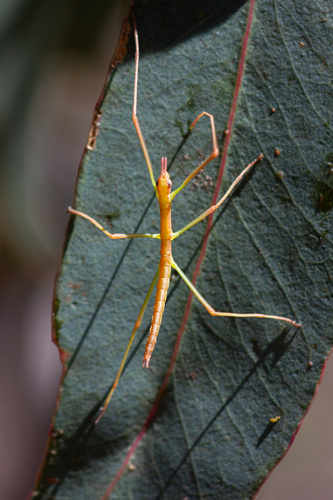
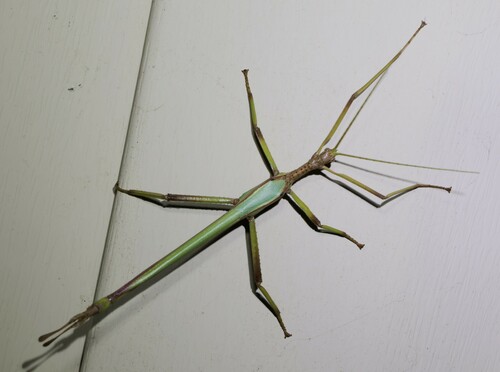
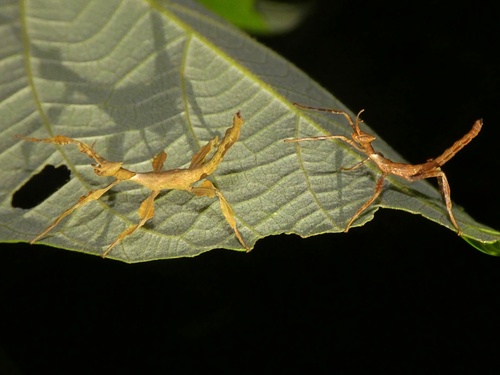
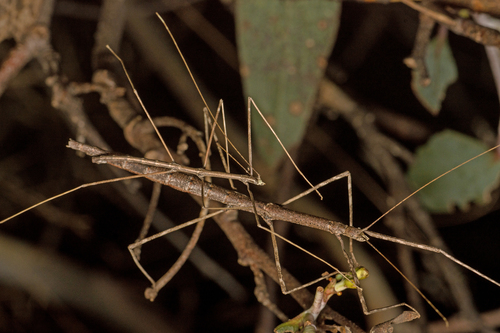
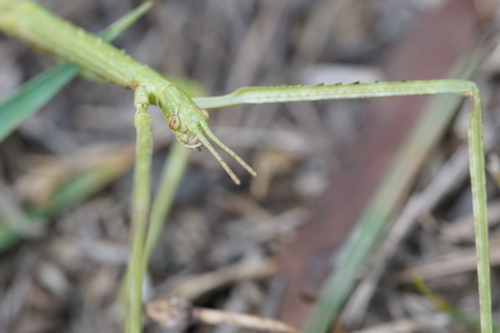
It was subsequently accepted as "Ctenomorpha chronus (Gray, 1833)". C. marginipennis resembles a eucalyptus twig and can grow up to 20 cm in length. The males are long and slender, have full wings and can fly. The females are larger with blackish hindwings. The wings of the females are smaller than those of the males. The legs and head (prothorax) are light pinkish brown, with the legs being dentated. The mesothorax, tegmina, abdomen and leaflets, are all blackish green. The mesothorax may have small tubercles. The abdomen contains numerous small spots. The cerci are extremely long and may be somewhat dentated. The nymphs are similar to the older stage, but with only small wing buds instead of the full-length wings of the adults. This species can be distinguished from other members of the family by their extremely long cerci and by the appearance of their eggs.

This species is quite common in heaths and... Wikipedia →
Global Distribution

Parks Where Found

# Park Country Daily sighting probability
1 Blue Mountains National Park 🇦🇺 Australia
~20%
2 Royal National Park 🇦🇺 Australia
~20%
3 Springbrook National Park 🇦🇺 Australia
~10%
4 Booderee National Park 🇦🇺 Australia
~10%
5 Wilsons Promontory National Park 🇦🇺 Australia
~10%
6 Kosciuszko National Park 🇦🇺 Australia
~10%
7 Great Otway National Park 🇦🇺 Australia
~10%
8 Lamington National Park 🇦🇺 Australia
~10%

Cities Where Found

# City Country Daily sighting probability
1 Sydney 🇦🇺 Australia
~10%
2 Melbourne 🇦🇺 Australia
~10%

Before you go

What are the chances of seeing a Margin-Winged Stick Insect in Blue Mountains National Park?

Possible

About 20% of wildlife watchers report a Margin-Winged Stick Insect sighting in Blue Mountains National Park on a given day, based on 115 verified sightings from GBIF citizen-science data from 2019 to 2026. It is the 8th most-seen of the 789 insects we can rate there. Over three days the chance rises to about 50%, and over a week to about 80%, if each day is a fresh chance.

When is the best time to see a Margin-Winged Stick Insect in Blue Mountains National Park?

June

In that month about 40% of wildlife watchers report a Margin-Winged Stick Insect in Blue Mountains National Park on a given day, against about 10% in October and November, the lowest months.

What time of day is best to see a Margin-Winged Stick Insect?

Between 8 and 11 pm

Across all the parks we cover, that three-hour window holds the most Margin-Winged Stick Insect sightings with a recorded time, and about 6 in 10 of them come between 6 am and 6 pm: it is seen both by day and at night.

Is Blue Mountains National Park the best place to see a Margin-Winged Stick Insect?

Yes

Of the 8 parks where we can rate Margin-Winged Stick Insect sightings, Blue Mountains National Park has the highest daily chance: about 20%. Next come Royal National Park (Australia, about 20%) and Springbrook National Park (Australia, about 10%).

Which relatives of the Margin-Winged Stick Insect live in Blue Mountains National Park?

Same family: Phasmatidae

The closest relatives of the Margin-Winged Stick Insect that you can see in Blue Mountains National Park (family Phasmatidae) are Spur Legged Phasmid (about 10%), Titan Stick Insect (about 10%) and Children’s Stick Insect (about 10%), with each one's daily chance of a sighting.

Where does the Margin-Winged Stick Insect sighting chance come from?

GBIF citizen-science records

It is estimated from how often the Margin-Winged Stick Insect is recorded against all the insects logged in Blue Mountains National Park (115 verified sightings from 2019 to 2026), calibrated against known sighting rates. Figures are rounded to the nearest 10% because citizen-science data supports honest approximations, not decimals, and months with records from fewer than five people show "—". How it works.

← Back to Blue Mountains National Park