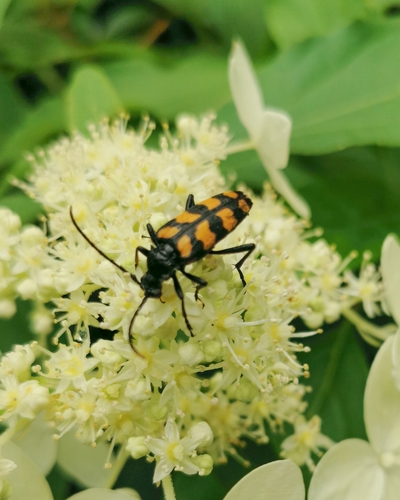
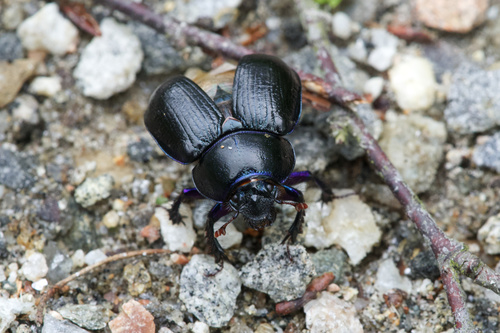
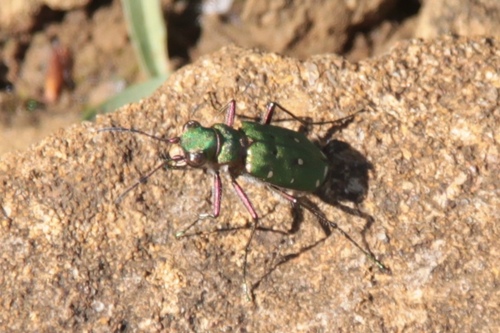
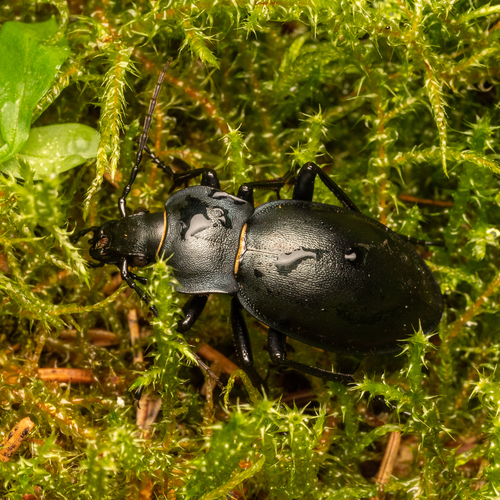
Ribbed Pine Borer

Ribbed Pine Borer

Rhagium inquisitor

Daily sighting probability ~10% · With luck
at Cairngorms National Park

In 3 days ~20% in a week ~50%

12 Verified sightings at Cairngorms National Park From 2019 to 2026
82 In all 10 parks
October Best month
☀️ Diurnal When it's spotted

About the Ribbed Pine Borer

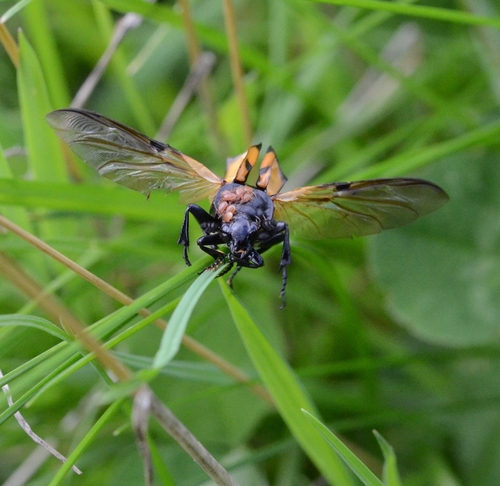
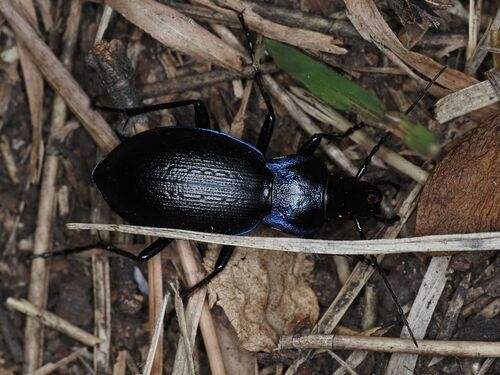
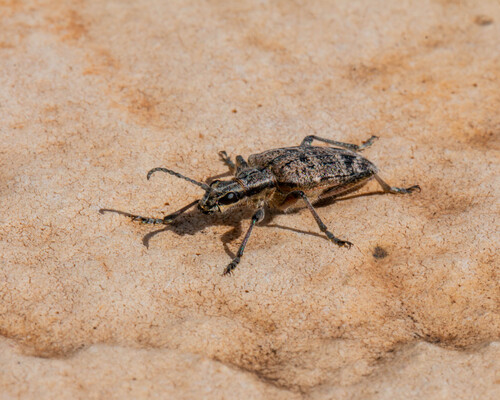
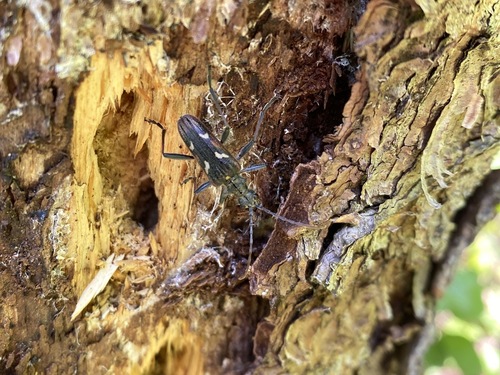
Rhagium inquisitor, the “ribbed pine borer”, is a species of longhorn beetle in the family Cerambycidae. It was described by Carl Linnaeus in the 1758 10th edition of Systema Naturae as ‘‘Cerambyx inquisitor’’.The species is widely distributed in the Holarctic and is associated mainly with dead or recently felled coniferous wood.

‘‘Rhagium inquisitor’’ was first described by Linnaeus in 1758 under the name ‘‘Cerambyx inquisitor’’. It is now placed in the genus ‘’Rhagium’’, subfamily Lepturinae, and tribe Rhagiini. A number of historical names have been treated as synonyms or combinations of the species, including ‘‘Cerambyx inquisitor’’, ‘‘Cerambyx nubeculus’’, ‘‘Rhagium indagator’’, and ‘‘Leptura inquisitor’’. Some authors have also discussed geographically variable forms and subspecies within the species complex.

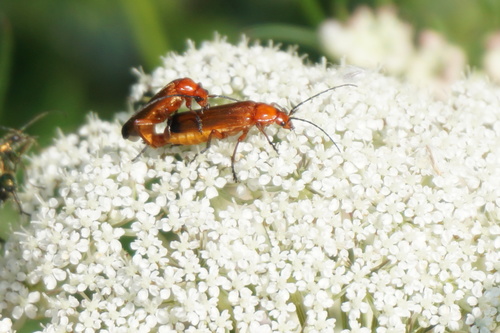
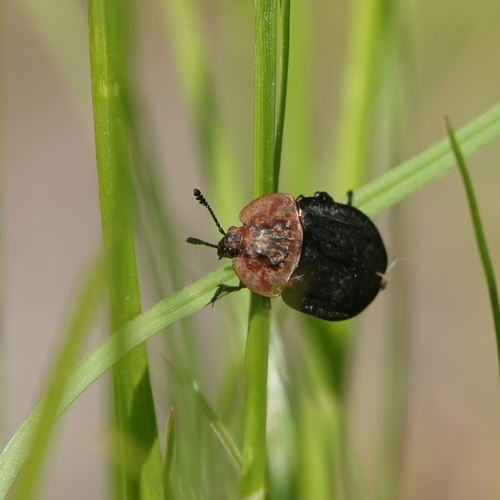
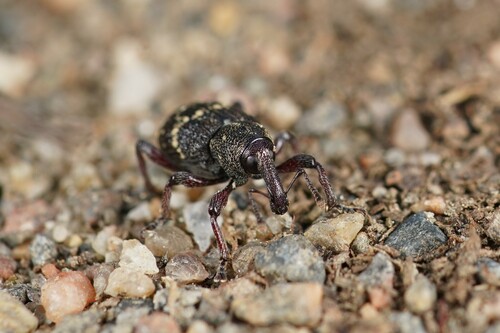
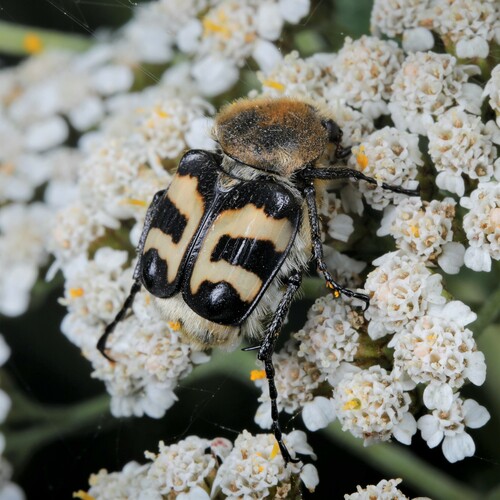
Adults are medium-sized longhorn beetles, usually about 9–22 mm long. The body is dark brown to blackish and is covered with mottled grey, yellowish, or brown pubescence that provides camouflage on bark and dead wood. The elytra are strongly sculptured and have prominent longitudinal ribs, a feature reflected in the common name “ribbed pine... Wikipedia →
Global Distribution

Parks Where Found

# Park Country Daily sighting probability
1 Tatra National Park 🇸🇰 Slovakia
~10%
2 Triglav National Park 🇸🇮 Slovenia
~10%
3 Cairngorms National Park 🇬🇧 United Kingdom
~10%
4 Bavarian Forest National Park 🇩🇪 Germany
~10%
5 Yellowstone National Park 🇺🇸 United States
~10%
6 Great Smoky Mountains National Park 🇺🇸 United States
<5%
7 Cévennes National Park 🇫🇷 France
<5%
8 Pyrénées National Park 🇫🇷 France
<5%
9 Olympic National Park 🇺🇸 United States
<5%
10 Wadden Sea National Park 🇩🇪 Germany
<5%

Cities Where Found

# City Country Daily sighting probability
1 Essen 🇩🇪 Germany
~10%
2 Helsinki 🇫🇮 Finland
<5%
3 Boston 🇺🇸 United States
<5%
4 Berlin 🇩🇪 Germany
<5%
5 Kyiv 🇺🇦 Ukraine
<5%
6 Prague 🇨🇿 Czechia
<5%
7 Vienna 🇦🇹 Austria
<5%
8 Moscow 🇷🇺 Russia
<5%

Before you go

What are the chances of seeing a Ribbed Pine Borer in Cairngorms National Park?

With luck

About 10% of wildlife watchers report a Ribbed Pine Borer sighting in Cairngorms National Park on a given day, based on 12 verified sightings from GBIF citizen-science data from 2019 to 2026. It is the 133rd most-seen of the 300 insects we can rate there. Over three days the chance rises to about 20%, and over a week to about 50%, if each day is a fresh chance.

When is the best time to see a Ribbed Pine Borer in Cairngorms National Park?

April–August and October

In those months about 10% of wildlife watchers report a Ribbed Pine Borer in Cairngorms National Park on a given day, against under 5% in September and November–March, the lowest months.

What time of day is best to see a Ribbed Pine Borer?

Between noon and 3 pm

Across all the parks we cover, that three-hour window holds the most Ribbed Pine Borer sightings with a recorded time, and about 9 in 10 of them come between 6 am and 6 pm: it is a daytime animal.

Is Cairngorms National Park the best place to see a Ribbed Pine Borer?

Among the best

Of the 10 parks where we can rate Ribbed Pine Borer sightings, Cairngorms National Park ranks 3rd at about 10%, level with the leaders once rounded. The best odds are in Tatra National Park (Slovakia, about 10%) and Triglav National Park (Slovenia, about 10%).

Which relatives of the Ribbed Pine Borer live in Cairngorms National Park?

Same genus: Rhagium

The closest relatives of the Ribbed Pine Borer that you can see in Cairngorms National Park (genus Rhagium) are Two-Banded Longhorn Beetle (about 30%) and Blackspotted Longhorn Beetle (about 10%), with each one's daily chance of a sighting.

Where does the Ribbed Pine Borer sighting chance come from?

GBIF citizen-science records

It is estimated from how often the Ribbed Pine Borer is recorded against all the insects logged in Cairngorms National Park (12 verified sightings from 2019 to 2026), calibrated against known sighting rates. Figures are rounded to the nearest 10% because citizen-science data supports honest approximations, not decimals, and months with records from fewer than five people show "—". How it works.

← Back to Cairngorms National Park