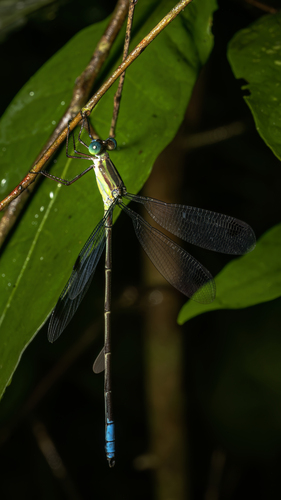
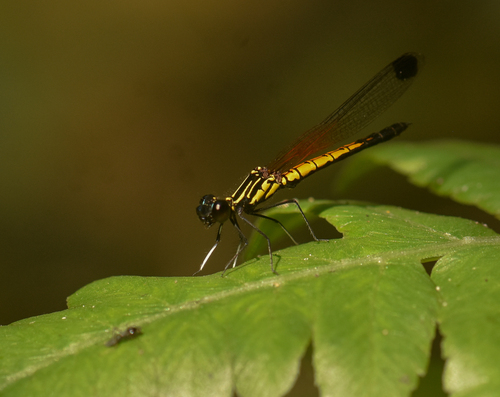
Common Picture Wing

Common Picture Wing

Rhyothemis variegata

Daily sighting probability ~20% · Possible
at Cat Tien National Park

In 3 days ~50% in a week ~80%

13 Verified sightings at Cat Tien National Park From 2019 to 2026
161 In all 10 parks
October Best month
☀️ Diurnal When it's spotted

About the Common Picture Wing

Rhyothemis variegata, known as the common picture wing, variegated flutterer, yellow-striped flutterer or yellow-barred flutterer, is a species of dragonfly of the family Libellulidae, found in South Asia, Indochina, southern China, Indonesia, Papua New Guinea, Australia and islands in the Pacific Ocean.

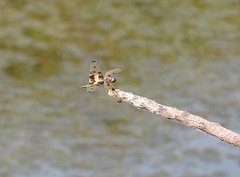
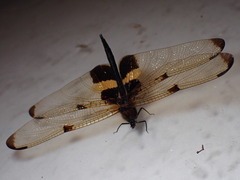
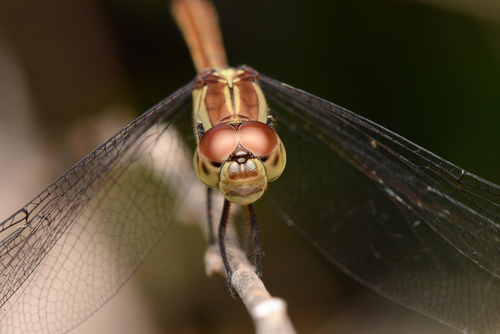
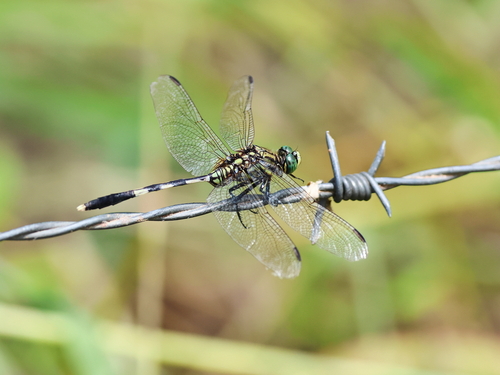
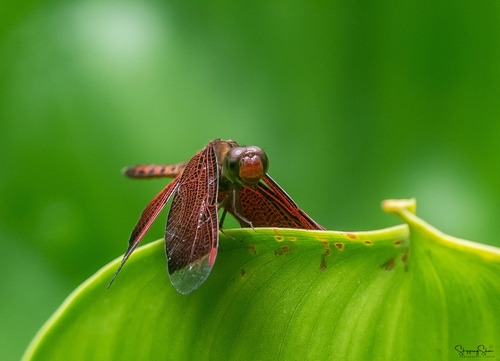
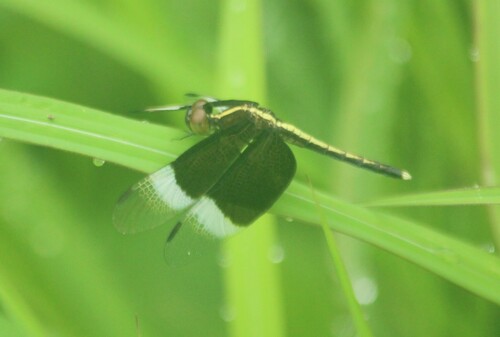
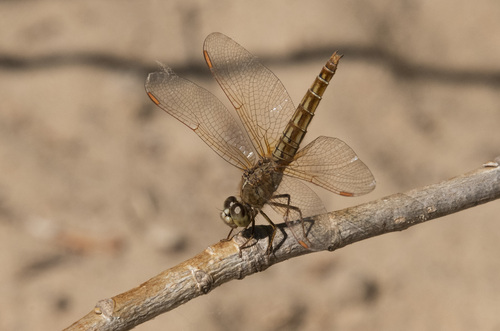
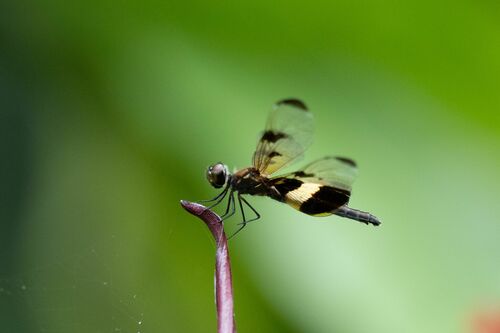
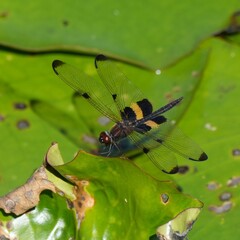
Rhyothemis variegata is a medium-sized dark bodied dragonfly with colorful wings tinted with pale yellow. There are a few black spots on the apices and nodes of the fore-wings. There is a large patch in the base of the hind-wings, marked with black and golden yellow. In females, the apical half of the fore-wings are transparent; basal half tinted with golden-yellow with black marks. The apical ends of the hind-wings are transparent; rest of wings marked with golden-yellow and black.

It breeds in marshes, ponds and paddy fields. They appear to have weak flight and can easily be mistaken for butterflies. The species Rhyothemis variegata was first described in 1763 in Centuria insectorum rariorum, a work associated with Carl Linnaeus.

The authorship of this publication may be uncertain, as it was produced in connection with Linnaeus’ student... Wikipedia →
Global Distribution

Parks Where Found

# Park Country Daily sighting probability
1 Kinabatangan Wildlife Sanctuary 🇲🇾 Malaysia
~30%
2 Cuc Phuong National Park 🇻🇳 Vietnam
~30%
3 Minneriya National Park 🇱🇰 Sri Lanka
~20%
4 Cat Tien National Park 🇻🇳 Vietnam
~20%
5 Kaeng Krachan National Park 🇹🇭 Thailand
~20%
6 Khao Yai National Park 🇹🇭 Thailand
~10%
7 Sepilok 🇲🇾 Malaysia
~10%
8 Daintree National Park 🇦🇺 Australia
~10%
9 Springbrook National Park 🇦🇺 Australia
~10%
10 Lamington National Park 🇦🇺 Australia
~10%

Cities Where Found

# City Country Daily sighting probability
1 Colachel 🇮🇳 India
~40%
2 Kota 🇮🇳 India
~40%
3 Savar 🇧🇩 Bangladesh
~40%
4 Thrissur 🇮🇳 India
~40%
5 Yangon 🇲🇲 Myanmar
~40%
6 Salem 🇮🇳 India
~30%
7 Ponnani 🇮🇳 India
~30%
8 Thiruvananthapuram 🇮🇳 India
~30%
9 Kochi 🇮🇳 India
~30%
10 Tuen Mun 🇨🇳 China
~30%

Before you go

What are the chances of seeing a Common Picture Wing in Cat Tien National Park?

Possible

About 20% of wildlife watchers report a Common Picture Wing sighting in Cat Tien National Park on a given day, based on 13 verified sightings from GBIF citizen-science data from 2019 to 2026. It is the 46th most-seen of the 125 insects we can rate there. Over three days the chance rises to about 50%, and over a week to about 80%, if each day is a fresh chance.

When is the best time to see a Common Picture Wing in Cat Tien National Park?

September and October

In those months about 40% of wildlife watchers report a Common Picture Wing in Cat Tien National Park on a given day, against under 5% in January, April and July–August, the lowest months. Those are among Cat Tien National Park's wettest months, with about 380 mm of rain a month against 15 mm in February.

What time of day is best to see a Common Picture Wing?

Between 9 am and noon

Across all the parks we cover, that three-hour window holds the most Common Picture Wing sightings with a recorded time, and about 8 in 10 of them come between 6 am and 6 pm: it is a daytime animal.

Which relatives of the Common Picture Wing live in Cat Tien National Park?

Same family: Libellulidae

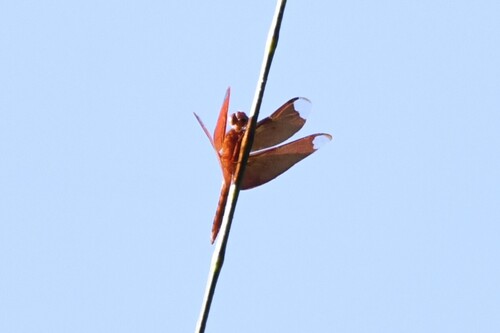
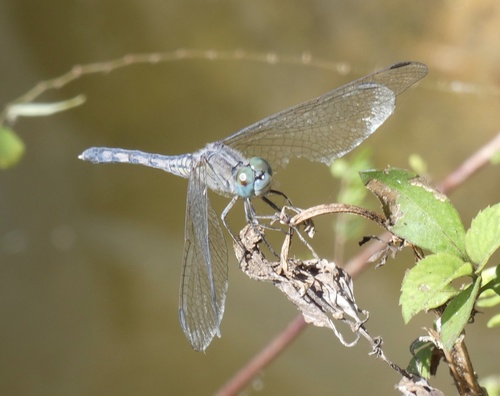
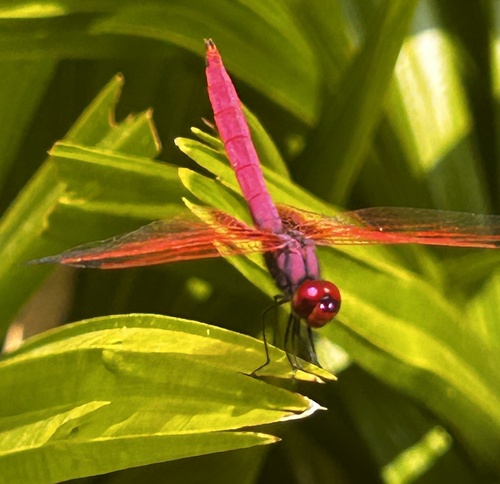
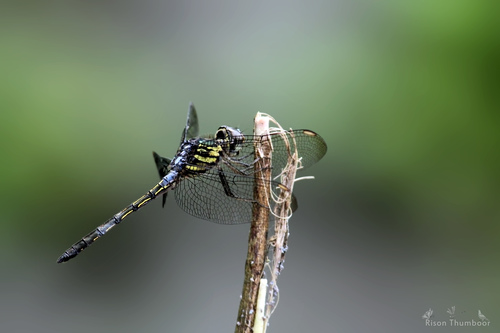
The closest relatives of the Common Picture Wing that you can see in Cat Tien National Park (family Libellulidae, Skimmers) are Russet Percher (about 40%), Chalky Percher (about 30%) and Asian Blood Tail (about 20%), with each one's daily chance of a sighting.

Where does the Common Picture Wing sighting chance come from?

GBIF citizen-science records

It is estimated from how often the Common Picture Wing is recorded against all the insects logged in Cat Tien National Park (13 verified sightings from 2019 to 2026), calibrated against known sighting rates. Figures are rounded to the nearest 10% because citizen-science data supports honest approximations, not decimals, and months with records from fewer than five people show "—". How it works.

← Back to Cat Tien National Park