Lemon Pansy
Daily sighting probability ~20% · Possible
at Cat Tien National Park

In 3 days ~60% in a week ~90%

22 Verified sightings at Cat Tien National Park From 2019 to 2026
314 In all 17 parks
August Best month
☀️ Diurnal When it's spotted

About the Lemon Pansy

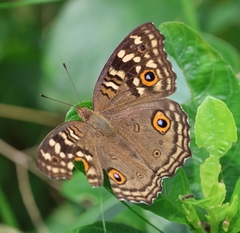
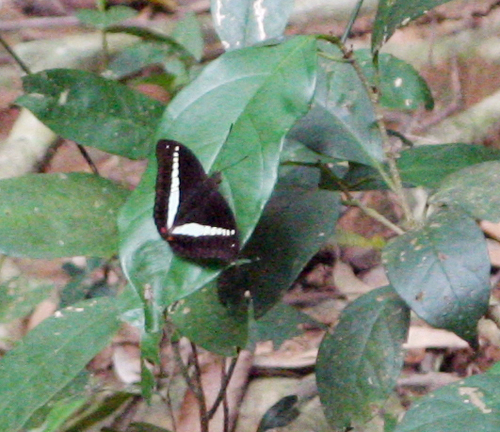
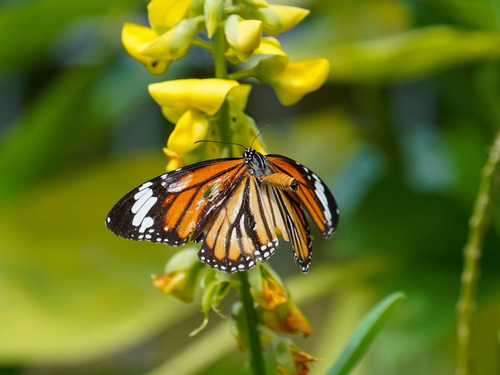
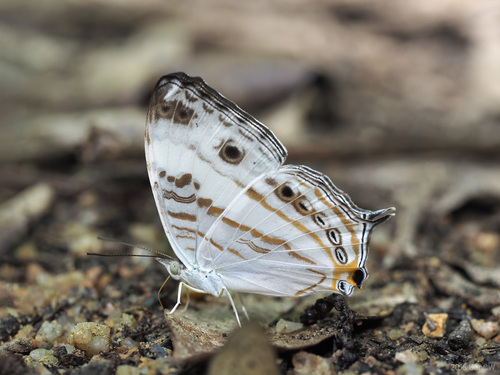
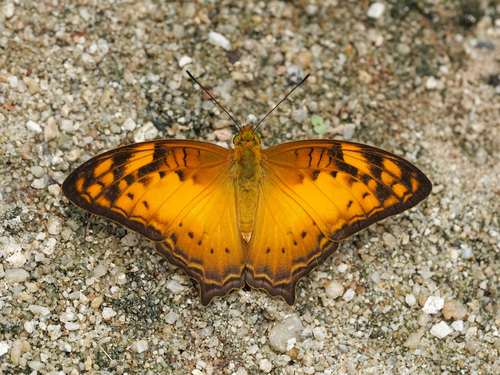
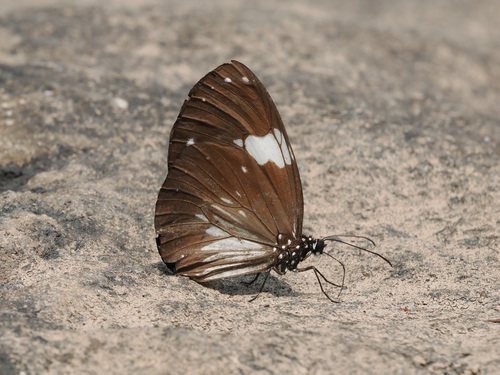
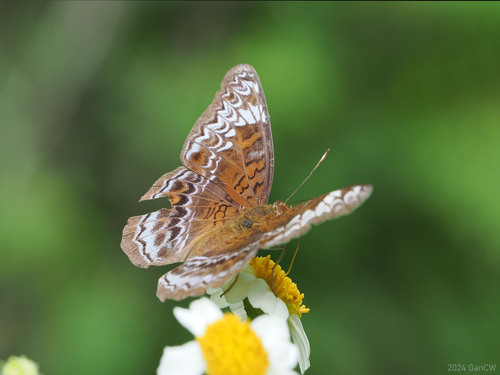
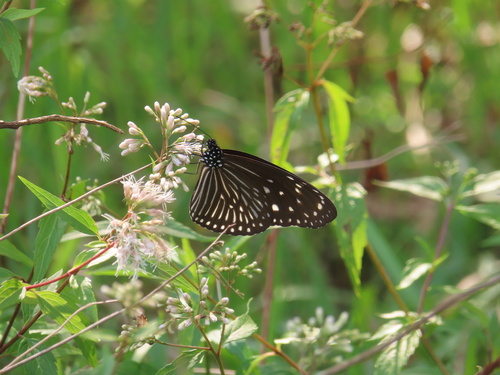
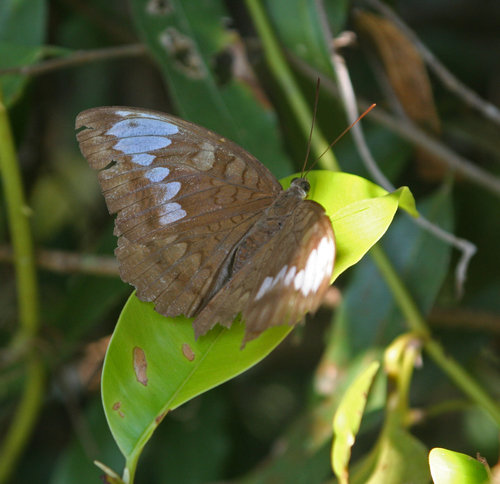
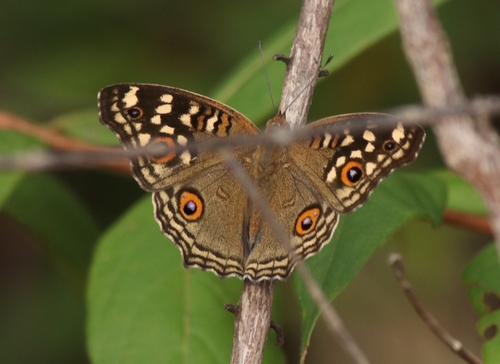
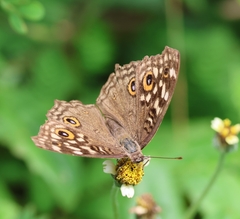
Junonia lemonias, the lemon pansy, is a common nymphalid butterfly found in Cambodia and South Asia. It is found in gardens, fallow land, and open wooded areas. It is brown with numerous eyespots as well as black and lemon-yellow spots and lines on the upperside of the wings. The underside is a dull brown, with a number of wavy lines and spots in varying shades of brown and black. There is also an eyespot on the lower side of the forewing. The wet- and dry-season forms differ considerably in coloration and even shape. In the wet-season form the markings are distinct and vivid and the wing shape is a little more rounded. In the dry-season form the markings are obscure and pale especially on the underside and the wing margin is more angular and jagged. This helps it camouflage in the dried leaf litter.

The lemon pansy is a very active butterfly and can be seen basking with its wings open facing the sun. It sits very low to the ground and can be approached easily. It feeds with its wings half open. It is a fairly strong flier and flies close to the ground with rapid wingbeats and often returns to settle back in the same spots.

Eggs are laid... Wikipedia →

Global Distribution

Parks Where Found

# Park Country Daily sighting probability
1 Royal Manas National Park 🇧🇹 Bhutan
~30%
2 Mudumalai National Park 🇮🇳 India
~30%
3 Keoladeo National Park 🇮🇳 India
~30%
4 Doi Inthanon National Park 🇹🇭 Thailand
~30%
5 Khao Yai National Park 🇹🇭 Thailand
~20%
6 Taroko National Park 🇹🇼 Taiwan
~20%
7 Cat Tien National Park 🇻🇳 Vietnam
~20%
8 Kanha National Park 🇮🇳 India
~20%
9 Manas National Park 🇮🇳 India
~20%
10 Khao Sok National Park 🇹🇭 Thailand
~20%
11 Cuc Phuong National Park 🇻🇳 Vietnam
~20%
12 Ranthambore National Park 🇮🇳 India
~20%
13 Periyar National Park 🇮🇳 India
~20%
14 Satpura National Park 🇮🇳 India
~20%
15 Kaeng Krachan National Park 🇹🇭 Thailand
~20%
16 Chitwan National Park 🇳🇵 Nepal
~20%
17 Minneriya National Park 🇱🇰 Sri Lanka
~10%

Cities Where Found

# City Country Daily sighting probability
1 Salem 🇮🇳 India
~50%
2 Raipur 🇮🇳 India
~50%
3 Xiuying District 🇨🇳 China
~40%
4 Jabalpur 🇮🇳 India
~40%
5 Chhatrapati Sambhajinagar 🇮🇳 India
~40%
6 Jamshedpur 🇮🇳 India
~40%
7 Bhopal 🇮🇳 India
~40%
8 Hyderabad 🇮🇳 India
~40%
9 Madurai 🇮🇳 India
~40%
10 Chennai 🇮🇳 India
~40%

Before you go

What are the chances of seeing a Lemon Pansy in Cat Tien National Park?

Possible

About 20% of wildlife watchers report a Lemon Pansy sighting in Cat Tien National Park on a given day, based on 22 verified sightings from GBIF citizen-science data from 2019 to 2026. It is the 26th most-seen of the 125 insects we can rate there. Over three days the chance rises to about 60%, and over a week to about 90%, if each day is a fresh chance.

When is the best time to see a Lemon Pansy in Cat Tien National Park?

February and August–September

In those months about 40% of wildlife watchers report a Lemon Pansy in Cat Tien National Park on a given day, against under 5% in January and July, the lowest months.

What time of day is best to see a Lemon Pansy?

Between 9 am and noon

Across all the parks we cover, that three-hour window holds the most Lemon Pansy sightings with a recorded time, and about 9 in 10 of them come between 6 am and 6 pm: it is a daytime animal.

Which relatives of the Lemon Pansy live in Cat Tien National Park?

Same genus: Junonia

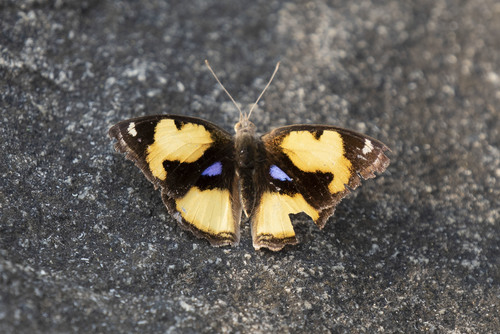
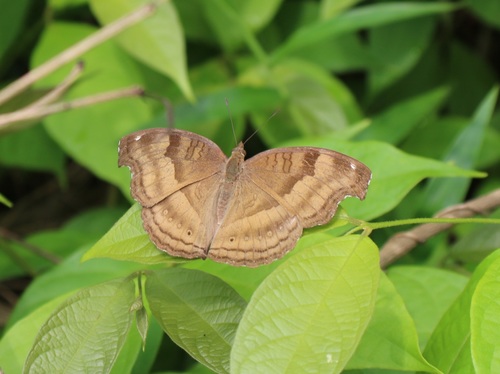
The closest relatives of the Lemon Pansy that you can see in Cat Tien National Park (genus Junonia, Buckeyes & Pansies) are Yellow Pansy (about 40%), Grey Pansy (about 30%) and Chocolate Pansy (about 30%), with each one's daily chance of a sighting.

Where does the Lemon Pansy sighting chance come from?

GBIF citizen-science records

It is estimated from how often the Lemon Pansy is recorded against all the insects logged in Cat Tien National Park (22 verified sightings from 2019 to 2026), calibrated against known sighting rates. Figures are rounded to the nearest 10% because citizen-science data supports honest approximations, not decimals, and months with records from fewer than five people show "—". How it works.
← Back to Cat Tien National Park