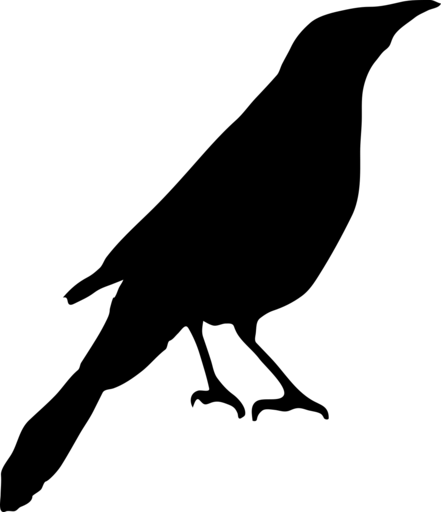
Carib Grackle

Carib Grackle

Quiscalus lugubris

Silhouette: Ferran Sayol · PhyloPic

LCLeast ConcernNTVUENCR
Daily sighting probability <5% · Rare
at Chingaza National Natural Park

In 3 days <5%

9 Verified sightings at Chingaza National Natural Park From 2019 to 2026
1,746 In all 11 parks
October Best month
☀️ Diurnal When it's spotted

About the Carib Grackle

The Carib grackle (Quiscalus lugubris) is a species of bird in the family Icteridae, the oropendolas, New World orioles, and New World blackbirds. It is found throughout the Lesser Antilles, across northern South America from Colombia to extreme northeastern Brazil, and on several islands off South America's northern coast.

The Carib grackle was formally described in 1838 with its current binomial Quiscalus lugubris. For a time the Carib grackle and the Greater Antillean grackle (Q. niger) were placed in the genus Holoquiscalus; they now are believed to form a superspecies.

The Carib grackle has these eight subspecies: Male Carib grackles average 26 cm (10 in) long and females about 22 cm (8.7 in). Males weigh 66 to 80 g (2.3 to 2.8 oz) and females 49 to 58 g (1.7 to 2.0 oz). Males of all subspecies have a long keel-shaped ("V") tail; females' tails are shorter and flat. Adult males of the nominate subspecies Q. l. lugubris are completely black with a violet gloss on most of the body; it is slightly less strong on the underparts. The gloss is more violet-blue on the wing coverts and greener on the flight feathers. Adult females have dull... Wikipedia →

Sounds

Call0:19

French Guiana · 2024

© Tristan Guillebot de Nerville · XC1139178 · CC BY-NC-SA 4.0

Song0:07

France · 2022

© Denis Dujardin · XC1056100 · CC BY-NC-SA 4.0

Alarm call0:27

St Lucia · 2005

© Simon Elliott · XC590861 · CC BY-NC-ND 4.0

Global Distribution

Parks Where Found

# Park Country Daily sighting probability
1 Tayrona National Natural Park 🇨🇴 Colombia
~40%
2 Caroni Swamp 🇹🇹 Trinidad and Tobago
~30%
3 Main Ridge Forest Reserve 🇹🇹 Trinidad and Tobago
~20%
4 Henri Pittier National Park 🇻🇪 Venezuela
~10%
5 Los Nevados National Natural Park 🇨🇴 Colombia
~10%
6 Darién National Park 🇵🇦 Panama
<5%
7 Sierra de la Macarena National Park 🇨🇴 Colombia
<5%
8 Farallones de Cali National Natural Park 🇨🇴 Colombia
<5%
9 Chingaza National Natural Park 🇨🇴 Colombia
<5%
10 Parque Natural Metropolitano 🇵🇦 Panama
<5%
11 Soberanía National Park 🇵🇦 Panama
<5%

Cities Where Found

# City Country Daily sighting probability
1 Maracaibo 🇻🇪 Venezuela
~80%
2 Barranquilla 🇨🇴 Colombia
~70%
3 Caracas 🇻🇪 Venezuela
~20%
4 Bogota 🇨🇴 Colombia
~20%
5 Valencia 🇻🇪 Venezuela
~20%
6 Medellín 🇨🇴 Colombia
~10%
7 Panama City 🇵🇦 Panama
<5%
8 Cali 🇨🇴 Colombia
<5%

Zoos & Centres Where Found

# Zoo / Centre Country
1 Aviario Nacional de Colombia 🇨🇴 Colombia In captivity

Before you go

What are the chances of seeing a Carib Grackle in Chingaza National Natural Park?

Rare

Under 5% of wildlife watchers report a Carib Grackle sighting in Chingaza National Natural Park on a given day, based on 9 verified sightings from GBIF citizen-science data from 2019 to 2026. It is the 208th most-seen of the 258 birds we can rate there. Over three days the chance rises to under 5%, if each day is a fresh chance.

When is the best time to see a Carib Grackle in Chingaza National Natural Park?

Any time of year

In every month with enough records, under 5% of wildlife watchers report a Carib Grackle in Chingaza National Natural Park on a given day, so our monthly data shows no clear season.

What time of day is best to see a Carib Grackle?

Between 10 am and 1 pm

Across all the parks we cover, that three-hour window holds the most Carib Grackle sightings with a recorded time, and about 8 in 10 of them come between 6 am and 6 pm: it is a daytime animal.

Is Chingaza National Natural Park the best place to see a Carib Grackle?

9th of 11

Of the 11 parks where we can rate Carib Grackle sightings, Chingaza National Natural Park ranks 9th at under 5%. The best odds are in Tayrona National Natural Park (Colombia, about 40%), Caroni Swamp (Trinidad and Tobago, about 30%) and Main Ridge Forest Reserve (Trinidad and Tobago, about 20%).

Which relatives of the Carib Grackle live in Chingaza National Natural Park?

Same family: Icteridae

The closest relatives of the Carib Grackle that you can see in Chingaza National Natural Park (family Icteridae, New World Blackbirds and Orioles) are Eastern Meadowlark (about 20%) and Mountain Cacique (about 10%), with each one's daily chance of a sighting.

Where does the Carib Grackle sighting chance come from?

GBIF citizen-science records

It is estimated from how often the Carib Grackle is recorded against all the birds logged in Chingaza National Natural Park (9 verified sightings from 2019 to 2026), calibrated against known sighting rates. Figures are rounded to the nearest 10% because citizen-science data supports honest approximations, not decimals, and months with records from fewer than five people show "—". How it works.

← Back to Chingaza National Natural Park