
Long-tailed Broadbill

Long-tailed Broadbill

Psarisomus dalhousiae

Silhouette: Sheatherius · PhyloPic

LCLeast ConcernNTVUENCR
Daily sighting probability <5% · Rare
at Chitwan National Park

In 3 days <5% in a week ~10%

19 Verified sightings at Chitwan National Park From 2019 to 2026
2,047 In all 10 parks
February Best month
🌅 Crepuscular When it's spotted

About the Long-tailed Broadbill

The long-tailed broadbill (Psarisomus dalhousiae) is a species of bird that is found in the Himalayas, extending east through Northeastern India to Southeast Asia. It is the only bird in the genus Psarisomus. The long-tailed broadbill is about 25 cm (10 inches) in length and weighs between 50 and 60 grams. It can be identified by its shrill call.

The long-tailed broadbill displays a yellow plumage on the throat. Blueish-green plumage on the belly, back, and wings. The long-tailed broadbill is a forest bird that lives on insects. It is very sociable and normally travels in large, noisy parties except during the mating season. It builds a pear-shaped nest in a tree. The female usually lays between 5 and 6 eggs that are incubated by both sexes; both sexes also help to feed the young.

The generic name Psarisomus comes from the name Psaris, a synonym of Tityra and the Greek word σῶμα sōma "body". The long-tailed broadbill is a songbird (Passeriformes) that belongs in the family Eurylaimidae, a group of birds that have broad heads and have flat, broad beak. It is the only bird that belongs to the genus Psarisomus. The scientific name commemorates Christina Broun, Countess... Wikipedia →

Sounds

Uncertain0:05

Bhutan · 2026

© Sonam Dorji, Bhutan Quest Travel (www.bhutanbird.com) · XC1099378 · CC BY-NC-SA 4.0

Call0:45

Cambodia · 2025

© Ding Li Yong · XC981329 · CC BY-NC-ND 4.0

Song0:32

Malaysia · 2024

© Lim Ying Hien · XC949238 · CC BY-NC-ND 4.0

Global Distribution

Parks Where Found

# Park Country Daily sighting probability
1 Khao Yai National Park 🇹🇭 Thailand
~30%
2 Kerinci Seblat National Park 🇮🇩 Indonesia
~20%
3 Namdapha National Park 🇮🇳 India
~10%
4 Royal Manas National Park 🇧🇹 Bhutan
~10%
5 Doi Inthanon National Park 🇹🇭 Thailand
~10%
6 Manas National Park 🇮🇳 India
~10%
7 Kaeng Krachan National Park 🇹🇭 Thailand
~10%
8 Jim Corbett National Park 🇮🇳 India
<5%
9 Chitwan National Park 🇳🇵 Nepal
<5%
10 Kinabalu Park 🇲🇾 Malaysia
<5%

Cities Where Found

# City Country Daily sighting probability
1 Kathmandu 🇳🇵 Nepal
<5%

Zoos & Centres Where Found

# Zoo / Centre Country
1 Hong Kong Zoological and Botanical Gardens 🇨🇳 China In captivity
2 Edward Youde Aviary 🇭🇰 Hong Kong SAR China In captivity

Before you go

What are the chances of seeing a Long-tailed Broadbill in Chitwan National Park?

Rare

Under 5% of wildlife watchers report a Long-tailed Broadbill sighting in Chitwan National Park on a given day, based on 19 verified sightings from GBIF citizen-science data from 2019 to 2026. It is the 278th most-seen of the 367 birds we can rate there. Over three days the chance rises to under 5%, and over a week to about 10%, if each day is a fresh chance.

When is the best time to see a Long-tailed Broadbill in Chitwan National Park?

Any time of year

In every month with enough records, under 5% of wildlife watchers report a Long-tailed Broadbill in Chitwan National Park on a given day, so our monthly data shows no clear season.

What time of day is best to see a Long-tailed Broadbill?

Between 9 am and noon

Across all the parks we cover, that three-hour window holds the most Long-tailed Broadbill sightings with a recorded time, and about 6 in 10 of them come between 6 am and 6 pm: it is most active around dawn and dusk.

Which relatives of the Long-tailed Broadbill live in Chitwan National Park?

Same order: Passeriformes

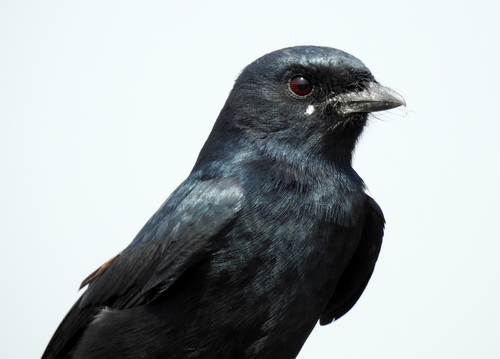
The closest relatives of the Long-tailed Broadbill that you can see in Chitwan National Park (order Passeriformes, Perching Birds) are Black Drongo (about 70%), Large-billed Crow (about 60%) and Rufous Treepie (about 60%), with each one's daily chance of a sighting.

Where does the Long-tailed Broadbill sighting chance come from?

GBIF citizen-science records

It is estimated from how often the Long-tailed Broadbill is recorded against all the birds logged in Chitwan National Park (19 verified sightings from 2019 to 2026), calibrated against known sighting rates. Figures are rounded to the nearest 10% because citizen-science data supports honest approximations, not decimals, and months with records from fewer than five people show "—". How it works.

← Back to Chitwan National Park