White Ermine

White Ermine

Spilosoma lubricipeda

Daily sighting probability ~10% · With luck
at Birmingham

In 3 days ~20% in a week ~30%

16 Verified sightings at Birmingham
232 In all 8 parks From 2019 to 2026
May Best month
☀️🌙 Day & Night When it's spotted

About the White Ermine

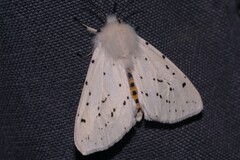
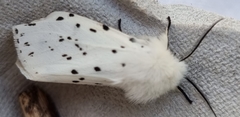
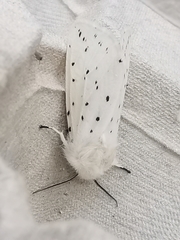
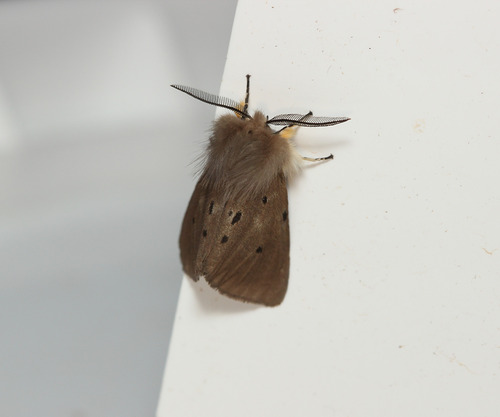
Spilosoma lubricipeda, the white ermine, is a moth of the family Erebidae. It is found throughout the temperate belt of Eurasia from Europe through Kazakhstan and southern Siberia to Amur Region, India, China, Korea and Japan. In China several sibling species occur.

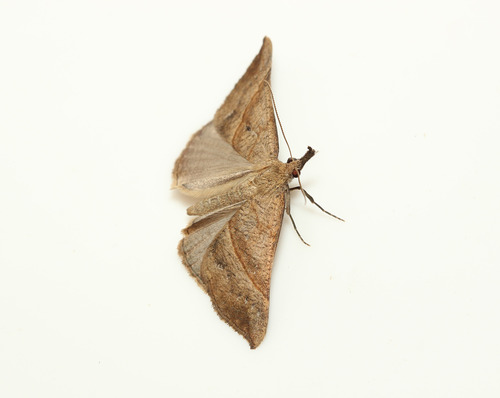
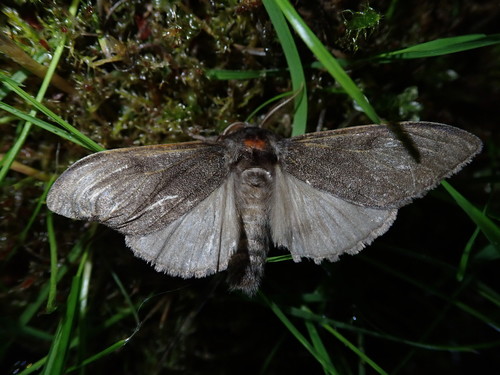
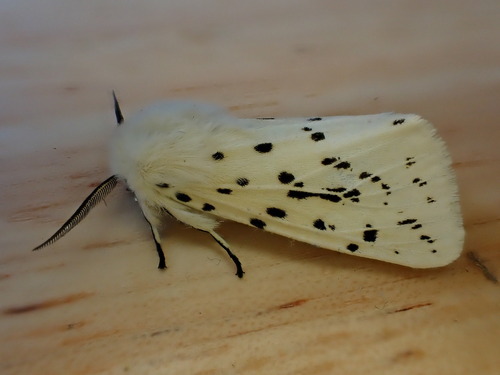
The wingspan is 34–48 mm. Wing pattern is very variable, from entirely white wings to strongly covered with black dots. Hindwings often with one or several black dots (rarely without any black dot). Antennae branches long (much longer than in similar Spilosoma urticae), 3–5 times longer than the antenna stem diameter.

Milky white, abdomen orange with black dorsal dots. Forewing more or less sprinkled with sharply defined black dots, of which there are always some at the costa and others arranged in rows in the disc. Hindwing with discal dots and often with anal ones and others. Antennae black. In specimens from northern Scotland the forewing is sandy yellow, ab. ochrea, also found elsewhere as an exception among. The forewing may be darkened to brown; this is the case in ab. brunnea Ober. In ab. luxerii Godt. the forewing is suffused with rose-red distally and brownish proximally... Wikipedia →
Global Distribution

Parks Where Found

# Park Country Daily sighting probability
1 Snowdonia National Park 🇬🇧 United Kingdom
~20%
2 Biebrza National Park 🇵🇱 Poland
~20%
3 Białowieża National Park 🇵🇱 Poland
~20%
4 Wadden Sea National Park 🇩🇪 Germany
~10%
5 Cairngorms National Park 🇬🇧 United Kingdom
~10%
6 Pyrénées National Park 🇫🇷 France
~10%
7 Bavarian Forest National Park 🇩🇪 Germany
~10%
8 Cévennes National Park 🇫🇷 France
~10%

Cities Where Found

# City Country Daily sighting probability
1 London 🇬🇧 United Kingdom
~10%
2 Porto 🇵🇹 Portugal
~10%
3 Liverpool 🇬🇧 United Kingdom
~10%
4 Rotterdam [The Hague] 🇳🇱 Netherlands
~10%
5 Manchester 🇬🇧 United Kingdom
~10%
6 Helsinki 🇫🇮 Finland
~10%
7 Amsterdam 🇳🇱 Netherlands
~10%
8 Birmingham 🇬🇧 United Kingdom
~10%
9 Hamburg 🇩🇪 Germany
~10%
10 Istanbul 🇹🇷 Turkey
<5%

Before you go

What are the chances of seeing a White Ermine in Birmingham?

With luck

About 10% of wildlife watchers report a White Ermine sighting in Birmingham on a given day, based on 16 verified sightings from GBIF citizen-science data. It is the 387th most-seen of the 811 insects we can rate there. Over three days the chance rises to about 20%, and over a week to about 30%, if each day is a fresh chance.

When is the best time to see a White Ermine in Birmingham?

May and June

In those months about 10% of wildlife watchers report a White Ermine in Birmingham on a given day, against under 5% in July to April, the lowest months.

What time of day is best to see a White Ermine?

Between 6 and 9 am

Across all the parks we cover, that three-hour window holds the most White Ermine sightings with a recorded time, and about 6 in 10 of them come between 6 am and 6 pm: it is seen both by day and at night.

Is Birmingham the best place to see a White Ermine?

Among the best

Of the 21 cities where we can rate White Ermine sightings, Birmingham ranks 8th at about 10%, level with the leaders once rounded. The best odds are in London (United Kingdom, about 10%), Porto (Portugal, about 10%) and Liverpool (United Kingdom, about 10%).

Which relatives of the White Ermine live in Birmingham?

Same family: Erebidae

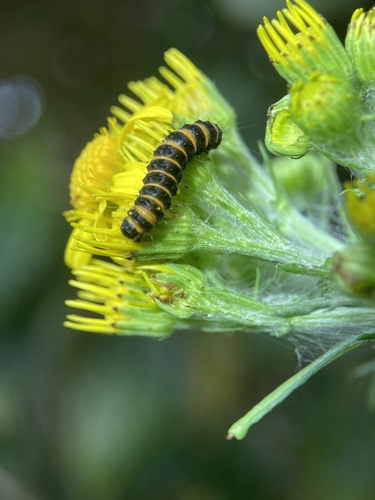
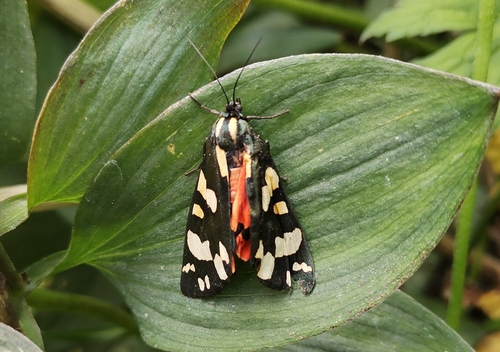
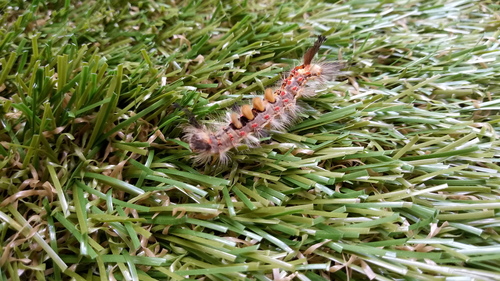
The closest relatives of the White Ermine that you can see in Birmingham (family Erebidae, Underwing, Tiger, Tussock, and Allied Moths) are Cinnabar Moth (about 30%), Scarlet Tiger (about 30%) and Rusty Tussock Moth (about 10%), with each one's daily chance of a sighting.

Where does the White Ermine sighting chance come from?

GBIF citizen-science records

It is estimated from how often the White Ermine is recorded against all the insects logged in Birmingham (16 verified sightings), calibrated against known sighting rates. Figures are rounded to the nearest 10% because citizen-science data supports honest approximations, not decimals, and months with records from fewer than five people show "—". How it works.

← Back to Birmingham