Black Treesnake

Black Treesnake

Dendrelaphis punctulatus

Silhouette: Alex Slavenko · PhyloPic

LCLeast ConcernNTVUENCR
Daily sighting probability ~20% · Possible
at Brisbane

In 3 days ~50% in a week ~80%

329 Verified sightings at Brisbane
331 In all 9 parks From 2019 to 2026
February Best month
☀️ Diurnal When it's spotted

About the Black Treesnake

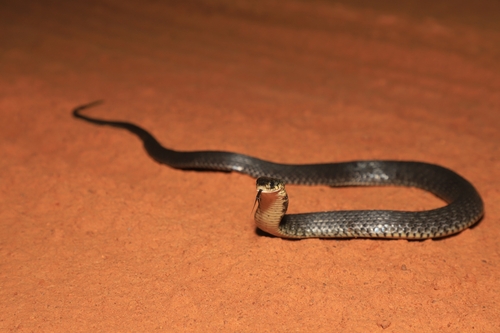
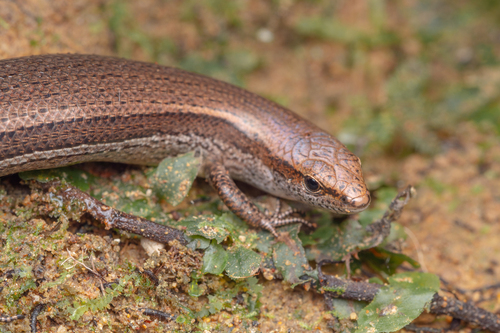
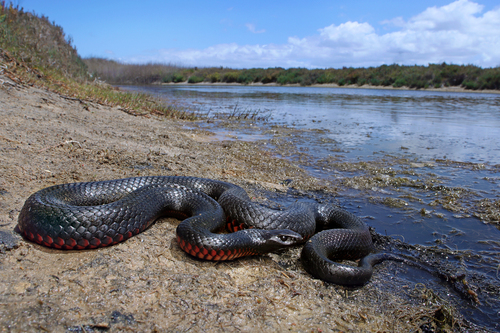
Dendrelaphis punctulatus, also known commonly as the Australian tree snake, the common tree snake, and the green tree snake, is a species of slender, large-eyed, diurnal, non-venomous snake in the family Colubridae. The species is native to many parts of Australia, especially in the northern and eastern coastal areas, and to Papua New Guinea.

It is an agile snake with a very slender body and tail and is also a strong swimmer, using the water for hunting and avoiding predation. The ventral body colour varies from golden yellow, to bright green, to olive-green, to black, sometimes even blue, while its back is typically dark in colour. It is frequently pale yellow on the throat and belly, but other pale colours have been noted. Blue flecks are present on the flanks. The eyes are large, with typically golden-coloured irises and large round pupils.

It is found in a variety of habitats ranging from rainforest to woodland to urban areas where it preys on fish, frogs, and other small animals. It is a non-venomous species and does not constrict its prey, but rather relies on its sharp, angled teeth to 'chew' its prey down the oesophagus.

A study of D. punctulatus in Queensland... Wikipedia →

Global Distribution

Parks Where Found

# Park Country Daily sighting probability
1 Daintree National Park 🇦🇺 Australia
~50%
2 Nitmiluk National Park 🇦🇺 Australia
~30%
3 Kakadu National Park 🇦🇺 Australia
~20%
4 Royal National Park 🇦🇺 Australia
~20%
5 Lamington National Park 🇦🇺 Australia
~20%
6 Noosa National Park 🇦🇺 Australia
~20%
7 Litchfield National Park 🇦🇺 Australia
~20%
8 Springbrook National Park 🇦🇺 Australia
~20%
9 Blue Mountains National Park 🇦🇺 Australia
~10%

Cities Where Found

# City Country Daily sighting probability
1 Brisbane 🇦🇺 Australia
~20%
2 Sydney 🇦🇺 Australia
~10%

Zoos & Centres Where Found

# Zoo / Centre Country
1 Currumbin Wildlife Sanctuary 🇦🇺 Australia In captivity
2 Cairns Aquarium 🇦🇺 Australia In captivity

Before you go

What are the chances of seeing a Black Treesnake in Brisbane?

Possible

About 20% of wildlife watchers report a Black Treesnake sighting in Brisbane on a given day, based on 329 verified sightings from GBIF citizen-science data. It is the 8th most-seen of the 43 reptiles we can rate there. Over three days the chance rises to about 50%, and over a week to about 80%, if each day is a fresh chance.

When is the best time to see a Black Treesnake in Brisbane?

January–March and September

In those months about 30% of wildlife watchers report a Black Treesnake in Brisbane on a given day, against about 10% in May to July, the lowest months.

What time of day is best to see a Black Treesnake?

Between noon and 3 pm

Across all the parks we cover, that three-hour window holds the most Black Treesnake sightings with a recorded time, and about 9 in 10 of them come between 6 am and 6 pm: it is a daytime animal.

Is Brisbane the best place to see a Black Treesnake?

Yes

Of the 2 cities where we can rate Black Treesnake sightings, Brisbane has the highest daily chance: about 20%. Next come Sydney (Australia, about 10%).

Where does the Black Treesnake sighting chance come from?

GBIF citizen-science records

It is estimated from how often the Black Treesnake is recorded against all the reptiles logged in Brisbane (329 verified sightings), calibrated against known sighting rates. Figures are rounded to the nearest 10% because citizen-science data supports honest approximations, not decimals, and months with records from fewer than five people show "—". How it works.

← Back to Brisbane