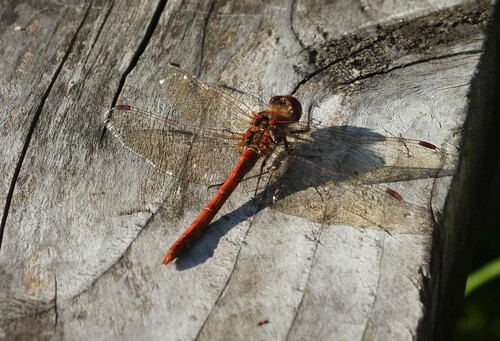
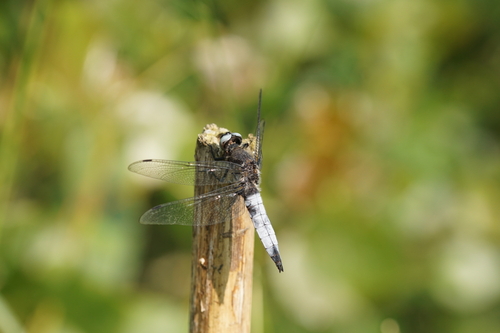
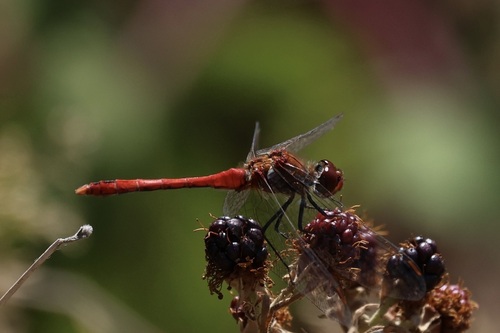
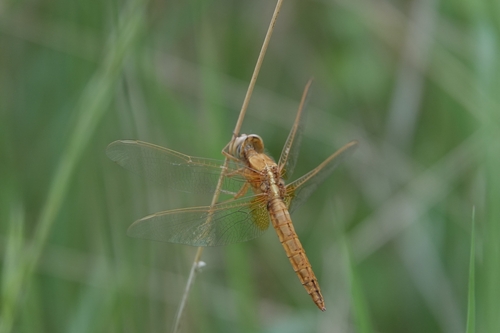
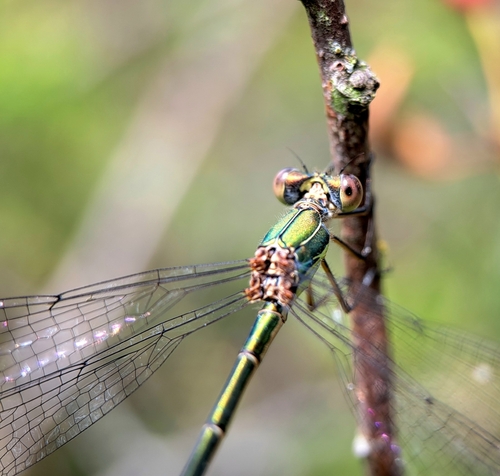
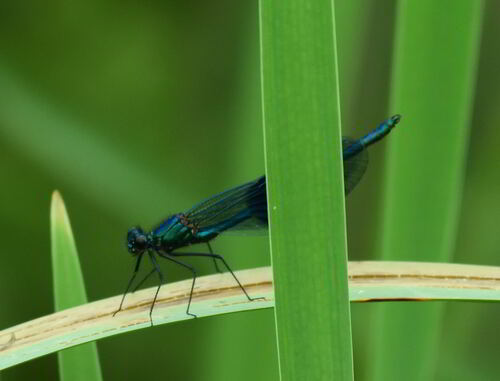
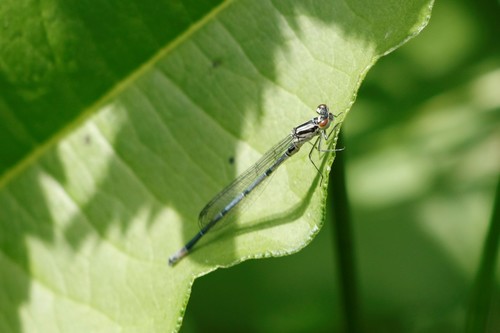
Black-Tailed Skimmer

Black-Tailed Skimmer

Orthetrum cancellatum

Daily sighting probability ~20% · Possible
at Brussels

In 3 days ~50% in a week ~80%

258 Verified sightings at Brussels
257 In all 12 parks From 2019 to 2026
July Best month
☀️ Diurnal When it's spotted

About the Black-Tailed Skimmer

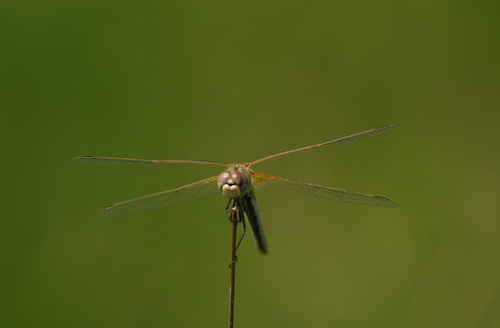
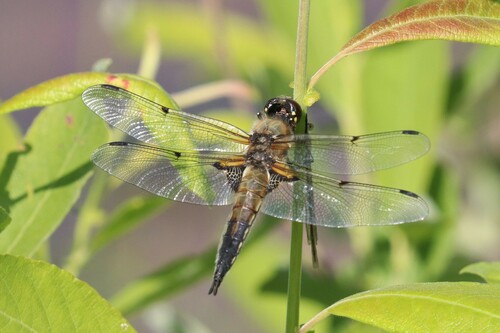
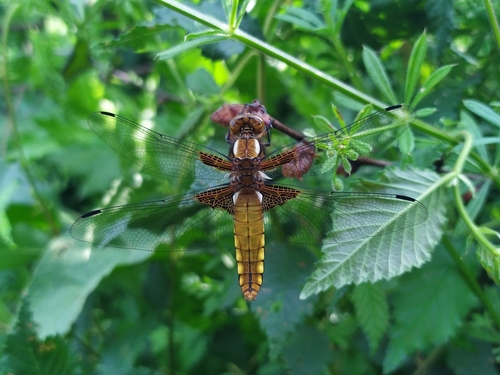
The black-tailed skimmer (Orthetrum cancellatum) is a dragonfly belonging to the family Libellulidae. This species is widespread in Europe and Asia. It is found throughout the European continent including the Mediterranean islands but is absent in the far north of Britain and the northern half of Fennoscandia. This is one of the most common European species and it is still increasing its range northwards. To the east, the range extends over central Asia to Kashmir, Mongolia to the northern parts of China and Arunachal Pradesh in India.

It is present in Albania, Algeria, Armenia, Austria, Azerbaijan, Belarus, Belgium, Bosnia and Herzegovina, Bulgaria, China, Croatia, Cyprus, Czech Republic, Denmark, Estonia, Finland, France (Corsica, and mainland), Georgia, Germany, Greece, Hungary, India, Iran, Ireland, Italy, Kazakhstan, Kyrgyzstan, Latvia, Lebanon, Lithuania, Luxembourg, Malta, Moldova, Mongolia, Montenegro, Morocco, Netherlands, North Macedonia, Norway, Poland, Portugal, Romania, Russia, Serbia, Slovakia, Slovenia, Spain, Sweden, Switzerland, Syria, Tajikistan, Tunisia, Turkey (including Turkey-in-Europe), Turkmenistan, Ukraine, United Kingdom, and Uzbekistan... Wikipedia →
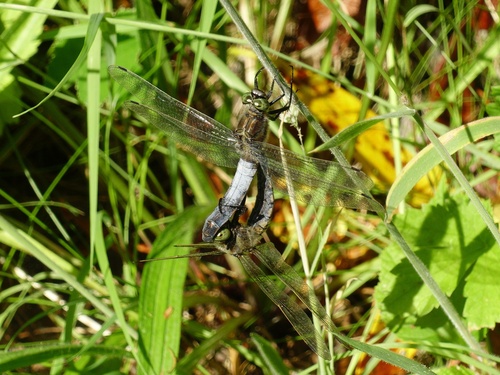
Global Distribution

Parks Where Found

# Park Country Daily sighting probability
1 Camargue 🇫🇷 France
~30%
2 Kiskunság National Park 🇭🇺 Hungary
~30%
3 Plitvice Lakes National Park 🇭🇷 Croatia
~20%
4 Fertő-Hanság National Park 🇭🇺 Hungary
~20%
5 Bavarian Forest National Park 🇩🇪 Germany
~20%
6 Białowieża National Park 🇵🇱 Poland
~10%
7 Aigüestortes National Park 🇪🇸 Spain
~10%
8 Snowdonia National Park 🇬🇧 United Kingdom
~10%
9 Cévennes National Park 🇫🇷 France
~10%
10 Wadden Sea National Park 🇩🇪 Germany
~10%
11 Sierra de Guadarrama National Park 🇪🇸 Spain
~10%
12 Pyrénées National Park 🇫🇷 France
<5%

Cities Where Found

# City Country Daily sighting probability
1 Brussels 🇧🇪 Belgium
~20%
2 Milan 🇮🇹 Italy
~20%
3 Kyiv 🇺🇦 Ukraine
~20%
4 Rostov-on-Don 🇷🇺 Russia
~20%
5 Turin 🇮🇹 Italy
~20%
6 Kharkiv 🇺🇦 Ukraine
~20%
7 Barcelona 🇪🇸 Spain
~20%
8 Budapest 🇭🇺 Hungary
~20%
9 Paris 🇫🇷 France
~10%
10 Warsaw 🇵🇱 Poland
~10%

Before you go

What are the chances of seeing a Black-Tailed Skimmer in Brussels?

Possible

About 20% of wildlife watchers report a Black-Tailed Skimmer sighting in Brussels on a given day, based on 258 verified sightings from GBIF citizen-science data. It is the 12th most-seen of the 337 insects we can rate there. Over three days the chance rises to about 50%, and over a week to about 80%, if each day is a fresh chance.

When is the best time to see a Black-Tailed Skimmer in Brussels?

June and July

In those months about 40% of wildlife watchers report a Black-Tailed Skimmer in Brussels on a given day, against under 5% in October to April, the lowest months.

What time of day is best to see a Black-Tailed Skimmer?

Between noon and 3 pm

Across all the parks we cover, that three-hour window holds the most Black-Tailed Skimmer sightings with a recorded time, and about 9 in 10 of them come between 6 am and 6 pm: it is a daytime animal.

Is Brussels the best place to see a Black-Tailed Skimmer?

Yes

Of the 42 cities where we can rate Black-Tailed Skimmer sightings, Brussels has the highest daily chance: about 20%. Next come Milan (Italy, about 20%) and Kyiv (Ukraine, about 20%).

Where does the Black-Tailed Skimmer sighting chance come from?

GBIF citizen-science records

It is estimated from how often the Black-Tailed Skimmer is recorded against all the insects logged in Brussels (258 verified sightings), calibrated against known sighting rates. Figures are rounded to the nearest 10% because citizen-science data supports honest approximations, not decimals, and months with records from fewer than five people show "—". How it works.

← Back to Brussels