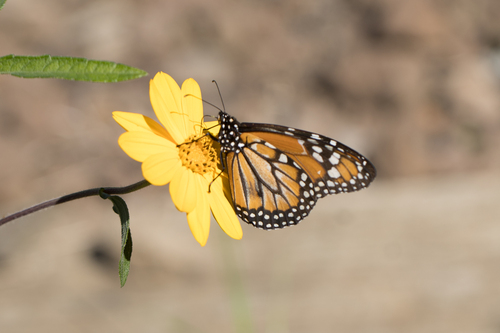
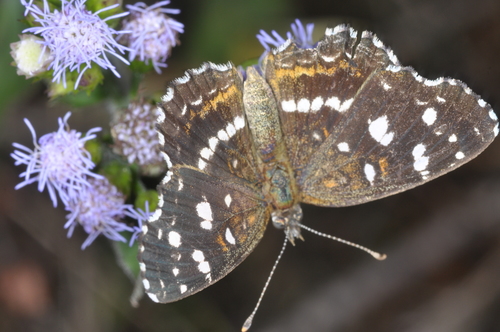
Banded Sphinx

Banded Sphinx

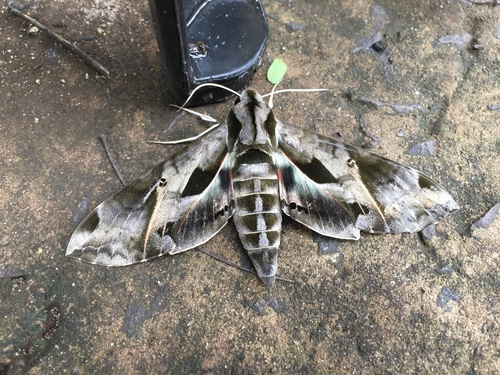
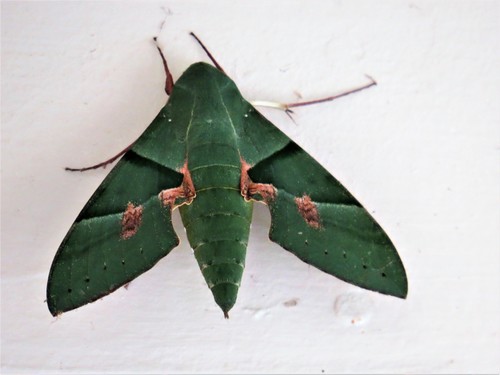
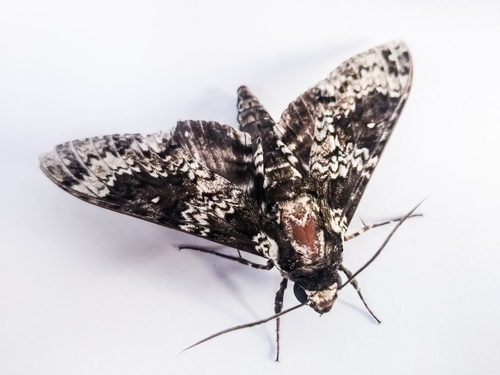
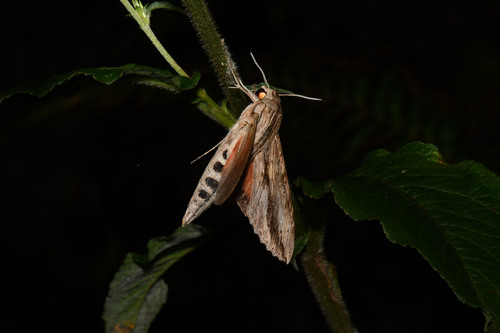
Eumorpha fasciatus

Daily sighting probability <5% · Rare
at Buenos Aires

In 3 days ~10% in a week ~20%

26 Verified sightings at Buenos Aires
68 In all 6 parks From 2019 to 2026
December Best month
☀️🌙 Day & Night When it's spotted

About the Banded Sphinx

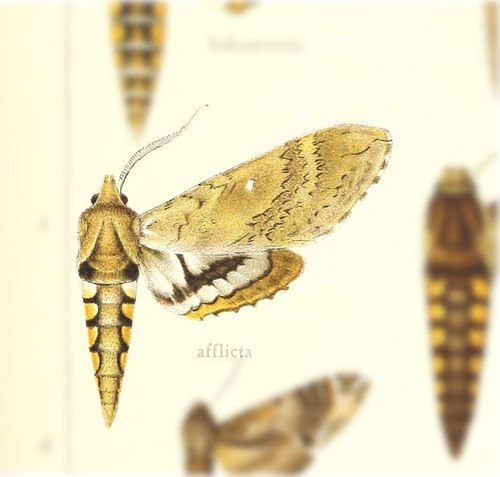
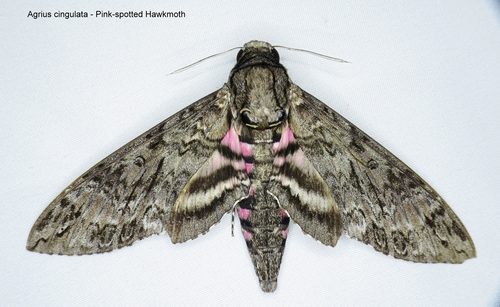
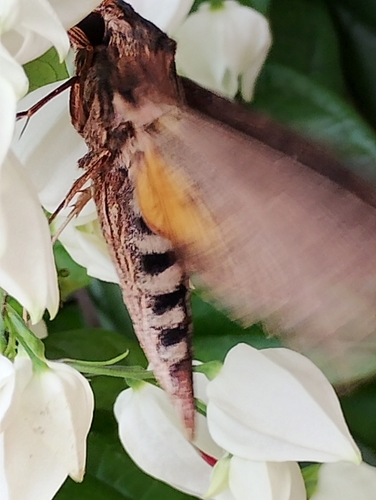
Eumorpha fasciatus, the banded sphinx, is a moth of the family Sphingidae. The species was first described by Johann Heinrich Sulzer in 1776. It is found from northern Argentina, Bolivia, Paraguay, Uruguay, Brazil, Colombia, Ecuador and Peru, north through Central America (Mexico, Belize, Guatemala, Honduras, Nicaragua, Costa Rica and Panama) to southern California and southern Arizona, east to Texas, Oklahoma, Louisiana, Mississippi, Florida and South Carolina. Strays can be found north up to Missouri, Michigan, Indiana, Pennsylvania, New Jersey, New York and Nova Scotia. It is also found in the Caribbean.

Adults are on wing year round in the tropics, but in the north, there are at least two generations with adults on wing from the end of May to July and the end of August to October in South Carolina and from May to October in Louisiana. Adults have been recorded feeding on nectar of Crinum, Catharanthus roseus, Petunia and Saponaria officinalis.

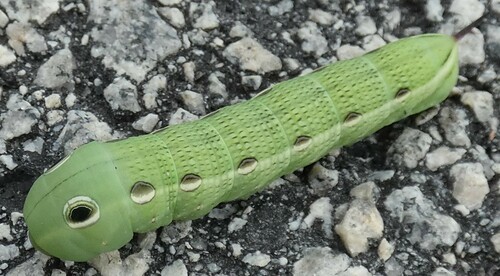
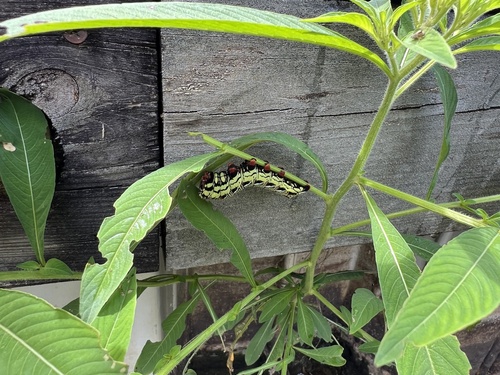
The larvae feed on Ludwigia (including L. decurrens, L. erecta, L. leptocarpa, L. octovalvis, L. peruviana and L. repens), Cissus verticillata, Fuchsia hybrida, Magnolia virginiana, Parthenocissus... Wikipedia →
Global Distribution

Parks Where Found

# Park Country Daily sighting probability
1 Palo Verde National Park 🇨🇷 Costa Rica
~30%
2 Piedras Blancas National Park 🇨🇷 Costa Rica
~10%
3 Everglades National Park 🇺🇸 United States
~10%
4 Braulio Carrillo National Park 🇨🇷 Costa Rica
~10%
5 Soberanía National Park 🇵🇦 Panama
~10%
6 Galápagos Islands 🇪🇨 Ecuador
<5%

Cities Where Found

# City Country Daily sighting probability
1 São Luís 🇧🇷 Brazil
~10%
2 Rosario 🇦🇷 Argentina
~10%
3 Asuncion 🇵🇾 Paraguay
~10%
4 Quito 🇪🇨 Ecuador
~10%
5 Montevideo 🇺🇾 Uruguay
~10%
6 Porto Alegre 🇧🇷 Brazil
~10%
7 Orlando 🇺🇸 United States
~10%
8 Houston 🇺🇸 United States
~10%
9 Bogota 🇨🇴 Colombia
~10%
10 Miami 🇺🇸 United States
<5%

Before you go

What are the chances of seeing a Banded Sphinx in Buenos Aires?

Rare

Under 5% of wildlife watchers report a Banded Sphinx sighting in Buenos Aires on a given day, based on 26 verified sightings from GBIF citizen-science data. It is the 263rd most-seen of the 558 insects we can rate there. Over three days the chance rises to about 10%, and over a week to about 20%, if each day is a fresh chance.

When is the best time to see a Banded Sphinx in Buenos Aires?

December and January

In those months about 10% of wildlife watchers report a Banded Sphinx in Buenos Aires on a given day, against under 5% in February to November, the lowest months.

What time of day is best to see a Banded Sphinx?

Between 8 and 11 am

Across all the parks we cover, that three-hour window holds the most Banded Sphinx sightings with a recorded time, and about 6 in 10 of them come between 6 am and 6 pm: it is seen both by day and at night.

Is Buenos Aires the best place to see a Banded Sphinx?

12th of 20

Of the 20 cities where we can rate Banded Sphinx sightings, Buenos Aires ranks 12th at under 5%. The best odds are in São Luís (Brazil, about 10%), Rosario (Argentina, about 10%) and Asuncion (Paraguay, about 10%).

Where does the Banded Sphinx sighting chance come from?

GBIF citizen-science records

It is estimated from how often the Banded Sphinx is recorded against all the insects logged in Buenos Aires (26 verified sightings), calibrated against known sighting rates. Figures are rounded to the nearest 10% because citizen-science data supports honest approximations, not decimals, and months with records from fewer than five people show "—". How it works.

← Back to Buenos Aires