About the Sandhill Crane
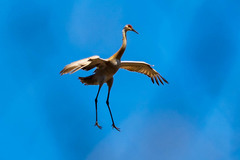
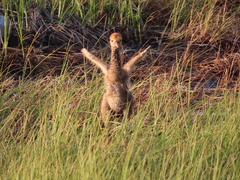
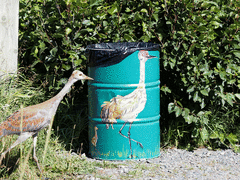
The sandhill crane (Antigone canadensis) is a species of large crane of North America and extreme northeastern Siberia. The common name of this bird refers to its habitat, such as the Platte River, on the edge of Nebraska's Sandhills on the American Great Plains. Sandhill cranes are known to frequent the edges of bodies of water. The central Platte River Valley in Nebraska is the most important stopover area for the nominotypical subspecies, the lesser sandhill crane (A. c. canadensis), with up to 450,000 of these birds migrating through annually.
In 1750, British naturalist George Edwards included an illustration and a description of the sandhill crane in the third volume of his A Natural History of Uncommon Birds, referring to the species as the 'Brown and Ash-colour'd Crane'. Edwards based his hand-colored etching on a preserved specimen that had been brought to London from the Hudson Bay area of Canada by James Isham. When in 1758, Swedish naturalist Carl Linnaeus updated his Systema Naturae for the 10th edition, he placed the sandhill crane with herons and cranes in the genus Ardea. Linnaeus included a brief description, coined the binomial name Ardea canadensis... Wikipedia →