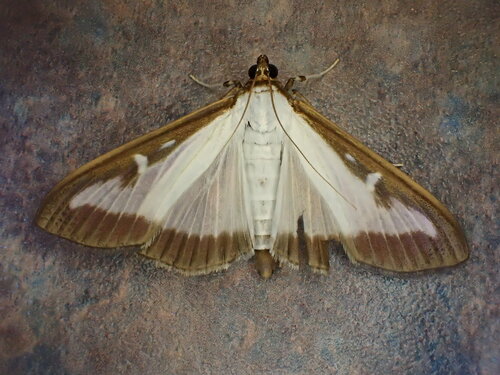
European Peacock Butterfly

European Peacock Butterfly

Aglais io

Daily sighting probability ~20% · Possible
at Hamburg

In 3 days ~50% in a week ~80%

118 Verified sightings at Hamburg
1,289 In all 19 parks From 2019 to 2026
April Best month
☀️ Diurnal When it's spotted

About the European Peacock Butterfly

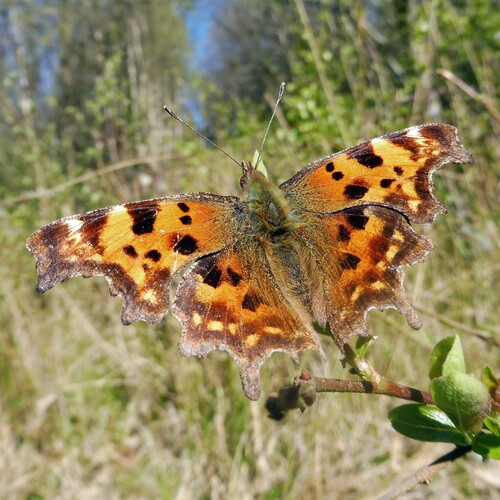
Aglais io, the European peacock, or the peacock butterfly, is a colourful butterfly, found in Europe and temperate Asia as far east as Japan. The peacock butterfly is resident in much of its range, often wintering in buildings or trees. It therefore often appears quite early in spring.

The peacock butterfly has figured in research in which the role of eyespots as an anti-predator mechanism has been investigated. The peacock is expanding its range and is not known to be threatened. In a 2026 poll conducted by Butterfly Conservation, the peacock butterfly was declared Britain's favourite butterfly.

European peacock larvae feed on nettle, where the eggs are usually laid. Other plants commonly associated with the species include hops. Its wingspan is around 63-69mm in males, and 67-75mm in females. In most climates the butterflies emerge from hibernation near the end of March or the beginning of April, with the second generation emerging near the end of July.

The base colour of the wings is a rusty red, and at each wingtip it bears a distinctive, black, blue and yellow eyespot. The underside is a cryptically coloured dark brown or black, mimicking a dead leaf. There are... Wikipedia →


Global Distribution

Parks Where Found

# Park Country Daily sighting probability
1 Biebrza National Park 🇵🇱 Poland
~40%
2 Tatra National Park 🇸🇰 Slovakia
~40%
3 Bavarian Forest National Park 🇩🇪 Germany
~40%
4 Cairngorms National Park 🇬🇧 United Kingdom
~30%
5 Białowieża National Park 🇵🇱 Poland
~30%
6 Snowdonia National Park 🇬🇧 United Kingdom
~30%
7 Gauja National Park 🇱🇻 Latvia
~30%
8 Aigüestortes National Park 🇪🇸 Spain
~20%
9 Nikko National Park 🇯🇵 Japan
~20%
10 Sierra de Guadarrama National Park 🇪🇸 Spain
~20%
11 Wadden Sea National Park 🇩🇪 Germany
~20%
12 Pyrénées National Park 🇫🇷 France
~20%
13 Fertő-Hanság National Park 🇭🇺 Hungary
~20%
14 Cévennes National Park 🇫🇷 France
~10%
15 Triglav National Park 🇸🇮 Slovenia
~10%
16 Picos de Europa National Park 🇪🇸 Spain
~10%
17 Hohe Tauern National Park 🇦🇹 Austria
~10%
18 Mercantour National Park 🇫🇷 France
~10%
19 Vanoise National Park 🇫🇷 France
~10%

Cities Where Found

# City Country Daily sighting probability
1 Birmingham 🇬🇧 United Kingdom
~30%
2 Liverpool 🇬🇧 United Kingdom
~30%
3 Manchester 🇬🇧 United Kingdom
~30%
4 Warsaw 🇵🇱 Poland
~30%
5 Prague 🇨🇿 Czechia
~30%
6 Kyiv 🇺🇦 Ukraine
~30%
7 London 🇬🇧 United Kingdom
~30%
8 Essen 🇩🇪 Germany
~20%
9 Amsterdam 🇳🇱 Netherlands
~20%
10 Kharkiv 🇺🇦 Ukraine
~20%

Before you go

What are the chances of seeing a European Peacock Butterfly in Hamburg?

Possible

About 20% of wildlife watchers report a European Peacock Butterfly sighting in Hamburg on a given day, based on 118 verified sightings from GBIF citizen-science data. It is the 10th most-seen of the 423 insects we can rate there. Over three days the chance rises to about 50%, and over a week to about 80%, if each day is a fresh chance.

When is the best time to see a European Peacock Butterfly in Hamburg?

April and July

In those months about 30% of wildlife watchers report a European Peacock Butterfly in Hamburg on a given day, against under 5% in January and November, the lowest months.

What time of day is best to see a European Peacock Butterfly?

Between 1 and 4 pm

Across all the parks we cover, that three-hour window holds the most European Peacock Butterfly sightings with a recorded time, and about 9 in 10 of them come between 6 am and 6 pm: it is a daytime animal.

Is Hamburg the best place to see a European Peacock Butterfly?

19th of 42

Of the 42 cities where we can rate European Peacock Butterfly sightings, Hamburg ranks 19th at about 20%. The best odds are in Birmingham (United Kingdom, about 30%), Liverpool (United Kingdom, about 30%) and Manchester (United Kingdom, about 30%).

Where does the European Peacock Butterfly sighting chance come from?

GBIF citizen-science records

It is estimated from how often the European Peacock Butterfly is recorded against all the insects logged in Hamburg (118 verified sightings), calibrated against known sighting rates. Figures are rounded to the nearest 10% because citizen-science data supports honest approximations, not decimals, and months with records from fewer than five people show "—". How it works.

← Back to Hamburg