





Completed

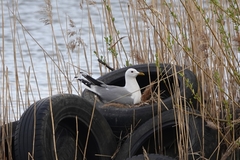
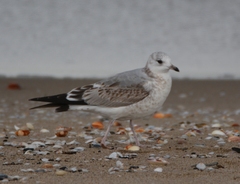

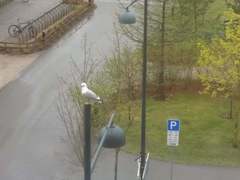
Common Gull
Larus canus
Silhouette: Sharon Wegner-Larsen · PhyloPic
- KingdomAnimalia (Animals)
- PhylumChordata (Chordates)
- ClassAves (Birds)
- OrderCharadriiformes (Shorebirds and Allies)
- FamilyLaridae (Gulls, Terns, and Skimmers)
- GenusLarus (Large White-headed Gulls)
- SpeciesLarus canus (Common Gull)
In 3 days ~90% in a week >90%
4,406 Verified sightings at Helsinki
5,927 In all 12 parks From 2019 to 2026
April Best month
☀️ Diurnal When it's spotted
About the Common Gull
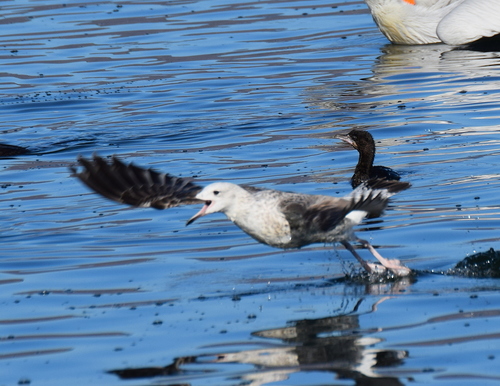
The common gull (Larus canus) is a gull that breeds in cool temperate regions of the Palearctic from Iceland and Scotland east to Kamchatka in the Russian Far East. Most common gulls migrate further south in winter, reaching the Mediterranean Sea, the southern Caspian Sea, and the seas around China and Japan; northwest European populations are at least partly resident. The closely related short-billed gull was formerly often included in this species, which was then sometimes known collectively as "mew gull".
The common gull was formally described in 1758 by the Swedish naturalist Carl Linnaeus in the tenth edition of his Systema Naturae under the current binomial name Larus canus. Linnaeus specified the type locality as Europe but this is now restricted to Sweden. The genus name is a Latin word for a seabird, probably a gull. The specific epithet canus is also Latin and means "grey". The name "common gull" was coined by Thomas Pennant in 1768 because he considered it the most numerous of its genus. John Ray earlier used the name common sea-mall.
There are many old British regional names for this species, typically variations on maa, mar, and mew. The original English... Wikipedia →
Recent sightings of Common Gull in Helsinki
LIVEiNaturalistGlobal Distribution
Parks Where Found
| # | Park | Country | Daily sighting probability |
|---|---|---|---|
| 1 | Wadden Sea National Park | 🇩🇪 Germany | |
| 2 | Cairngorms National Park | 🇬🇧 United Kingdom | |
| 3 | Snowdonia National Park | 🇬🇧 United Kingdom | |
| 4 | Kiskunság National Park | 🇭🇺 Hungary | |
| 5 | Vatnajokull National Park | 🇮🇸 Iceland | |
| 6 | Hortobágy National Park | 🇭🇺 Hungary | |
| 7 | Fertő-Hanság National Park | 🇭🇺 Hungary | |
| 8 | Gauja National Park | 🇱🇻 Latvia | |
| 9 | Biebrza National Park | 🇵🇱 Poland | |
| 10 | Białowieża National Park | 🇵🇱 Poland | |
| 11 | Sierra de Guadarrama National Park | 🇪🇸 Spain | |
| 12 | Bavarian Forest National Park | 🇩🇪 Germany |
Cities Where Found
| # | City | Country | Daily sighting probability |
|---|---|---|---|
| 1 | Helsinki | 🇫🇮 Finland | |
| 2 | Liverpool | 🇬🇧 United Kingdom | |
| 3 | Stockholm | 🇸🇪 Sweden | |
| 4 | Nizhny Novgorod | 🇷🇺 Russia | |
| 5 | Copenhagen | 🇩🇰 Denmark | |
| 6 | Warsaw | 🇵🇱 Poland | |
| 7 | Novosibirsk | 🇷🇺 Russia | |
| 8 | Moscow | 🇷🇺 Russia | |
| 9 | Dublin | 🇮🇪 Ireland | |
| 10 | Hamburg | 🇩🇪 Germany |
Zoos & Centres Where Found
| # | Zoo / Centre | Country | |
|---|---|---|---|
| 1 | Zhuhai Chimelong Ocean Kingdom | 🇨🇳 China | |
| 2 | Chimelong Spaceship | 🇨🇳 China | |
| 3 | Royev Ruchey Zoo | 🇷🇺 Russia | |
| 4 | Ecomare | 🇳🇱 Netherlands |
Closest Relatives at Helsinki




Before you go
What are the chances of seeing a Common Gull in Helsinki?
Likely
About 60% of wildlife watchers report a Common Gull sighting in Helsinki on a given day, based on 4,406 verified sightings from GBIF citizen-science data. It is the 6th most-seen of the 233 birds we can rate there. Over three days the chance rises to about 90%, and over a week to over 90%, if each day is a fresh chance.
When is the best time to see a Common Gull in Helsinki?
April and July
In those months about 80% of wildlife watchers report a Common Gull in Helsinki on a given day, against about 30% in February and December, the lowest months.
What time of day is best to see a Common Gull?
Between 11 am and 2 pm
Across all the parks we cover, that three-hour window holds the most Common Gull sightings with a recorded time, and about 8 in 10 of them come between 6 am and 6 pm: it is a daytime animal.
Is Helsinki the best place to see a Common Gull?
Yes
Of the 51 cities where we can rate Common Gull sightings, Helsinki has the highest daily chance: about 60%. Next come Liverpool (United Kingdom, about 50%) and Stockholm (Sweden, about 50%).
Which relatives of the Common Gull live in Helsinki?
Same genus: Larus
The closest relatives of the Common Gull that you can see in Helsinki (genus Larus, Large White-headed Gulls) are European Herring Gull (about 50%), Great Black-backed Gull (about 30%) and Lesser Black-backed Gull (about 20%), with each one's daily chance of a sighting.
Where does the Common Gull sighting chance come from?
GBIF citizen-science records
It is estimated from how often the Common Gull is recorded against all the birds logged in Helsinki (4,406 verified sightings), calibrated against known sighting rates. Figures are rounded to the nearest 10% because citizen-science data supports honest approximations, not decimals, and months with records from fewer than five people show "—". How it works.
