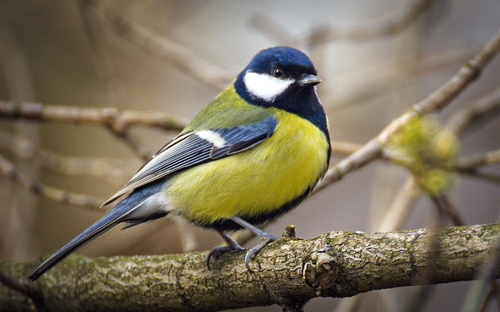
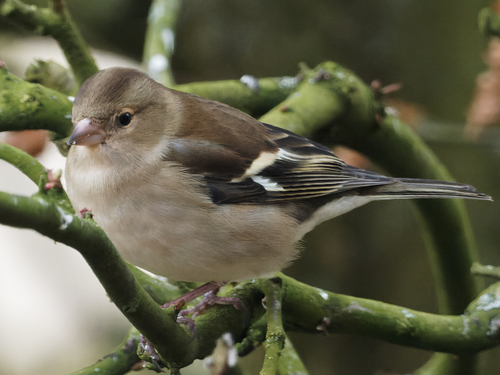
Marsh Tit

Marsh Tit

Poecile palustris

Silhouette: Andy Wilson · PhyloPic

LCLeast ConcernNTVUENCR
Daily sighting probability <5% · Rare
at Istanbul

In 3 days <5%

9 Verified sightings at Istanbul
2,664 In all 17 parks From 2019 to 2026
February Best month
☀️ Diurnal When it's spotted

About the Marsh Tit

The marsh tit (Poecile palustris) is a Eurasian passerine bird in the tit family Paridae and genus Poecile, closely related to the willow tit, Père David's and Songar tits. It is a small bird, around 12 cm (4.7 in) long and weighing 12 g (0.42 oz), with a black crown and nape, pale cheeks, brown back and greyish-brown wings and tail. Between 8 and 11 subspecies are recognised. Its close resemblance to the willow tit can cause identification problems, especially in the United Kingdom where the local subspecies of the two are very similar; they were not recognised as separate species until 1897.

Globally, the marsh tit is classified as Least Concern, although there is evidence of a decline in numbers (in the UK, numbers have dropped by more than 50% since the 1970s, for example). It can be found throughout temperate Europe and northern Asia and, despite its name, it occurs in a range of habitats including dry woodland. The marsh tit is omnivorous; its food includes caterpillars, spiders and seeds. It nests in tree holes, choosing existing hollows to enlarge, rather than excavating its own. A clutch of 5–9 eggs is laid.

The marsh tit was formally described... Wikipedia →

Sounds

Song1:22

Sweden · 2026

© Lennart Jeppsson · XC1173264 · CC BY-NC-SA 4.0

Call0:15

Sweden · 2025

© Ulf Elman · XC974026 · CC BY-NC-ND 4.0

Alarm call0:28

Poland · 2025

© Jarek Matusiak · XC964322 · CC BY-NC-ND 4.0

Global Distribution

Parks Where Found

# Park Country Daily sighting probability
1 Plitvice Lakes National Park 🇭🇷 Croatia
~60%
2 Białowieża National Park 🇵🇱 Poland
~40%
3 Triglav National Park 🇸🇮 Slovenia
~40%
4 Biebrza National Park 🇵🇱 Poland
~20%
5 Ordesa y Monte Perdido National Park 🇪🇸 Spain
~20%
6 Pyrénées National Park 🇫🇷 France
~20%
7 Picos de Europa National Park 🇪🇸 Spain
~20%
8 Gauja National Park 🇱🇻 Latvia
~20%
9 Bavarian Forest National Park 🇩🇪 Germany
~20%
10 Cévennes National Park 🇫🇷 France
~10%
11 Tatra National Park 🇸🇰 Slovakia
~10%
12 Mercantour National Park 🇫🇷 France
~10%
13 Ecrins National Park 🇫🇷 France
~10%
14 Aigüestortes National Park 🇪🇸 Spain
~10%
15 Fertő-Hanság National Park 🇭🇺 Hungary
<5%
16 Wadden Sea National Park 🇩🇪 Germany
<5%
17 Snowdonia National Park 🇬🇧 United Kingdom
<5%

Cities Where Found

# City Country Daily sighting probability
1 Sapporo 🇯🇵 Japan
~70%
2 Seoul 🇰🇷 South Korea
~70%
3 Beijing 🇨🇳 China
~70%
4 Daejeon 🇰🇷 South Korea
~50%
5 Busan 🇰🇷 South Korea
~30%
6 Turin 🇮🇹 Italy
~20%
7 Gwangju 🇰🇷 South Korea
~20%
8 Munich 🇩🇪 Germany
~20%
9 Daegu 🇰🇷 South Korea
~20%
10 Hamburg 🇩🇪 Germany
~10%

Before you go

What are the chances of seeing a Marsh Tit in Istanbul?

Rare

Under 5% of wildlife watchers report a Marsh Tit sighting in Istanbul on a given day, based on 9 verified sightings from GBIF citizen-science data. It is the 222nd most-seen of the 233 birds we can rate there. Over three days the chance rises to under 5%, if each day is a fresh chance.

When is the best time to see a Marsh Tit in Istanbul?

Any time of year

In every month with enough records, under 5% of wildlife watchers report a Marsh Tit in Istanbul on a given day, so our monthly data shows no clear season.

What time of day is best to see a Marsh Tit?

Between 8 and 11 am

Across all the parks we cover, that three-hour window holds the most Marsh Tit sightings with a recorded time, and about 8 in 10 of them come between 6 am and 6 pm: it is a daytime animal.

Is Istanbul the best place to see a Marsh Tit?

38th of 38

Of the 38 cities where we can rate Marsh Tit sightings, Istanbul ranks 38th at under 5%. The best odds are in Sapporo (Japan, about 70%), Seoul (South Korea, about 70%) and Beijing (China, about 70%).

Which relatives of the Marsh Tit live in Istanbul?

Same family: Paridae

The closest relatives of the Marsh Tit that you can see in Istanbul (family Paridae, Tits, Chickadees, and Titmice) are Great Tit (about 70%), Blue Tit (about 30%) and Coal Tit (about 10%), with each one's daily chance of a sighting.

Where does the Marsh Tit sighting chance come from?

GBIF citizen-science records

It is estimated from how often the Marsh Tit is recorded against all the birds logged in Istanbul (9 verified sightings), calibrated against known sighting rates. Figures are rounded to the nearest 10% because citizen-science data supports honest approximations, not decimals, and months with records from fewer than five people show "—". How it works.

← Back to Istanbul