Ortolan Bunting

Ortolan Bunting

Emberiza hortulana

Silhouette: L. Shyamal · PhyloPic

LCLeast ConcernNTVUENCR
Daily sighting probability <5% · Rare
at Istanbul

In 3 days <5%

33 Verified sightings at Istanbul
569 In all 10 parks From 2019 to 2026
April Best month
☀️ Diurnal When it's spotted

About the Ortolan Bunting

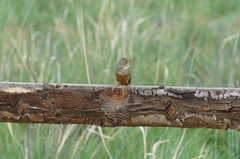
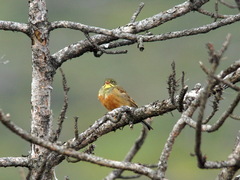
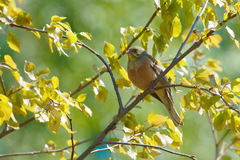
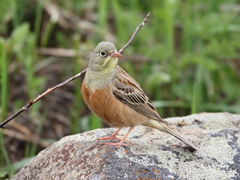
The ortolan (Emberiza hortulana), also called ortolan bunting, is a Eurasian bird in the bunting family Emberizidae, a passerine family now separated by most modern scholars from the finches, Fringillidae. The genus name Emberiza is from Alemannic German Embritz, a bunting. The specific name hortulana is from the Italian name for this bird, ortolana. The English ortolan is derived from Middle French hortolan, "gardener".

The ortolan is served in French cuisine, typically cooked and eaten whole. Traditionally, diners cover their heads with their napkin or a towel while eating the delicacy. The ortolan was so widely eaten that its French populations had dropped dangerously low by the 1990s. French laws protecting the bird, and an EU-wide prohibition against killing or capturing it, have had little effect on the ortolan's numbers.

The ortolan bunting was described by the Swedish naturalist Carl Linnaeus in 1758 in the tenth edition of his Systema Naturae and retains its original binomial name of Emberiza hortulana. The species is monotypic. A molecular phylogenetic study of the buntings published in 2008 found that the ortolan bunting is most closely related to Cretzschmar... Wikipedia →

Sounds

Song1:23

Spain · 2026

© Jacobo Ramil Millarengo · XC1107504 · CC BY-NC-SA 4.0

Call1:01

Sweden · 2025

© Lars Edenius · XC1002668 · CC BY-NC-SA 4.0

Flight call0:30

Mongolia · 2022

© Stanislas Wroza · XC765629 · CC BY-NC-SA 4.0

Global Distribution

Parks Where Found

# Park Country Daily sighting probability
1 Cévennes National Park 🇫🇷 France
~10%
2 Mercantour National Park 🇫🇷 France
~10%
3 Ecrins National Park 🇫🇷 France
~10%
4 Sierra de Guadarrama National Park 🇪🇸 Spain
~10%
5 Biebrza National Park 🇵🇱 Poland
<5%
6 Sierra Nevada National Park 🇪🇸 Spain
<5%
7 Ordesa y Monte Perdido National Park 🇪🇸 Spain
<5%
8 Pyrénées National Park 🇫🇷 France
<5%
9 Doñana National Park 🇪🇸 Spain
<5%
10 Camargue 🇫🇷 France
<5%

Cities Where Found

# City Country Daily sighting probability
1 Jerusalem 🇮🇱 Israel
~10%
2 Ramallah 🇵🇸 Palestine
<5%
3 Doha 🇶🇦 Qatar
<5%
4 Abu Dhabi 🇦🇪 United Arab Emirates
<5%
5 Kuwait City 🇰🇼 Kuwait
<5%
6 Tel Aviv 🇮🇱 Israel
<5%
7 Istanbul 🇹🇷 Turkey
<5%
8 Dubai 🇦🇪 United Arab Emirates
<5%

Zoos & Centres Where Found

# Zoo / Centre Country
1 Dresden Zoo 🇩🇪 Germany In captivity

Before you go

What are the chances of seeing an Ortolan Bunting in Istanbul?

Rare

Under 5% of wildlife watchers report an Ortolan Bunting sighting in Istanbul on a given day, based on 33 verified sightings from GBIF citizen-science data. It is the 171st most-seen of the 233 birds we can rate there. Over three days the chance rises to under 5%, if each day is a fresh chance.

When is the best time to see an Ortolan Bunting in Istanbul?

Any time of year

In every month with enough records, under 5% of wildlife watchers report an Ortolan Bunting in Istanbul on a given day, so our monthly data shows no clear season.

What time of day is best to see an Ortolan Bunting?

Between 8 and 11 am

Across all the parks we cover, that three-hour window holds the most Ortolan Bunting sightings with a recorded time, and about 8 in 10 of them come between 6 am and 6 pm: it is a daytime animal.

Is Istanbul the best place to see an Ortolan Bunting?

7th of 8

Of the 8 cities where we can rate Ortolan Bunting sightings, Istanbul ranks 7th at under 5%. The best odds are in Jerusalem (Israel, about 10%), Ramallah (Palestine, under 5%) and Doha (Qatar, under 5%).

Where does the Ortolan Bunting sighting chance come from?

GBIF citizen-science records

It is estimated from how often the Ortolan Bunting is recorded against all the birds logged in Istanbul (33 verified sightings), calibrated against known sighting rates. Figures are rounded to the nearest 10% because citizen-science data supports honest approximations, not decimals, and months with records from fewer than five people show "—". How it works.

← Back to Istanbul