Chestnut-fronted Macaw

Chestnut-fronted Macaw

Ara severus

Silhouette: Myriam_Ramirez · PhyloPic

LCLeast ConcernNTVUENCR
Daily sighting probability ~10% · With luck
at Medellín

In 3 days ~30% in a week ~60%

467 Verified sightings at Medellín
5,847 In all 9 parks From 2019 to 2026
December Best month
☀️ Diurnal When it's spotted

About the Chestnut-fronted Macaw

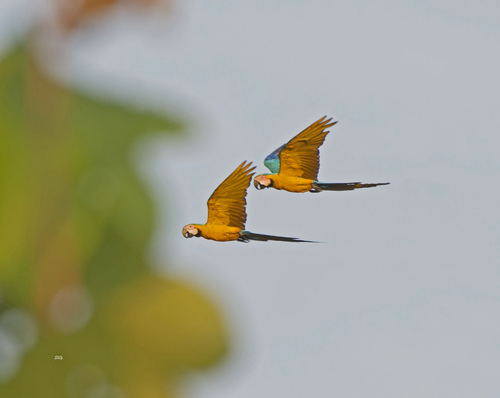
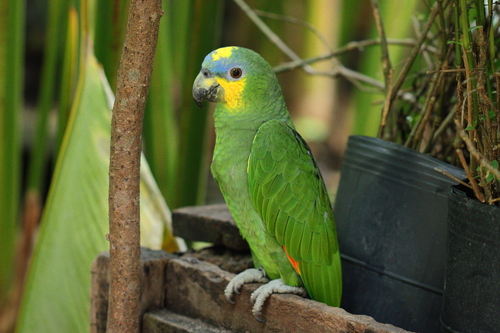
The chestnut-fronted macaw or severe macaw (Ara severus) is one of the largest of the mini-macaws. It reaches a size of around 45 cm (18 in) of which around half is the length of the tail. They can be found over a large part of Northern South America from Panama south into Amazonian Brazil and central Bolivia. A feral population is found in Florida.

Their lifespan is listed as anything from 30 to 80 years of age. The chestnut-fronted macaw was formally described in 1758 by the Swedish naturalist Carl Linnaeus in the tenth edition of his Systema Naturae. He placed it with all the other parrots in the genus Psittacus and coined the binomial name Psittacus severus. This macaw is now one of the eight extant species placed the genus Ara that was erected in 1799 by the French naturalist Bernard Germain de Lacépède. The genus name is from ará meaning "macaw" in the Tupi language of Brazil. The word is an onomatopoeia based on the sound of their call. The specific epithet severus is Latin meaning "grim", "cruel" or "stern". The species is considered to be monotypic: no subspecies are recognised.

The chestnut-fronted or severe macaw is mostly green in colour... Wikipedia →

Sounds

Flight call0:08

Ecuador · 2010

© Manuel Sánchez-Nivicela · XC1157393 · CC BY-NC-ND 4.0

Song0:50

Colombia · 2022

© Frank Lambert · XC1040553 · CC BY-NC-ND 4.0

Call1:26

Brazil · 2025

© JAYRSON ARAUJO DE OLIVEIRA · XC1035763 · CC BY-NC-SA 4.0

Global Distribution

Parks Where Found

# Park Country Daily sighting probability
1 Manu National Park 🇵🇪 Peru
~50%
2 Tambopata National Reserve 🇵🇪 Peru
~40%
3 Yasuní National Park 🇪🇨 Ecuador
~30%
4 Cuyabeno Wildlife Reserve 🇪🇨 Ecuador
~30%
5 Sierra de la Macarena National Park 🇨🇴 Colombia
~30%
6 Amacayacu National Natural Park 🇨🇴 Colombia
~20%
7 Henri Pittier National Park 🇻🇪 Venezuela
~20%
8 Darién National Park 🇵🇦 Panama
<5%
9 Farallones de Cali National Natural Park 🇨🇴 Colombia
<5%

Cities Where Found

# City Country Daily sighting probability
1 Caracas 🇻🇪 Venezuela
~70%
2 Valencia 🇻🇪 Venezuela
~60%
3 Maracaibo 🇻🇪 Venezuela
~60%
4 Cali 🇨🇴 Colombia
~50%
5 Santa Cruz de la Sierra 🇧🇴 Bolivia
~20%
6 Medellín 🇨🇴 Colombia
~10%
7 Miami 🇺🇸 United States
<5%

Zoos & Centres Where Found

# Zoo / Centre Country
1 Parque das Aves 🇧🇷 Brazil In captivity
2 Curitiba Zoo 🇧🇷 Brazil In captivity
3 Parque Zoologico Guátika 🇨🇴 Colombia In captivity
4 Ukumarí Biopark 🇨🇴 Colombia In captivity
5 Zoológico la pastroa 🇲🇽 Mexico In captivity
6 Bioparque Municipal Vesty Pakos 🇧🇴 Bolivia In captivity
7 Sayaji Baug Zoo 🇮🇳 India In captivity
8 Paphos Zoo 🇨🇾 Cyprus In captivity
9 Aviario Nacional de Colombia 🇨🇴 Colombia In captivity
10 Loro Parque 🇪🇸 Spain In captivity
11 Bioparque Wakatá 🇨🇴 Colombia In captivity
12 Zoológico de Fauna Sudamericana 🇧🇴 Bolivia In captivity
13 Parque de la Conservación 🇨🇴 Colombia In captivity
14 Buttonwood Park Zoo 🇺🇸 United States In captivity
15 Zoo El Pantanal 🇪🇨 Ecuador In captivity
16 Arequipa zoo 🇵🇪 Peru In captivity
17 Rodadero Sea Aquarium and Museum 🇨🇴 Colombia In captivity
18 Agroflori Parque de las Aves 🇧🇴 Bolivia In captivity
19 El Refugio foundation 🇨🇴 Colombia In captivity
20 MaST Center Aquarium 🇺🇸 United States In captivity
21 Bird Park 🇷🇺 Russia In captivity
22 Cali Zoo 🇨🇴 Colombia In captivity
23 Fundação Zoobotânica de Marabá 🇧🇷 Brazil In captivity
24 GüiráOga 🇦🇷 Argentina In captivity
25 Sea Life Paris Val d'Europe 🇫🇷 France In captivity
26 Wiwa Quito 🇪🇨 Ecuador In captivity

Before you go

What are the chances of seeing a Chestnut-fronted Macaw in Medellín?

With luck

About 10% of wildlife watchers report a Chestnut-fronted Macaw sighting in Medellín on a given day, based on 467 verified sightings from GBIF citizen-science data. It is the 55th most-seen of the 244 birds we can rate there. Over three days the chance rises to about 30%, and over a week to about 60%, if each day is a fresh chance.

When is the best time to see a Chestnut-fronted Macaw in Medellín?

September and December

In those months about 20% of wildlife watchers report a Chestnut-fronted Macaw in Medellín on a given day, against about 10% in January–August and October–November, the lowest months.

What time of day is best to see a Chestnut-fronted Macaw?

Between 3 and 6 pm

Across all the parks we cover, that three-hour window holds the most Chestnut-fronted Macaw sightings with a recorded time, and about 8 in 10 of them come between 6 am and 6 pm: it is a daytime animal.

Is Medellín the best place to see a Chestnut-fronted Macaw?

6th of 7

Of the 7 cities where we can rate Chestnut-fronted Macaw sightings, Medellín ranks 6th at about 10%. The best odds are in Caracas (Venezuela, about 70%), Valencia (Venezuela, about 60%) and Maracaibo (Venezuela, about 60%).

Where does the Chestnut-fronted Macaw sighting chance come from?

GBIF citizen-science records

It is estimated from how often the Chestnut-fronted Macaw is recorded against all the birds logged in Medellín (467 verified sightings), calibrated against known sighting rates. Figures are rounded to the nearest 10% because citizen-science data supports honest approximations, not decimals, and months with records from fewer than five people show "—". How it works.

← Back to Medellín