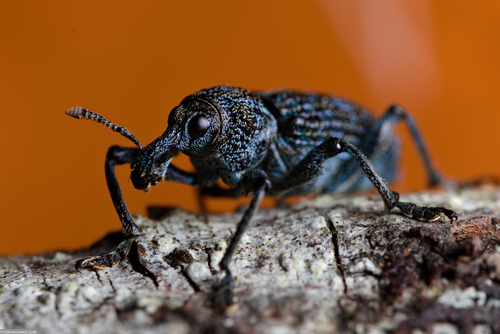
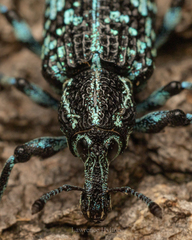
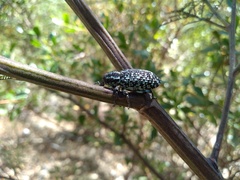
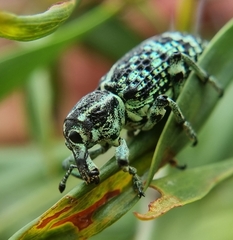
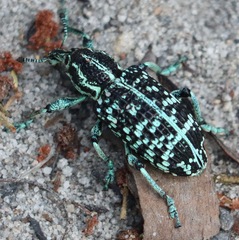
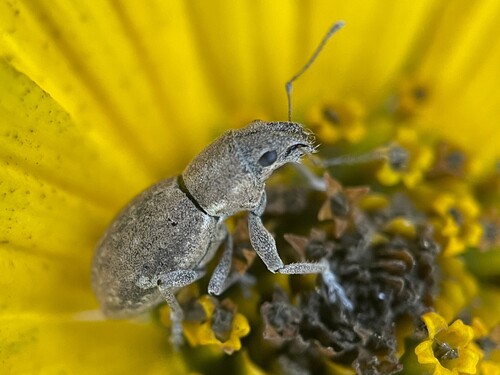
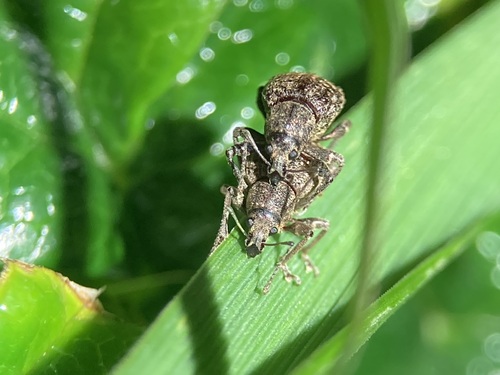
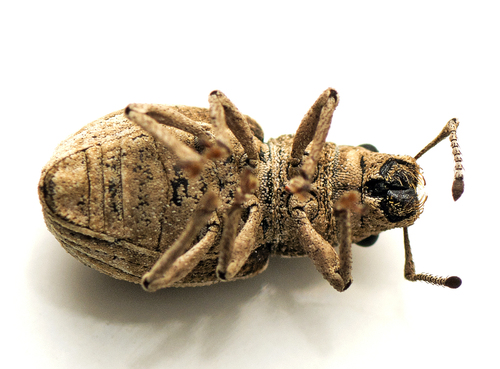
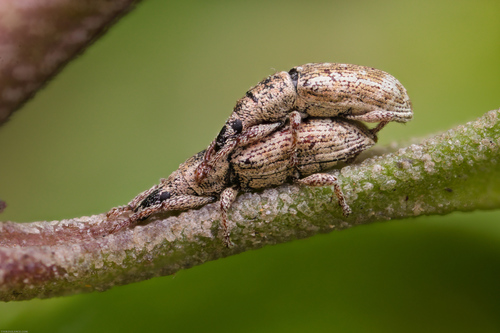
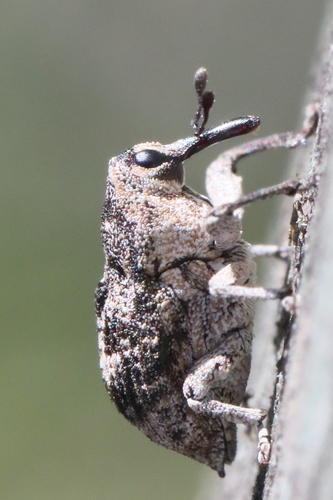
Botany Bay Diamond Weevil

Botany Bay Diamond Weevil

Chrysolopus spectabilis

Endemic
Daily sighting probability <5% · Rare
at Melbourne

In 3 days ~10% in a week ~20%

30 Verified sightings at Melbourne
296 In all 9 parks From 2019 to 2026
December Best month
☀️ Diurnal When it's spotted

About the Botany Bay Diamond Weevil

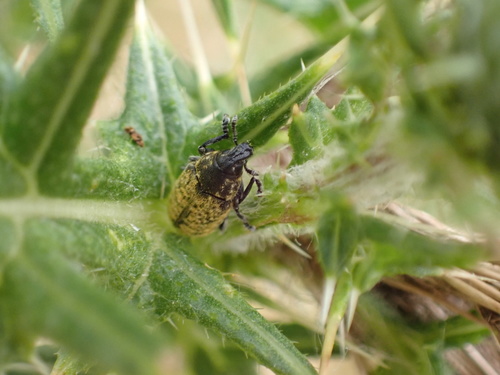
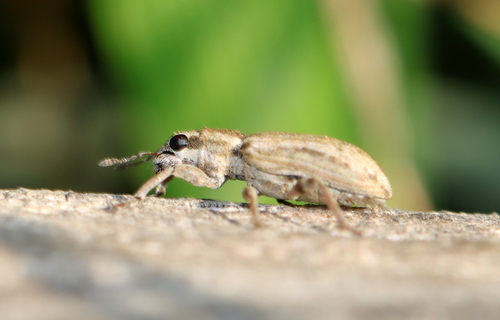
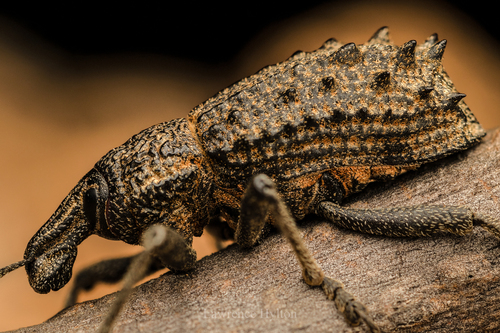
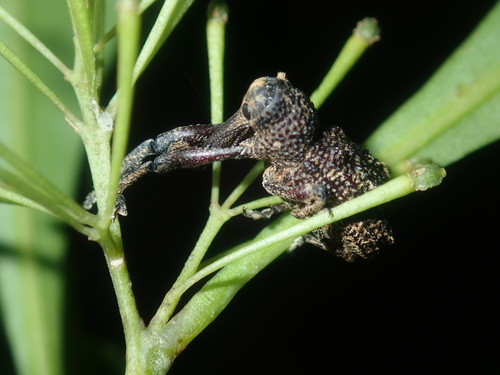
Chrysolopus spectabilis (common names include Botany Bay diamond weevil, Botany Bay diamond beetle and sapphire weevil) is a species of weevil found in south-eastern Australia. It was discovered during James Cook's first voyage, and became one of the first insects to be described from Australia. The weevil measures up to 25 mm (1.0 in) long and includes distinctive metallic green and black scales. It feeds only on 28 species of the plant genus Acacia.

Chrysolopus spectabilis was first described in 1775 by the Danish entomologist Johan Christian Fabricius, in his work Systema Entomologiae, making it one of the first insects to be described from Australia. Fabricius named the species Curculio spectabilis, where the specific epithet spectabilis translates as "remarkable" or "admirable". Fabricius would have had ample opportunity on visits to London in the previous years to examine the insect collections from Cook's expeditions. Fabricius' species was transferred in 1817 by Ernst Friedrich Germar to the genus Chrysolopus, and so reached its current scientific name. Since then, other species have been added to the genus, which now contains 11 species, all native to Oceania... Wikipedia →

Global Distribution

Parks Where Found

# Park Country Daily sighting probability
1 Royal National Park 🇦🇺 Australia
~30%
2 Booderee National Park 🇦🇺 Australia
~20%
3 Flinders Chase 🇦🇺 Australia
~20%
4 Grampians National Park 🇦🇺 Australia
~20%
5 Blue Mountains National Park 🇦🇺 Australia
~20%
6 Kosciuszko National Park 🇦🇺 Australia
~20%
7 Lamington National Park 🇦🇺 Australia
~10%
8 Springbrook National Park 🇦🇺 Australia
~10%
9 Great Otway National Park 🇦🇺 Australia
~10%

Cities Where Found

# City Country Daily sighting probability
1 Sydney 🇦🇺 Australia
~10%
2 Brisbane 🇦🇺 Australia
<5%
3 Melbourne 🇦🇺 Australia
<5%

Before you go

What are the chances of seeing a Botany Bay Diamond Weevil in Melbourne?

Rare

Under 5% of wildlife watchers report a Botany Bay Diamond Weevil sighting in Melbourne on a given day, based on 30 verified sightings from GBIF citizen-science data. It is the 377th most-seen of the 875 insects we can rate there. Over three days the chance rises to about 10%, and over a week to about 20%, if each day is a fresh chance.

When is the best time to see a Botany Bay Diamond Weevil in Melbourne?

December

In that month about 10% of wildlife watchers report a Botany Bay Diamond Weevil in Melbourne on a given day, against under 5% in January to November, the lowest months.

What time of day is best to see a Botany Bay Diamond Weevil?

Between 11 am and 2 pm

Across all the parks we cover, that three-hour window holds the most Botany Bay Diamond Weevil sightings with a recorded time, and about 9 in 10 of them come between 6 am and 6 pm: it is a daytime animal.

Is Melbourne the best place to see a Botany Bay Diamond Weevil?

3rd of 3

Of the 3 cities where we can rate Botany Bay Diamond Weevil sightings, Melbourne ranks 3rd at under 5%. The best odds are in Sydney (Australia, about 10%) and Brisbane (Australia, under 5%).

Which relatives of the Botany Bay Diamond Weevil live in Melbourne?

Same family: Curculionidae

The closest relatives of the Botany Bay Diamond Weevil that you can see in Melbourne (family Curculionidae, True Weevils) are Fruit-Tree Root Weevil (about 10%), Fuller's Rose Weevil (about 10%) and Garden Weevil (about 10%), with each one's daily chance of a sighting.

Where does the Botany Bay Diamond Weevil sighting chance come from?

GBIF citizen-science records

It is estimated from how often the Botany Bay Diamond Weevil is recorded against all the insects logged in Melbourne (30 verified sightings), calibrated against known sighting rates. Figures are rounded to the nearest 10% because citizen-science data supports honest approximations, not decimals, and months with records from fewer than five people show "—". How it works.

← Back to Melbourne