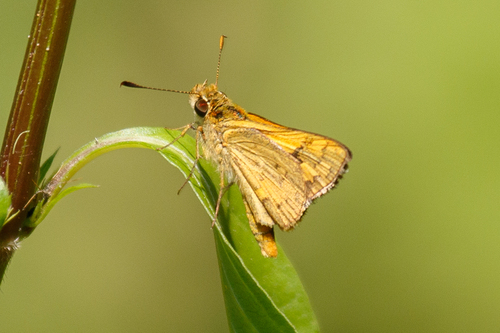
Klug's Xenica

Klug's Xenica

Geitoneura klugii

Endemic
Daily sighting probability ~10% · With luck
at Melbourne

In 3 days ~20% in a week ~40%

165 Verified sightings at Melbourne
223 In all 7 parks From 2019 to 2026
January Best month
☀️ Diurnal When it's spotted

About the Klug's Xenica

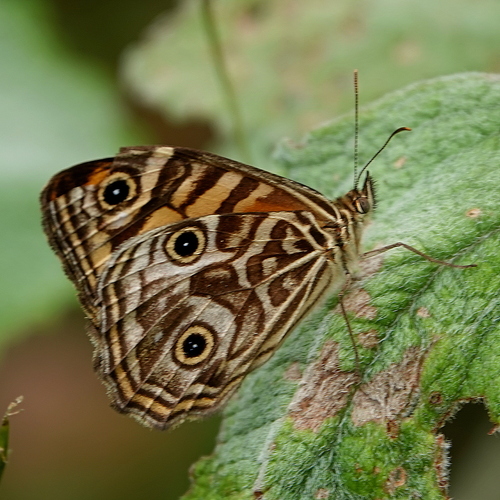
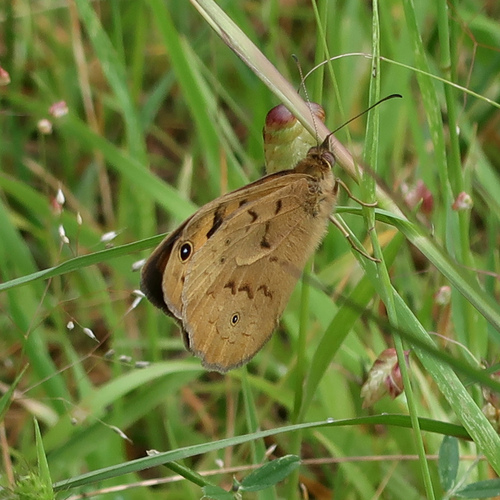
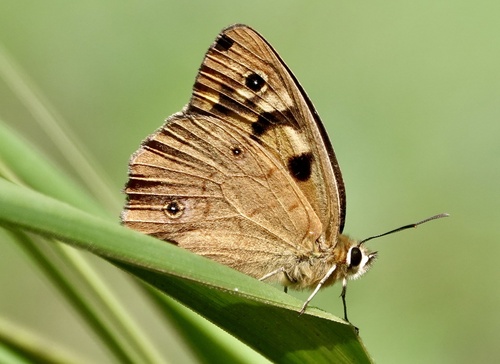
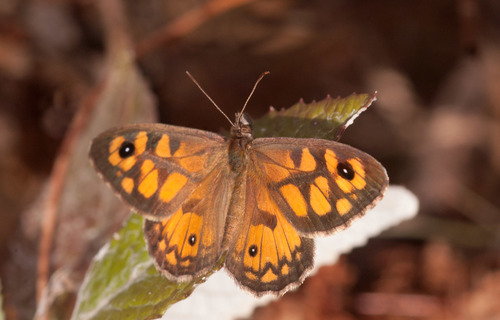
Geitoneura klugii, the common xenica or Klug's xenica, is a species of butterfly belonging to the family Nymphalidae. It is a southern Australian butterfly that is easily camouflaged because of its resemblance to the ground where it is usually found fluttering. It has a wingspan of about 38 millimetres (1.5 in). The upper and lower side of the forewing is black with brownish-black markings and contains a black spot with a white centre. The orange hindwing is set off by a black border and a black-rimmed eyespot. The underside of the hindwing ranges from grey to brown and consists of darker markings.

There is not much difference in appearance between the male and female, except for a silvery sex band that runs across the centre of the upperside of the male forewing. Also the females are paler compared to the males. In anticipation of mating, the males either set up their territory on or close to the ground and wait for the females to arrive or they personally go in search for the females. Territorial disputes are common among the males and are expressed by the upward spiral flight of the males.

The eggs are either white or... Wikipedia →

Global Distribution

Parks Where Found

# Park Country Daily sighting probability
1 Rottnest Island 🇦🇺 Australia
~30%
2 Kosciuszko National Park 🇦🇺 Australia
~20%
3 Great Otway National Park 🇦🇺 Australia
~20%
4 Maria Island National Park 🇦🇺 Australia
~20%
5 Wilsons Promontory National Park 🇦🇺 Australia
~10%
6 Grampians National Park 🇦🇺 Australia
~10%
7 Blue Mountains National Park 🇦🇺 Australia
~10%

Cities Where Found

# City Country Daily sighting probability
1 Melbourne 🇦🇺 Australia
~10%
2 Perth 🇦🇺 Australia
~10%

Before you go

What are the chances of seeing a Klug's Xenica in Melbourne?

With luck

About 10% of wildlife watchers report a Klug's Xenica sighting in Melbourne on a given day, based on 165 verified sightings from GBIF citizen-science data. It is the 99th most-seen of the 875 insects we can rate there. Over three days the chance rises to about 20%, and over a week to about 40%, if each day is a fresh chance.

When is the best time to see a Klug's Xenica in Melbourne?

January

In that month about 20% of wildlife watchers report a Klug's Xenica in Melbourne on a given day, against under 5% in April to November, the lowest months.

What time of day is best to see a Klug's Xenica?

Between 1 and 4 pm

Across all the parks we cover, that three-hour window holds the most Klug's Xenica sightings with a recorded time, and about 9 in 10 of them come between 6 am and 6 pm: it is a daytime animal.

Is Melbourne the best place to see a Klug's Xenica?

Yes

Of the 2 cities where we can rate Klug's Xenica sightings, Melbourne has the highest daily chance: about 10%. Next come Perth (Australia, about 10%).

Where does the Klug's Xenica sighting chance come from?

GBIF citizen-science records

It is estimated from how often the Klug's Xenica is recorded against all the insects logged in Melbourne (165 verified sightings), calibrated against known sighting rates. Figures are rounded to the nearest 10% because citizen-science data supports honest approximations, not decimals, and months with records from fewer than five people show "—". How it works.
← Back to Melbourne