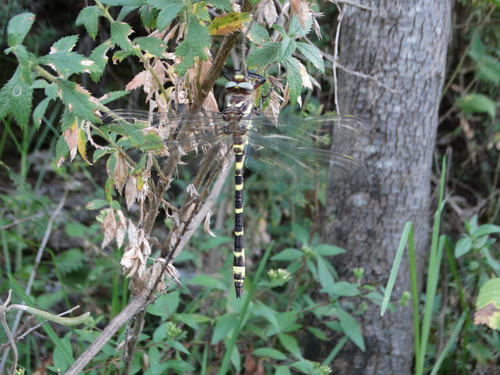
Common Green Darner

Common Green Darner

Anax junius

Daily sighting probability <5% · Rare
at Mexico City

In 3 days ~10% in a week ~20%

19 Verified sightings at Mexico City
217 In all 17 parks From 2019 to 2026
September Best month
☀️ Diurnal When it's spotted

About the Common Green Darner

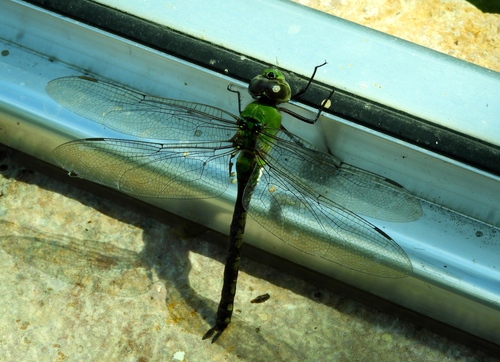
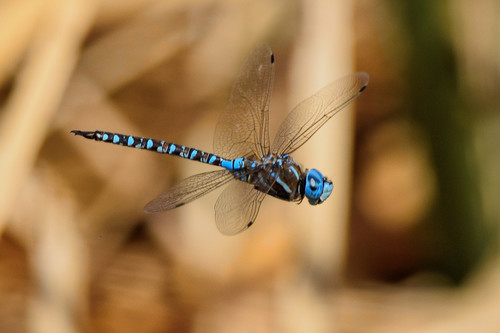
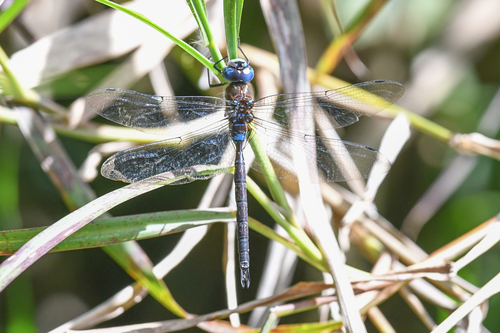
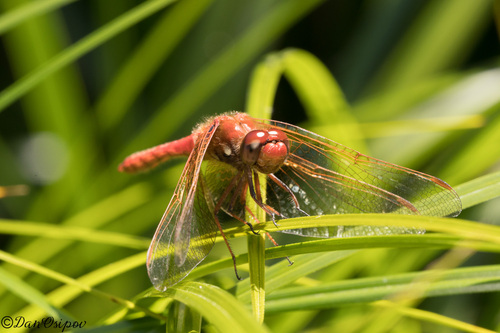
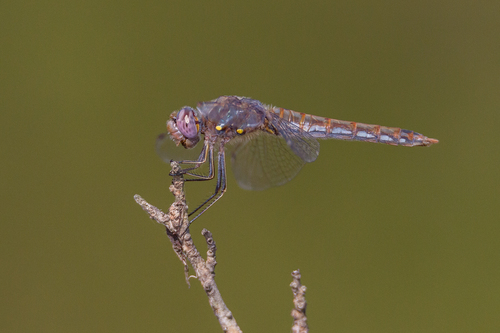
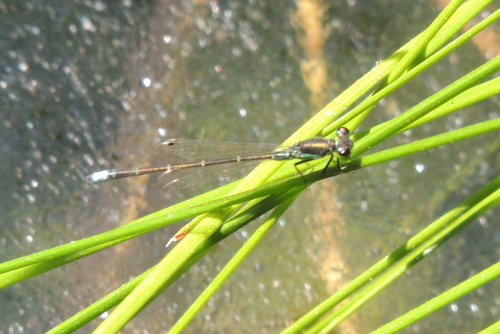
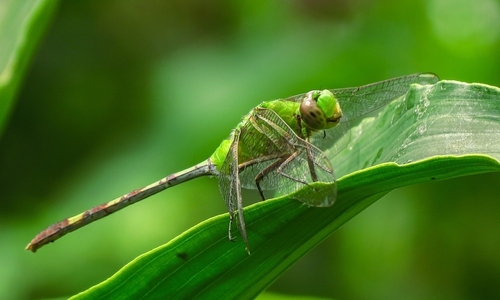
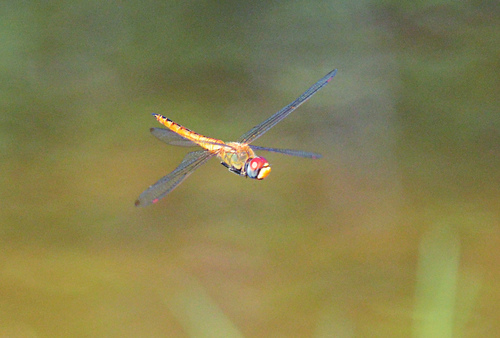
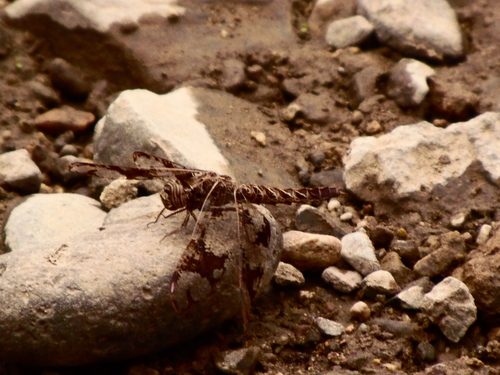
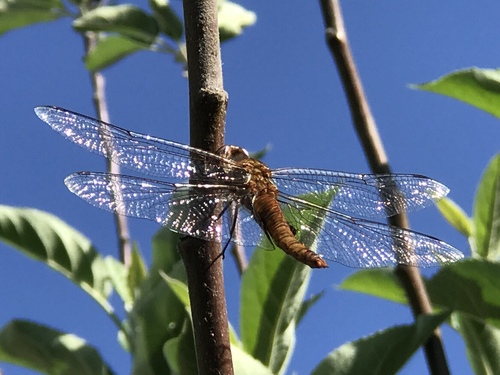
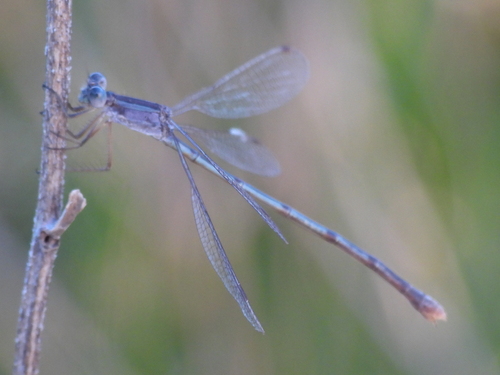
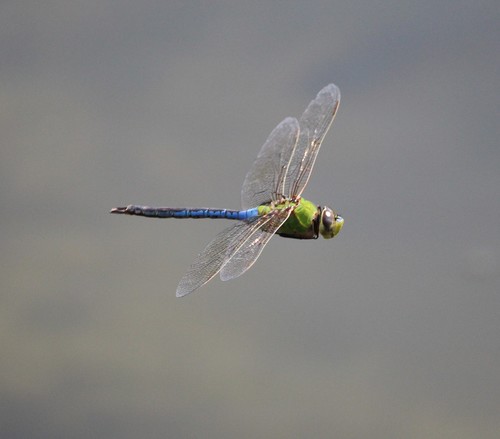
The green darner or common green darner (Anax junius), after its resemblance to a darning needle, is a species of dragonfly in the family Aeshnidae. One of the most common and abundant species throughout North America, it also ranges south to Panama. It is well known for its great migration distance from the northern United States south into Texas and Mexico. It also occurs in the Caribbean, Tahiti, and Asia from Japan to mainland China. It is the official insect for the state of Washington in the United States.

The green darner is a large dragonfly; males grow to 8 cm (3.1 in) in length with a wingspan up to 10 cm (4 in). Females oviposit in aquatic vegetation, eggs laid beneath the water surface. Nymphs (naiads) are aquatic carnivores, feeding on insects, tadpoles, and small fish. Adult darners catch insects on the wing, including ant alates, moths, mosquitoes, and flies.

Dru Drury described this species as Libellula junius in 1773. There are not currently any recognized subspecies. Common green darners are commonly found throughout... Wikipedia →
Global Distribution

Parks Where Found

# Park Country Daily sighting probability
1 Point Pelee National Park 🇨🇦 Canada
~20%
2 Padre Island National Seashore 🇺🇸 United States
~10%
3 Redwood National Park 🇺🇸 United States
~10%
4 Big Bend National Park 🇺🇸 United States
~10%
5 Death Valley National Park 🇺🇸 United States
~10%
6 Riding Mountain National Park 🇨🇦 Canada
~10%
7 Merritt Island National Wildlife Refuge 🇺🇸 United States
~10%
8 Channel Islands National Park 🇺🇸 United States
~10%
9 Sequoia and Kings Canyon National Parks 🇺🇸 United States
~10%
10 Big Cypress National Preserve 🇺🇸 United States
~10%
11 Acadia National Park 🇺🇸 United States
~10%
12 Everglades National Park 🇺🇸 United States
~10%
13 Cumbres de Monterrey National Park 🇲🇽 Mexico
~10%
14 Shenandoah National Park 🇺🇸 United States
~10%
15 Saguaro National Park 🇺🇸 United States
<5%
16 Yosemite National Park 🇺🇸 United States
<5%
17 Great Smoky Mountains National Park 🇺🇸 United States
<5%

Cities Where Found

# City Country Daily sighting probability
1 Sacramento 🇺🇸 United States
~20%
2 Minneapolis [Saint Paul] 🇺🇸 United States
~20%
3 Austin 🇺🇸 United States
~10%
4 Houston 🇺🇸 United States
~10%
5 Toronto 🇨🇦 Canada
~10%
6 Mesa 🇺🇸 United States
~10%
7 Chicago 🇺🇸 United States
~10%
8 Portland 🇺🇸 United States
~10%
9 Las Vegas 🇺🇸 United States
~10%
10 Torreón 🇲🇽 México
~10%

Before you go

What are the chances of seeing a Common Green Darner in Mexico City?

Rare

Under 5% of wildlife watchers report a Common Green Darner sighting in Mexico City on a given day, based on 19 verified sightings from GBIF citizen-science data. It is the 268th most-seen of the 557 insects we can rate there. Over three days the chance rises to about 10%, and over a week to about 20%, if each day is a fresh chance.

When is the best time to see a Common Green Darner in Mexico City?

September

In that month about 10% of wildlife watchers report a Common Green Darner in Mexico City on a given day, against under 5% in October to August, the lowest months. That is one of Mexico City's wettest months, with about 150 mm of rain against 5 mm in December.

What time of day is best to see a Common Green Darner?

Between 10 am and 1 pm

Across all the parks we cover, that three-hour window holds the most Common Green Darner sightings with a recorded time, and about 9 in 10 of them come between 6 am and 6 pm: it is a daytime animal.

Is Mexico City the best place to see a Common Green Darner?

33rd of 33

Of the 33 cities where we can rate Common Green Darner sightings, Mexico City ranks 33rd at under 5%. The best odds are in Sacramento (United States, about 20%), Minneapolis [Saint Paul] (United States, about 20%) and Austin (United States, about 10%).

Where does the Common Green Darner sighting chance come from?

GBIF citizen-science records

It is estimated from how often the Common Green Darner is recorded against all the insects logged in Mexico City (19 verified sightings), calibrated against known sighting rates. Figures are rounded to the nearest 10% because citizen-science data supports honest approximations, not decimals, and months with records from fewer than five people show "—". How it works.

← Back to Mexico City